
Cauliflower and Leek Soup
This article is for informational purposes only and does not constitute medical advice. Always consult your healthcare provider before making any changes to your treatment plan.
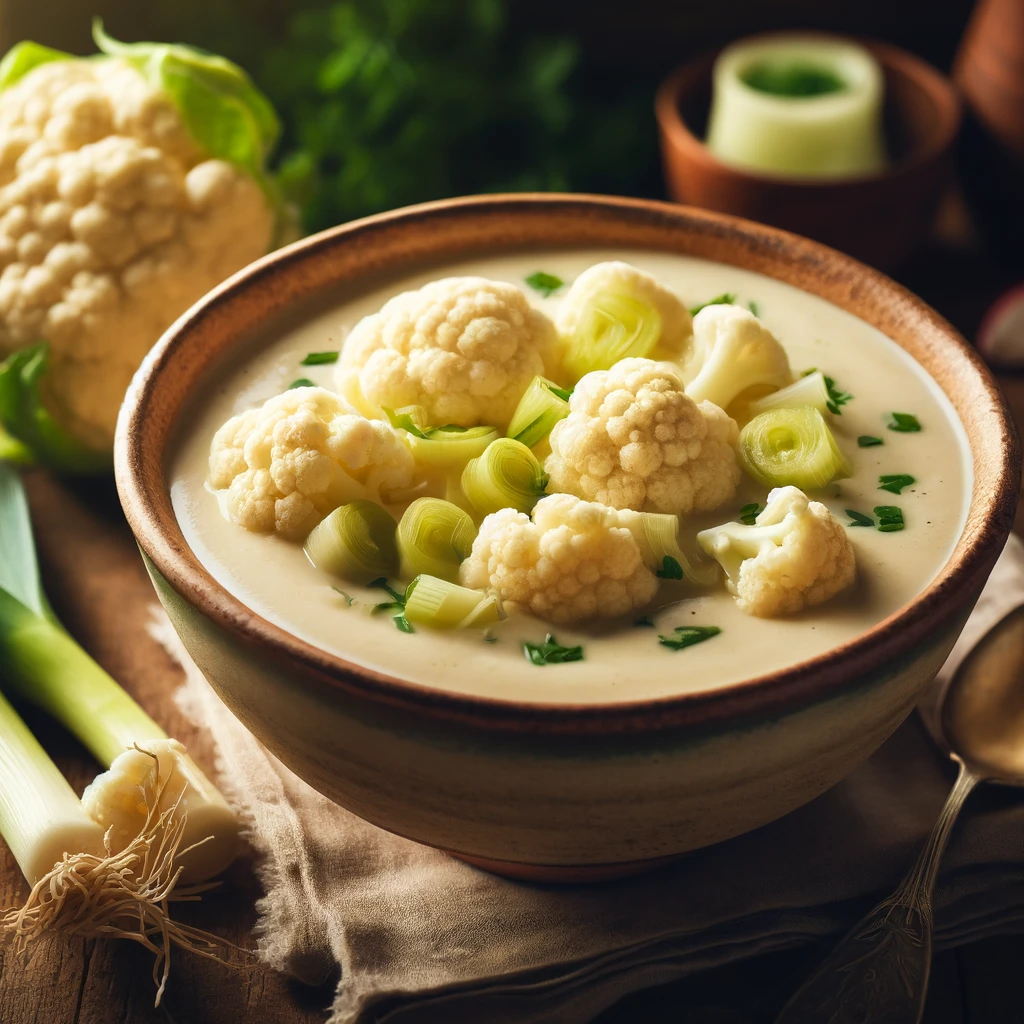
This cauliflower and leek soup is a comforting dish for cold winter days, and while cauliflower may not agree with everyone with IBD, it is a delightful treat for those who can tolerate it.
Cauliflower and leek soup is a comforting dish perfect for cold winter days. While cauliflower may not always agree with everyone, especially those with IBD (Inflammatory Bowel Disease), it's a delightful treat for guests or those who can tolerate it. Here’s a recipe that promises to have your guests licking their fingers!
Ingredients:
- 25 grams (1.75 oz) butter
- 1 tablespoon olive oil
- 2 leeks, thinly sliced
- Leaves from 3-4 sprigs of thyme
- 1-2 cloves garlic, finely chopped
- 2-3 potatoes, peeled and chopped
- 1 large cauliflower, broken into small florets
- Salt
- Freshly ground black pepper
- Crushed chili flakes (optional)
- A pinch of nutmeg
- Approximately 1.5 liters (6 cups) water
- 1/4 to 1/2 cup heavy cream
For Garnish:
- Chopped chives
- Croutons
Instructions:
- Prepare the Base:
- Heat a large pot over medium heat.
- Add the butter, olive oil, leeks, and thyme leaves.
- Stir occasionally until the leeks are softened.
- Add Vegetables:
- Add the chopped potatoes and stir.
- Add the cauliflower florets.
- Season with salt, pepper, chili flakes, and a pinch of nutmeg.
- Stir occasionally until the vegetables are lightly golden.
- Simmer the Soup:
- Pour in the water and bring to a boil.
- Reduce the heat and simmer until the cauliflower and potatoes are tender, about 15-20 minutes.
- Blend and Finish:
- Reduce the heat to low.
- Add the heavy cream and let it simmer for another 5-10 minutes.
- Use an immersion blender to blend the soup to your desired consistency. (For a smoothtexture, blend until silky.)
- Serve:
- Ladle the soup into bowls.
- Garnish with chopped chives and croutons.
- Enjoy**!**
Tips:
- Make it Vegetarian: Substitute butter with a plant-based alternative and use vegetable stock instead of water for added flavor.
- Extra Creaminess: Add more cream or a splash of milk for an even richer texture.
- Spicy Kick: For those who enjoy a bit of heat, add more crushed chili flakes.
Bon Appétit!
Recommended Resources
Browse ResourcesRelated Articles

Potassium Deficiency in Crohn's Disease: A Patient Guide
Potassium deficiency in Crohn's disease: what drains your levels, why magnesium must be corrected first, and how to hit your target on a low-fiber diet.

Short Bowel Syndrome in Crohn's Disease: Diet and Fluids
Short bowel syndrome in Crohn's disease changes how you eat and drink. What guidelines say about sodium, fluids, fat, fiber and supplements after surgery.

Protein Intake With Crohn's Disease: How Much You Need
How much protein do you need with Crohn's disease? ESPEN sets 1.2 to 1.5 g/kg in a flare and about 1 g/kg in remission. A guide to protein intake with Crohn's.

IgG Food Sensitivity Tests for Crohn's: Do They Work?
Is an IgG food sensitivity test worth it for Crohn's? What the sham-controlled trial found, why allergy societies reject the panels, and what to do instead.

Low-Fiber Diet for Crohn's Disease: Who Actually Needs It
A low fiber diet for Crohn's disease has a real but narrow role. Research links routine fiber avoidance to more flares, not fewer. Here is the evidence.

Gluten-Free Diet for Crohn's Disease: What Evidence Shows
Is a gluten free diet for Crohn's disease worth trying? Here is what the research shows on celiac risk, gluten sensitivity, fructans, and who benefits.