
Entyvio Cost Without Insurance: Prices, Copay and Help

This article is for informational purposes only and does not constitute medical advice. Always consult your healthcare provider before making any changes to your treatment plan.
The most reliable public price for Entyvio is the Medicare Part B payment limit: $20.949 per mg for the drug, which works out to $6,284.70 for a single 300 mg infusion dose, before any facility, nursing or lab charge is added (1). Checked 2026-09-28.
If you have just been prescribed a biologic with no coverage, the question of entyvio cost without insurance is not academic. Many of us living with Crohn's have sat with a quoted number that felt impossible, and almost nobody pays the first figure they see. What follows is priced from government data you can re-check yourself, not from a coupon site. For how the drug works, see our guide to vedolizumab for Crohn's disease.
Key Takeaways
- Entyvio cost without insurance starts at $6,284.70 for the drug in one 300 mg dose, from the Medicare Part B limit of $20.949 per mg, checked 2026-09-28 (1).
- Medicare Part B claims for 2024 averaged $6,545 per Entyvio claim and $39,134 per patient for the year (2).
- The EntyvioConnect copay program can bring a dose to $0, capped at $20,000 a year, but covers commercial insurance only (3).
- Uninsured patients should look instead at the ENTYVIO Patient Assistance Program, a separate free-drug route reviewed case by case (4).
- No manufacturer publishes a retail cash price. A written good-faith estimate from your infusion site is the only number that reflects your bill.
- The 2028 negotiated Medicare price and the first vedolizumab biosimilar under FDA review will not lower what an uninsured patient pays now (6)(7).
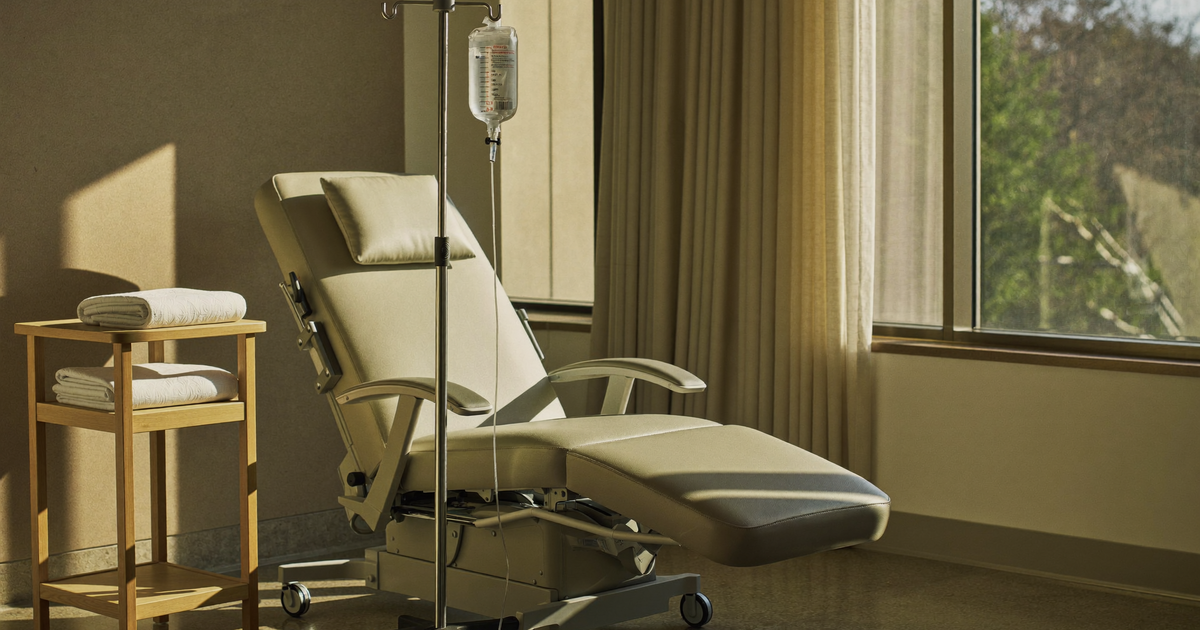
Entyvio Cost Without Insurance: What One Dose Actually Costs
For October 1 through December 31, 2026, Medicare's payment limit for vedolizumab (HCPCS code J3380) is $20.949 per mg, based on second-quarter 2026 average sales price data (1). A single 300 mg dose therefore prices at $6,284.70 for the drug alone, excluding the infusion visit. Checked 2026-09-28.
This is a payment limit, not a cash price. Takeda publishes no single retail number for Entyvio, and what a self-pay patient is charged depends on the infusion site as much as on the drug. Treat any confident cash price you find online as a third-party estimate, not a rate anyone has promised you.
The IV infusion (300 mg vial)
The IV form comes as a 300 mg single-dose vial and is normally billed as a medical benefit, the side of a plan Medicare Part B covers (5). Two charges land on the bill: the drug, and the visit, which includes chair time, a facility fee, and the nurse who administers the dose. That second charge is why identical doses produce very different bills: hospital outpatient departments routinely charge more than a standalone infusion center, and a doctor's office that infuses in-house is often cheapest of the three.
The Entyvio Pen (108 mg)
The subcutaneous form is 108 mg/0.68 mL, supplied as a prefilled syringe or the Entyvio Pen (5). It travels through a different door: a specialty pharmacy dispenses it as a pharmacy benefit rather than a medical one. That decides which assistance program applies, which deductible the cost hits, and whether a facility fee exists at all, since there is no infusion suite to bill for a self-injection. The trade-off is frequency: every 2 weeks rather than every 8.
What a Full Year of Entyvio Costs
A year of Entyvio is not one dose multiplied by twelve. The dosing schedule sets how many doses you receive, and the doses set the bill. Rather than estimate a total, the clearest anchor is real claims data: Medicare Part B spending in 2024 averaged $39,134.26 per beneficiary for the year (2).
The dosing schedule that drives the bill
The FDA label, revised February 2026, gives 300 mg intravenously at week 0 and week 2 as induction. From there patients either continue 300 mg intravenously every 8 weeks, or switch to 108 mg subcutaneously every 2 weeks (5). Here is the arithmetic in the open:
- The every-8-weeks IV route: induction doses at week 0 and week 2, then roughly 6 to 7 maintenance infusions across a year.
- The every-2-weeks pen route: 26 injections a year after the IV induction doses.
The label also directs discontinuing Entyvio in patients with no evidence of therapeutic benefit by week 14 (5). For budgeting, the first commitment is an induction course and an assessment, not a permanent expense.
What Medicare data shows a real year costs
In 2024, Medicare Part B spending on Entyvio averaged $6,545.18 per claim and $39,134.26 per beneficiary, totaling $769,418,664 across 117,555 claims and 19,661 beneficiaries (2). That per-claim average sits close to the current per-dose payment limit, which is a useful check on both.
The drug price leaves out the rest of the bill. Chair time and the facility fee, the nurse, lab work, and travel are billed separately. In our community that is the most common surprise: a careful drug-price comparison, then a facility charge nobody mentioned.

The EntyvioConnect Copay Program: Who It Helps and Who It Does Not
Takeda's EntyvioConnect Co-Pay Program states that eligible patients may pay as little as $0 per dose, up to a program maximum of $20,000 per year (3). Checked 2026-09-28.
Here is the catch, stated plainly: the program is for commercial insurance only. It excludes patients with Medicare, Medicaid, TRICARE and state pharmaceutical assistance programs, and cannot be used if a government program pays any part of the prescription (3). So if you are uninsured, the copay card is not your route: it reduces a share of cost that only exists when a plan is already paying. Skip to the patient assistance program below.
Two limits matter even if you qualify:
- The cap is real. At $20,000 a year against a drug Medicare data puts near $39,000 a year, the card covers a substantial share but is not a blank check.
- Watch for copay accumulators and maximizers. Some plans do not credit card dollars toward your deductible or out-of-pocket maximum, so the card spends down while your own obligation stays put. Ask whether your plan operates one.
EntyvioConnect can be reached at 1-844-ENTYVIO (1-844-368-9846). Terms can change at Takeda's discretion, so confirm the current rules yourself rather than relying on any article, this one included.
Getting Entyvio Free: The Patient Assistance Program
The ENTYVIO Patient Assistance Program (ENTYVIO PAP) is a separate route from the copay card, run through EntyvioConnect, for people with no insurance or not enough of it (4). Takeda's enrollment form lists the conditions an applicant must meet, and all of them apply:
- Be a United States resident.
- Meet income criteria.
- Not have access to alternative sources of coverage or funding.
- Not be enrolled in an alternate funding program.
- Generally not have coverage through private or government health programs (4).
Note what Takeda does not publish. The form says "meet income criteria" without naming a federal poverty level cutoff, and applications are reviewed case by case (4). Anyone quoting a specific percentage threshold is guessing. The form also includes e-income verification involving a soft credit check, which you consent to (4).
Four points decide whether an application goes smoothly:
- Your prescriber signs the same form, so this is a conversation with your GI office, not paperwork you file alone. Ask who there handles EntyvioConnect enrollments.
- A rejection is not final. Applicants who miss the general criteria may request an exception (4).
- Takeda charges nothing for this help (4). A company asking a monthly fee to enroll you is not Takeda, and you do not need it.
- Medicare-eligible applicants, note the caveat. Drug received through the PAP does not count toward true out-of-pocket (TrOOP) credit, which matters if you later move onto a Part D plan.
When a manufacturer program does not fit, independent help exists. Copay relief funds and patient-advocacy foundations run disease-specific grants that open and close as funding allows, so eligibility partly depends on timing. The Crohn's and Colitis Foundation's IBD Help Center is a reasonable first call for a referral to what is open. Verify any fund's terms on its own site.
Practical Ways to Bring the Bill Down
Ask for a written good-faith estimate before the first infusion. Under the No Surprises Act, uninsured and self-pay patients are entitled to one, and it is the only document that lets you compare two sites for the same dose. Beyond it:
- Compare sites of care. The same 300 mg dose prices differently at a hospital outpatient department, a standalone infusion center, and a physician's office. Ask whether your practice can infuse in-office.
- Ask whether the pen changes the financial picture. It shifts the drug to the pharmacy benefit and removes the facility fee, and the label allows a switch at week 6 or later for patients responding to IV therapy (5). This is a medical decision first, and cost is one input among several, as we discuss in our comparison of biologics for Crohn's disease.
- Ask the hospital's financial counselor about charity care. Nonprofit hospitals must maintain a written financial assistance policy, and sliding-scale or self-pay discounts go unmentioned unless you ask by name.
- If you have insurance and were denied, the route is an appeal, not a cash payment. Our prior authorization and appeals walkthrough covers the deadlines.
Questions to ask before your first infusion
Take this list to the GI office and billing department:
- What is the written good-faith estimate for the drug plus the facility fee, itemized separately?
- Where else can this infusion be given, and what would each site charge?
- Has EntyvioConnect been contacted, and by whom?
- Is screening in progress for the ENTYVIO Patient Assistance Program?
- What happens, clinically and financially, if a dose is missed while paperwork is pending?
Sticker shock on a biologic is normal, not a sign of poor planning. Very few patients pay the number that first appears, and the assistance paperwork is worth the afternoon it takes.
What Could Change the Price: Biosimilars and Medicare Negotiation
Two changes are coming, and neither lowers an uninsured patient's bill today. As of this writing, no vedolizumab biosimilar has been approved in any market worldwide.
Alvotech's AVT16 was the first accepted for FDA review, on June 8, 2026, as a proposed interchangeable biosimilar, with a decision expected in the first quarter of 2027 (7). Other candidates sit behind it, including a subcutaneous version and filings from other manufacturers, so expect a gradual price shift over years rather than one cheap generic. Our biosimilars guide for patients explains what interchangeability and pharmacy substitution mean in practice.
On the Medicare side, CMS announced on January 27, 2026 that Entyvio is one of 15 drugs selected for the third cycle of the Medicare Drug Price Negotiation Program, covering initial price applicability year 2028. The listing shows $1,483,348,000 in total Medicare Part B and Part D expenditures and roughly 37,000 Medicare enrollees. Any agreed maximum fair price takes effect January 1, 2028 (6).
That is a significant policy change, and it is not relief for an uninsured reader. A negotiated Medicare price governs what Medicare pays. It does not set the price for someone paying cash, so waiting for 2028 is not a plan. The assistance programs above are what is available now.
Frequently Asked Questions
How much does Entyvio cost per dose without insurance?
The most defensible public figure is the Medicare Part B payment limit of $20.949 per mg for HCPCS code J3380, or $6,284.70 for a 300 mg dose of the drug alone, checked 2026-09-28 (1). Your charge will differ, because the infusion site adds facility and nursing fees on top.
Can I use the Entyvio copay card if I have no insurance?
No. The EntyvioConnect Co-Pay Program is limited to commercial insurance and excludes Medicare, Medicaid, TRICARE and state pharmaceutical assistance programs (3). Uninsured patients apply instead to the ENTYVIO Patient Assistance Program, a separate free-drug route run through the same EntyvioConnect service (4).
What income do you need to qualify for the Entyvio patient assistance program?
Takeda's form requires applicants to "meet income criteria" but publishes no federal poverty level cutoff, and states that applications are reviewed case by case (4). Anyone quoting a specific percentage is guessing. The form includes consent to e-income verification through a soft credit check (4).
Is the Entyvio Pen cheaper than the IV infusion?
It changes the structure of the cost rather than guaranteeing a lower one. The pen goes through a specialty pharmacy under the pharmacy benefit, removing the facility fee an infusion suite charges, but it is given every 2 weeks rather than every 8 (5). The total depends on your coverage and which program fits.
When will a cheaper vedolizumab biosimilar be available?
Not yet. No vedolizumab biosimilar has been approved in any market. Alvotech's AVT16 was the first accepted for FDA review, on June 8, 2026, with a decision expected in the first quarter of 2027 (7). Price effects arrive gradually as more products launch, not all at once.
Will the Medicare negotiated price lower what I pay if I am uninsured?
No. CMS selected Entyvio for negotiation covering initial price applicability year 2028, with any maximum fair price effective January 1, 2028 (6). That price governs what Medicare pays for its beneficiaries. It sets no rate for a self-pay patient, so the assistance programs available now remain the route.
What should I ask my doctor about the cost of Entyvio?
Ask who in the practice handles EntyvioConnect enrollments, whether you are being screened for the patient assistance program, and whether the practice can infuse in-office rather than at a hospital outpatient department. Ask for a good-faith estimate itemizing drug and facility charges.
References
- Centers for Medicare and Medicaid Services. Medicare Part B Drug Average Sales Price: ASP Pricing Files (October 2026, HCPCS J3380 vedolizumab). 2026. Checked 2026-09-28. View pricing files
- Centers for Medicare and Medicaid Services. Medicare Part B Spending by Drug (2024 data, Entyvio / vedolizumab, HCPCS J3380). 2026. View the data
- Takeda Pharmaceuticals. ENTYVIO (vedolizumab) Cost and Co-Pay Assistance. 2026. Checked 2026-09-28. Read article
- Takeda Pharmaceuticals. EntyvioConnect Enrollment and Prescription Form, including ENTYVIO Patient Assistance Program criteria (US-VED-4331v1.0, 06/26). 2026. Read the form
- Takeda Pharmaceuticals. ENTYVIO (vedolizumab) Prescribing Information, revised 2/2026 (BLA 125476, supplement 66). US Food and Drug Administration, 2026. Read the label
- Centers for Medicare and Medicaid Services. Medicare Drug Price Negotiation Program: Selected Drugs for Initial Price Applicability Year 2028 (Fact Sheet). January 27, 2026. Read fact sheet
- Goodwin Procter LLP, Big Molecule Watch. Alvotech's BLA for Vedolizumab Biosimilar First to be Accepted by FDA. June 2026. Read article
Recommended Resources
Browse ResourcesRelated Articles

Skyrizi Cost for Crohn's: Copay Card, Assistance, Real Prices
Skyrizi cost for Crohn's: verified list price, what the Skyrizi Complete copay card really covers, options if you are uninsured, and the Medicare coverage gap.

Stelara Cost in 2026: Copay, Biosimilars and How to Pay Less
Stelara cost in 2026: the real list price, the $5 copay card terms and limits, Medicare's new negotiated price, and eight biosimilars at up to 95% off.

Humira Biosimilars in 2026: Every Brand, Interchangeability, Cost
Every FDA-approved Humira biosimilar for Crohn's disease in 2026: all 10 brands, which are interchangeable, high vs low concentration, and real cost data.

Entyvio vs Skyrizi for Crohn's Disease: A Patient Comparison
Entyvio vs Skyrizi for Crohn's disease: how the two drugs work, what their trials showed, safety, dosing burden, and where 2025 AGA guidance puts each.

Entyvio vs Stelara for Crohn's Disease: How They Compare
Entyvio vs Stelara for Crohn's disease: how these two biologics compare on mechanism, dosing, real-world evidence, safety and what the guidelines say.

Vedolizumab (Entyvio) for Crohn's Disease: A Patient Guide
Vedolizumab (Entyvio) is a gut-selective biologic for Crohn's disease. Learn how this anti-integrin therapy works, what trials show, and dosing options.