
Foods to Avoid With Crohn's Disease: An Evidence-Based Guide

This article is for informational purposes only and does not constitute medical advice. Always consult your healthcare provider before making any changes to your treatment plan.
There is no single Crohn's diet and no food has been proven to cause the disease; instead certain foods commonly worsen symptoms, especially during a flare, and trigger foods vary from person to person (1).
If you live with Crohn's disease, one of the first questions you probably asked was: "What foods should I avoid?" It is a reasonable question, but the honest answer is more nuanced than most lists suggest. There is no single "Crohn's diet," and no food has been proven to cause the disease. Instead, certain foods commonly worsen symptoms, especially during a flare, and trigger foods vary from person to person, so the most reliable approach is to identify your own triggers with help from your care team and an IBD-focused registered dietitian (1).
This guide covers the foods most often linked with symptoms, what the evidence does and does not show, and how flare eating differs from remission eating.
Key Takeaways
- People with IBD respond to food differently, so trigger foods are individual rather than universal, and the same food may bother you during a flare but not in remission (1).
- Common symptom triggers reported by the Crohn's & Colitis Foundation include foods high in insoluble fiber, high-lactose foods, high-fat and fried foods, spicy foods, alcohol, caffeine, sugar alcohols, and added sugars (1).
- Trigger foods cause unpleasant symptoms but do not necessarily cause inflammation or harm; that distinction matters when deciding what to restrict (1).
- An international expert panel suggests limiting saturated and trans fats, processed and red meat, and some additives, while noting the evidence for many specific restrictions is limited (2).
- In a 2025 clinical trial of 154 people, those who cut dietary emulsifiers (common in ultra-processed foods) were about three times more likely to see symptom improvement than the comparison group (3).
- Overly restrictive eating carries real risks, including nutrient deficiencies, weight loss, and disordered eating, so restrictions should be guided by a professional, not the internet (1).
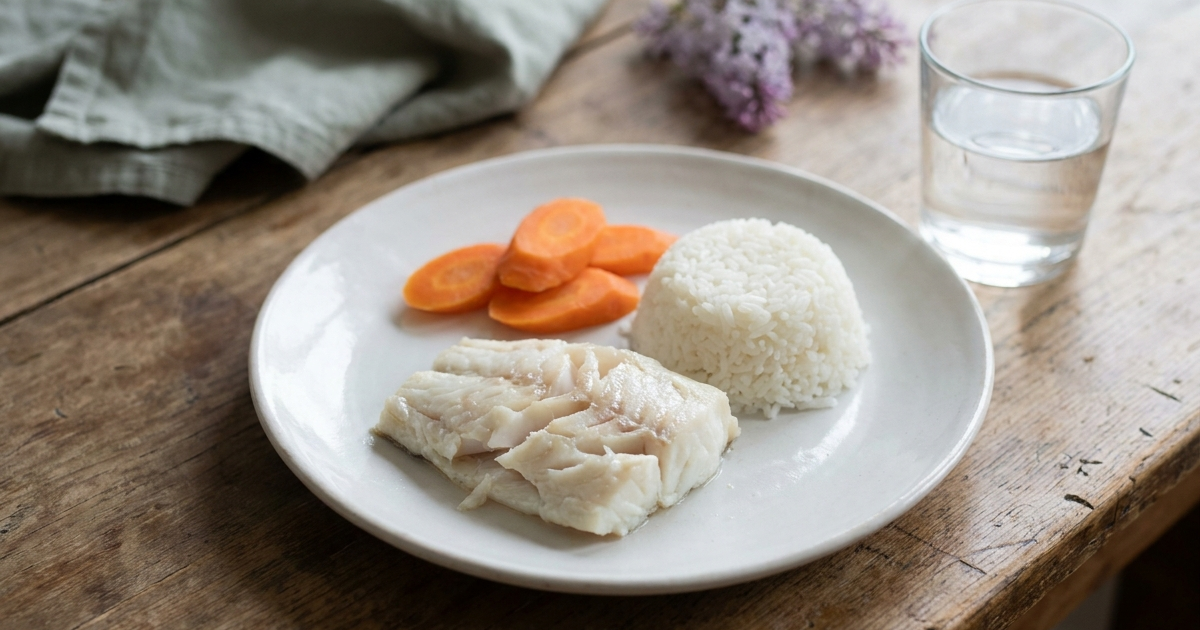
Common Trigger Foods to Limit, Especially During a Flare
The list below reflects foods that commonly trigger symptoms according to the Crohn's & Colitis Foundation and international expert guidance. None is forbidden for everyone. The goal during a flare is to reduce symptoms while keeping your diet as varied and nourishing as possible.
Raw and high-insoluble-fiber vegetables
Insoluble fiber does not dissolve in water and can be hard to digest. The Foundation lists raw kale, apple skins, and similar foods as common triggers, and notes that insoluble fiber can cause more frequent or urgent trips to the bathroom (1). High-fiber vegetables like Brussels sprouts, cabbage, cauliflower, and asparagus are also frequent culprits during active disease.
You often do not have to give these up entirely. Cooking, peeling, blending, or finely chopping fiber-rich foods changes how the body handles them. As the Foundation explains, raw kale and blended kale contain the same insoluble fiber, but blended kale is better tolerated because it behaves more like soluble fiber in the gut (1).
Nuts, seeds, popcorn, and other rough textures
Whole nuts, seeds, and popcorn are tough, high-residue foods. They are commonly limited during flares and are specifically flagged as potentially problematic for people with stricturing Crohn's disease (narrowing of the bowel), along with mushrooms, dried meats or fruit, and salads (1). Nut butters are often easier to tolerate than whole nuts. If you have a known stricture, talk with your doctor about how careful you need to be.
High-fat and fried foods
Butter, cheesy dishes, and fried foods appear on the Foundation's list of common trigger foods (1). International expert guidance also suggests it may be prudent to reduce saturated fats and to limit dairy fat, palm oil, and coconut oil, while noting the evidence on dietary fat in IBD is still developing (1, 2).
Lactose, for those who are intolerant
High-lactose foods such as cow's milk, cream, ice cream, and custard can trigger symptoms in people who are lactose intolerant (1). Lactose intolerance is not universal among people with Crohn's, so there is no need to drop dairy if you tolerate it. Many people do fine with hard cheeses or yogurt, and lactose-free milk is widely available.
Spicy foods
Spicy foods like sriracha and chili powder are listed among common triggers (1). Rather than eliminating cultural or favorite dishes entirely, the Foundation suggests adapting recipes or simply eating smaller amounts so you can still enjoy them without provoking symptoms (1).
Caffeine and alcohol
Caffeinated coffee, tea, energy drinks, and other caffeinated beverages can act as triggers, as can alcohol (1). Both can stimulate the gut and worsen diarrhea in some people. Tolerance varies widely, so this is an area where a food diary is especially useful.
Sugar, sugar alcohols, and artificial sweeteners
Added sugars and sugary foods, sugar-sweetened beverages, and sugar alcohols and artificial sweeteners (such as sorbitol, mannitol, xylitol, sucralose, aspartame, and saccharin) are all named as common triggers (1). Sugar alcohols are particularly known for causing gas and loose stools.
Ultra-processed foods and emulsifiers
This is one of the most active areas of IBD nutrition research. Emerging evidence suggests certain food additives, including the emulsifiers carboxymethylcellulose and polysorbate-80, plus carrageenan, maltodextrin, and titanium dioxide, may play a role in inflammation, although the Foundation is clear that more research is needed (1). Laboratory and animal studies suggest emulsifiers can alter gut bacteria, reduce the protective mucus layer, and increase gut permeability (3).
The first major clinical trial in this area, the ADDapt trial led by King's College London and presented in 2025, randomized 154 people with active Crohn's disease to a low-emulsifier diet or a comparison diet for eight weeks. Participants on the low-emulsifier diet were about three times more likely to see their symptoms improve and roughly twice as likely to reach symptom remission (3). This is promising but early evidence from a single trial, so it is best viewed as a reason to favor whole foods rather than a strict rule.
Trigger Foods at a Glance
| Food group | Why it can be a problem | Possible alternative | | --- | --- | --- | | Raw, high-insoluble-fiber vegetables | Hard to digest, may cause urgency (1) | Cooked, peeled, or blended vegetables (1) | | Nuts, seeds, popcorn | Rough, high-residue; a concern with strictures (1) | Smooth nut butters; seedless options (1) | | High-fat and fried foods | Common trigger; saturated fat may be best limited (1, 2) | Baked, grilled, steamed, or poached foods (1) | | High-lactose dairy | Symptoms in those who are lactose intolerant (1) | Lactose-free milk, hard cheese, or yogurt (1) | | Spicy foods | Can provoke symptoms in some people (1) | Milder seasoning; smaller portions (1) | | Caffeine and alcohol | May stimulate the gut and worsen diarrhea (1) | Water, broth, decaf, herbal options (1) | | Sugar alcohols and added sugars | Gas, loose stools, urgency (1) | Whole fruit; smaller amounts of sweets (1) | | Ultra-processed foods with emulsifiers | May affect gut barrier; early trial shows benefit from cutting them (1, 3) | Whole and minimally processed foods (1, 3) |

How is eating during a flare different from eating in remission?
During an active flare, the goal shifts toward reducing symptoms and maintaining nutrition rather than maximizing dietary variety. The Crohn's & Colitis Foundation recommends adjusting the texture of fiber-containing foods to improve tolerance, prioritizing protein because needs rise during active disease, increasing hydrating fluids if you are having frequent loose stools, and choosing frequent, small, nutrient-dense meals if your appetite has dropped (1).
In remission, the advice broadens considerably. Once symptoms settle, you can start reintroducing tougher-to-digest foods and aim to keep your diet as expansive as possible, including as many tolerated plant-based foods as you can, such as fruits, vegetables, nuts, seeds, herbs, and whole grains (1). Some triggers only cause trouble during active disease, while others bother you regardless of disease state, which is exactly why personal experience matters so much (1). If you have stricturing Crohn's, ask your doctor whether to keep modifying food textures even in remission (1).
Why are Crohn's trigger foods so individual?
Crohn's disease affects people differently, and so does food. As the Foundation puts it, people with IBD may have different experiences with food, and it does not affect everyone the same way (1). A key distinction is that a trigger food causes unpleasant symptoms but does not necessarily cause inflammation or harm to your body (1). That means a food that gives you cramps is not automatically damaging you, and a food that someone else avoids may be perfectly fine for you.
This individuality is also why blanket "avoid these foods" lists can backfire. Cutting out whole food groups without a reason raises the risk of nutrient deficiencies, unplanned weight loss, malnutrition, and disordered eating, all of which can worsen disease outcomes (1). The aim is to remove what genuinely bothers you while protecting overall nutrition.
How do I find my own trigger foods?
Because triggers are personal, the most useful tool is a structured process rather than a generic list.
Keep a food and symptom diary. Write down what you eat and any symptoms that follow, along with timing. Over a few weeks, patterns often emerge that point to specific foods or food groups.
Work with an IBD-focused registered dietitian. The Foundation strongly advises against following restrictive diets you find online without proper support, because they carry real risks (1). A dietitian can guide a careful, temporary elimination and reintroduction process so you remove only what you need to and add foods back safely. For people who still have symptoms in remission, a dietitian may suggest a structured approach such as a low-FODMAP plan when appropriate (1). You can read more in our guide to the low-FODMAP diet for Crohn's disease.
Remember it is the big picture that counts. The Foundation emphasizes that what your diet looks like as a whole, rather than any single meal, makes the biggest difference, so an occasional trigger food is not a failure (1).
Frequently Asked Questions
Do I have to give up coffee with Crohn's disease?
Not necessarily. Caffeinated coffee is a common trigger and can worsen diarrhea or urgency in some people, but tolerance is individual (1). A food diary can help you see whether coffee affects you, and switching to decaf or smaller amounts is an option if it does.
Is alcohol safe to drink with Crohn's?
Alcohol is listed among common trigger foods and beverages, and it can irritate the gut for some people (1). Whether and how much you can tolerate varies, so monitor your own response and discuss alcohol with your care team, especially if you take medications.
Do I need to avoid all dairy?
No. Only high-lactose dairy such as milk, cream, ice cream, and custard tends to cause problems, and only in people who are lactose intolerant (1). If you tolerate dairy, there is no reason to cut it. Lactose-free milk, hard cheeses, and yogurt are often well tolerated.
Should I avoid popcorn, nuts, and seeds?
These rough, high-residue foods are commonly limited during flares and are a particular concern if you have a stricture (narrowing of the bowel), along with foods like mushrooms and dried fruit (1). Many people tolerate them in remission, and nut butters are often easier than whole nuts. If you have a known stricture, ask your doctor for personalized guidance.
Are ultra-processed foods and emulsifiers bad for Crohn's?
Evidence is emerging. Certain additives may play a role in inflammation, and a 2025 trial found that cutting emulsifiers improved symptoms for many participants with active Crohn's (1, 3). The findings are early, so a sensible takeaway is to favor whole, minimally processed foods rather than to panic about every ingredient.
Is there one official "Crohn's diet" I should follow?
No. There is no single proven Crohn's disease diet, and the evidence for many specific food restrictions remains limited (1, 2). General guidance is to eat a varied, well-balanced diet and to personalize it with help from your doctor and an IBD-focused dietitian.
Can the wrong foods cause a Crohn's flare?
No food has been proven to cause Crohn's disease, and trigger foods cause symptoms rather than necessarily causing inflammation (1). Flares are driven by the underlying disease, so diet is one tool for managing symptoms, not a substitute for medical treatment.
This article is for educational purposes only and is not medical advice. Crohn's disease and nutrition are highly individual. Always consult your gastroenterologist and an IBD-focused registered dietitian before making significant changes to your diet or treatment.
References
- Crohn's & Colitis Foundation. What Should I Eat with Crohn's or Colitis? IBD Diet Guide. https://www.crohnscolitisfoundation.org/patientsandcaregivers/diet-and-nutrition/what-should-i-eat
- Levine A, Rhodes JM, Lindsay JO, et al. Dietary Guidance From the International Organization for the Study of Inflammatory Bowel Diseases. Clin Gastroenterol Hepatol. 2020;18(6):1381-1392. https://pubmed.ncbi.nlm.nih.gov/32068150/
- King's College London. New research presented at ECCO Congress on low emulsifier diet and Crohn's disease (ADDapt trial). 2025. https://www.kcl.ac.uk/news/new-research-presented-at-ecco-congress-on-low-emulsifier-diet-and-crohns-disease
- National Institute of Diabetes and Digestive and Kidney Diseases (NIDDK). Eating, Diet, & Nutrition for Crohn's Disease. https://www.niddk.nih.gov/health-information/digestive-diseases/crohns-disease/eating-diet-nutrition
- Vissers E, Wellens J, Sabino J. Ultra-processed foods as a possible culprit for the rising prevalence of inflammatory bowel diseases. Front Med. 2022;9:1058373. https://pmc.ncbi.nlm.nih.gov/articles/PMC9676654/
Recommended Resources
Browse ResourcesRelated Articles

Low FODMAP Diet for Crohn's: Evidence-Based Patient Guide
Low FODMAP diet for Crohn's disease in IBD remission: 2025 evidence on symptom relief, microbiota impact, and how to safely reintroduce common trigger foods.

Fear of Flare in Crohn's Disease: An Evidence-Based Guide
Fear of flare in Crohn's disease is very common. Learn how anticipatory anxiety works, why it happens, and evidence-based ways to cope when panic strikes.

Fatigue in Crohn's Disease: Evidence-Based Management
Fatigue in Crohn's disease affects most patients, even in remission. Learn evidence-based causes, testing, and what actually helps ease chronic tiredness.

Journaling for Crohn's Disease: An Evidence-Based Guide
Discover how journaling and expressive writing may reduce IBD distress and boost quality of life. An evidence-based patient guide for Crohn's disease.

CBT for Crohn's Disease: An Evidence-Based Patient Guide
CBT for Crohn's disease reduces anxiety and depression in IBD patients. Learn how this evidence-based therapy works, what to expect, and where to find help.

Self-Compassion for Crohn's Disease: An Evidence-Based Guide
Self-compassion for Crohn's disease can ease anxiety, depression, and stress. An evidence-based guide to the three pillars and practical ways to start today.