
Mirikizumab (Omvoh) for Crohn's Disease: A Patient Guide

This article is for informational purposes only and does not constitute medical advice. Always consult your healthcare provider before making any changes to your treatment plan.
When the FDA approved mirikizumab for Crohn's disease on January 15, 2025, it added a powerful new option for adults with moderate to severe Crohn's who need something beyond conventional therapies (1). Marketed as Omvoh, mirikizumab is a highly selective IL-23p19 inhibitor - the second biologic in this targeted class to earn a Crohn's approval, following risankizumab (Skyrizi) (1). If you are weighing your next treatment step or your gastroenterologist has mentioned Omvoh, this guide walks through the real evidence, practical dosing details, safety data, cost, and how it compares with other biologics - all in plain language.
Key Takeaways
- Mirikizumab (Omvoh) was FDA-approved in January 2025 for moderately to severely active Crohn's disease, making it the second IL-23p19 biologic approved for this condition (1)
- In the VIVID-1 phase 3 trial of 1,150 adults, 53 percent of mirikizumab patients achieved clinical remission at week 52 versus 36 percent on placebo (1)
- Nearly 90 percent of patients who achieved remission and endoscopic response at year 1 maintained clinical remission through year 3 of continuous treatment (1)
- Dosing starts with three IV infusions over 8 weeks, then transitions to self-administered subcutaneous injections at home every 4 weeks (1)
- Beyond symptom control, mirikizumab significantly improved fatigue scores, quality of life, and work productivity compared to placebo (3, 4)
- The most common side effects in trials were upper respiratory infections, injection site reactions, headache, and elevated liver tests (1)
What Is Mirikizumab (Omvoh) and How Does It Work?
Mirikizumab is a humanized monoclonal antibody that selectively binds the p19 subunit of interleukin-23, a protein that drives inflammation in the gut (1). By blocking IL-23 specifically, mirikizumab interrupts a key pathway fueling the Th17 immune response that damages the intestinal lining in Crohn's disease (5).
Targeting IL-23p19
IL-23 is one of the central cytokines - signaling molecules of the immune system - that promote chronic gut inflammation in Crohn's disease (5). It activates Th17 cells and other immune cells that produce damaging inflammatory signals in the intestinal wall. Mirikizumab neutralizes IL-23 by binding its p19 subunit, effectively calming this specific branch of the immune cascade without broadly suppressing the entire immune system.
This selectivity matters. As we explored in our guide to IL-23 inhibitors for Crohn's disease, the IL-23 pathway has become one of the most promising therapeutic targets in IBD. The ability to dial down a specific inflammatory driver - rather than shutting down large parts of the immune response - is what makes this class of biologics so appealing.
How It Differs From Older IL-12/23 Biologics
If you have been on ustekinumab (Stelara), you may be wondering how mirikizumab is different. Ustekinumab blocks the p40 subunit, which is shared between two cytokines: IL-12 and IL-23. That means it inhibits both pathways at once (1, 5).
Mirikizumab, by contrast, blocks only the p19 subunit - the piece unique to IL-23 - leaving the IL-12 pathway intact. Research suggests that IL-12 may play a protective role in certain immune functions, so sparing it while still blocking IL-23 could offer a more focused therapeutic approach (5). Whether this translates into clinically meaningful differences for individual patients is still being studied, but the pharmacological rationale is clear.
VIVID-1 Trial: What the Evidence Shows
The approval of mirikizumab for Crohn's disease rests primarily on VIVID-1, one of the largest and most rigorous phase 3 trials in IBD. Understanding what this trial found - and what it did not find - is essential for making informed treatment decisions.
Trial Design
VIVID-1 was a phase 3, randomized, double-blind, placebo-controlled and active-controlled study enrolling 1,150 adults with moderately to severely active Crohn's disease (2). Patients had failed conventional therapy or at least one biologic. The trial used a "treat-through" design, meaning patients who responded during induction continued on the same drug through the maintenance phase without re-randomization.
The trial included three arms: mirikizumab, ustekinumab (as an active comparator), and placebo. Published in The Lancet in 2024, it remains the definitive dataset supporting Omvoh's Crohn's indication (2).
Clinical Remission and Endoscopic Response
The primary endpoint results were compelling. At week 52, 53 percent of patients on mirikizumab achieved clinical remission, compared to 36 percent on placebo (p less than 0.001) (1). That is a meaningful absolute difference of 17 percentage points.
Endoscopic response - visible improvement in gut healing as seen during colonoscopy - was also significantly better with mirikizumab. At week 52, 46 percent of mirikizumab patients showed endoscopic response versus 23 percent on placebo (p less than 0.001) (1). Endoscopic improvement is important because it reflects actual tissue healing, not just symptom control.
Long-Term (2-Year) Outcomes
Among patients who achieved both clinical remission and endoscopic response at the end of year 1, the durability of response has been encouraging. Nearly 90 percent of these responders maintained clinical remission through year 3 of continuous treatment in the open-label extension (1). While open-label data is less rigorous than blinded results, this level of sustained response aligns with what the IBD community hopes for from advanced therapies - durable control that lets patients get back to their lives.

How Mirikizumab Is Given: Dosing and Administration
One of the most practical questions patients ask about any biologic is: what does taking it actually look like in daily life? Mirikizumab uses a two-phase approach that many of us in the Crohn's community are becoming familiar with.
Induction: IV Infusions
The treatment starts with three IV infusions of 900 mg, given at weeks 0, 4, and 8 (1). Each infusion takes approximately 30 minutes and is administered in an infusion center or hospital outpatient setting. This is similar to the induction protocols for other biologics like vedolizumab and infliximab, so if you have been through IV induction before, you know the routine.
Maintenance: Subcutaneous Injections at Home
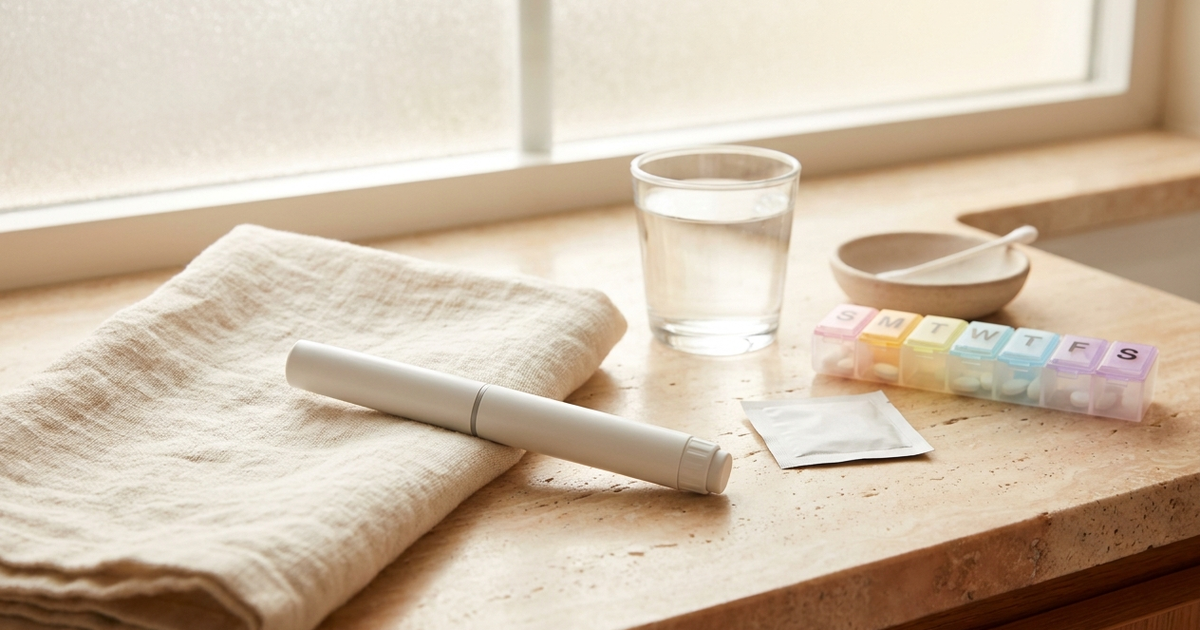
After completing induction, maintenance dosing begins at week 12 with 300 mg subcutaneously every 4 weeks (1). The dose is delivered as two separate 150 mg prefilled pen injections that you administer at home.
For many patients, the transition from infusion center visits to home injections is a significant quality-of-life advantage. You are no longer tied to clinic schedules for ongoing treatment. That said, some patients find self-injection daunting at first - your gastroenterology team or specialty pharmacy can walk you through the process and provide support.
One critical note: stopping mirikizumab abruptly - without guidance from your gastroenterologist - can trigger a disease flare. Always discuss any changes to your treatment plan with your care team before making them.
Safety, Side Effects, and Warnings
Understanding what to watch for during treatment is just as important as understanding what the drug can do. The safety profile of mirikizumab in VIVID-1 was generally reassuring, but there are important details to know.
Most Common Side Effects
The most frequently reported adverse reactions in clinical trials were upper respiratory infections, injection site reactions, headache, and elevated liver enzyme tests (1). Most of these were mild to moderate. Notably, the overall rates of adverse events and treatment discontinuations were actually lower with mirikizumab than with placebo in VIVID-1 (2), which is an encouraging signal.
Serious Warnings on the Label
The prescribing label includes warnings about serious hypersensitivity reactions (including anaphylaxis), serious infections (including tuberculosis reactivation), and hepatotoxicity (liver injury) (1). While these events were rare in trials, they require attention:
- Infections: If you develop signs of a serious infection - persistent fever, cough, difficulty breathing, unusual fatigue - contact your doctor promptly. Patients with active infections should delay starting mirikizumab until the infection is treated.
- Liver monitoring: Your doctor will likely check liver enzymes before starting treatment and periodically during it.
- Live vaccines: Avoid live vaccines while on mirikizumab. Talk to your gastroenterologist about updating vaccinations before starting treatment.
Screening Before Starting
Before your first dose, expect screening for latent tuberculosis and baseline liver function tests. Your doctor may also review your vaccination history and check for any active infections. This pre-treatment workup is standard for most biologic therapies and helps ensure safe initiation.
Beyond Symptoms: Fatigue, Quality of Life, and Work
Many of us living with Crohn's know that the disease takes a toll far beyond bowel symptoms. Fatigue, reduced quality of life, and lost productivity at work or school are among the most common concerns patients raise - and they are not always captured by standard clinical endpoints.
FACIT-Fatigue Improvements
By week 52 in VIVID-1, 46 percent of mirikizumab patients achieved a clinically meaningful improvement in fatigue (at least a 6-point gain on the FACIT-Fatigue scale), compared to only 20 percent on placebo (3). That is more than double the rate, and it reflects a real change patients can feel in their daily energy and ability to function.
The research also found that baseline fatigue in Crohn's disease is strongly associated with depressive symptoms, suggesting that treating the underlying gut inflammation can also help lift the mood-related exhaustion that so many patients struggle with (3).
Quality of Life and Productivity
A separate analysis of VIVID-1 data, published in the American Journal of Gastroenterology in 2025, reported statistically significant improvements in IBDQ (Inflammatory Bowel Disease Questionnaire) scores and Work Productivity and Activity Impairment scores at week 52 for mirikizumab versus placebo (4).
In practical terms, this means patients on mirikizumab reported less absenteeism, greater productivity while at work, and fewer limitations in daily activities outside of work. For anyone who has had to call in sick during a flare or struggled to stay present during a difficult stretch, these numbers represent something deeply personal.
Cost, Insurance Coverage, and How to Access It
Let's talk about the part that no one loves discussing but everyone needs to know: what Omvoh costs and how to actually get it covered.
Wholesale Cost and List Price
The wholesale acquisition cost for a single 300 mg IV vial (used during induction) is approximately 9,378 US dollars, and each 150 mg subcutaneous pen (used for maintenance) is approximately 5,582 US dollars, according to Lilly's public pricing information (6). These are list prices before insurance negotiations and do not reflect what most patients pay out of pocket.
For patients outside the United States, pricing and availability vary considerably by country, healthcare system, and regulatory approval status. Check with your local gastroenterology team or national IBD organization for region-specific information.
Insurance and Patient Support Programs
Insurance coverage for Omvoh in Crohn's disease has expanded since the 2025 approval. Some major pharmacy benefit managers now include it as a first-line biologic option, though coverage tier and prior authorization requirements vary by plan (6).
Eli Lilly offers support through Lilly Support Services, which includes copay assistance programs for eligible commercially insured patients that can substantially lower out-of-pocket costs (6). Patients on Medicare or Medicaid have separate assistance pathways - contact Lilly Support Services directly or ask your infusion center's financial counselor about available options.
Your gastroenterologist's office or specialty pharmacy can often help navigate insurance approvals and connect you with patient assistance programs. Do not hesitate to ask - this is a routine part of starting any biologic therapy.
Where Mirikizumab Fits Compared to Other Biologics
With a growing list of approved biologics for Crohn's, choosing the right one involves weighing evidence, personal treatment history, and practical factors. As we discuss in our guide to choosing the best biologic for Crohn's disease, there is no single "best" option - the right drug depends on your specific situation.
Vs Ustekinumab (Stelara)
VIVID-1 included ustekinumab as an active comparator, and both drugs performed well (2). The key pharmacological difference is that ustekinumab blocks the shared p40 subunit of IL-12 and IL-23, while mirikizumab targets only the p19 subunit of IL-23 (1, 5). This more selective mechanism may appeal to some clinicians, though head-to-head superiority was not a primary endpoint of the trial.
For patients who have previously been on ustekinumab and lost response or experienced side effects, mirikizumab offers a mechanistically distinct option within a related drug class - potentially allowing continued targeting of the IL-23 pathway with a different approach.
Vs Risankizumab (Skyrizi)
Risankizumab (Skyrizi) is the other IL-23p19 inhibitor approved for Crohn's disease. Both drugs target the same p19 subunit, but they are different antibodies with different binding characteristics, dosing schedules, and clinical trial populations. As of 2026, no head-to-head trial has directly compared mirikizumab and risankizumab, so choosing between them typically comes down to insurance coverage, dosing preference, and clinician experience.
For a broader look at where all of these therapies fit in the evolving treatment landscape, see our overview of new IBD treatments in 2026.
Talking With Your Gastroenterologist
When discussing mirikizumab with your care team, some useful questions include:
- Given my treatment history, is an IL-23p19 inhibitor a good next step?
- How does my insurance formulary tier affect the choice between mirikizumab and risankizumab?
- What monitoring will I need during induction and maintenance?
- How long should we expect before seeing improvement?
- What is the plan if mirikizumab does not work well enough?
Your prior treatment responses, medication history, insurance formulary, and personal preferences all factor into the decision. Sequencing biologics is increasingly complex, and an honest conversation with a gastroenterologist who knows your case is the best starting point.
Frequently Asked Questions
Is mirikizumab (Omvoh) FDA-approved for Crohn's disease?
Yes. The FDA approved mirikizumab (Omvoh) for moderately to severely active Crohn's disease in adults on January 15, 2025 (1). It was previously approved for ulcerative colitis in 2023, making Crohn's its second inflammatory bowel disease indication.
How long does mirikizumab take to start working?
In the VIVID-1 trial, some patients began showing improvement during the 12-week induction period, but the primary efficacy endpoints were measured at week 52 (1). Individual response times vary, and your gastroenterologist will likely assess your progress at several checkpoints during the first year of treatment.
Can I switch from Stelara to Omvoh?
Many patients in the VIVID-1 trial had previously used biologics, including ustekinumab (Stelara) (2). While both drugs target IL-23 pathways, they work differently - mirikizumab blocks only IL-23, while ustekinumab blocks both IL-12 and IL-23. Your gastroenterologist can help determine whether switching makes sense based on your response history and current disease activity.
What are the most common side effects of mirikizumab?
The most commonly reported side effects in clinical trials were upper respiratory infections, injection site reactions, headache, and elevated liver enzyme tests (1). Most were mild to moderate. Your doctor will monitor liver function and screen for infections before and during treatment.
Do I need to go to an infusion center for every dose?
Only during induction. The first three doses (at weeks 0, 4, and 8) are given as IV infusions in a clinic or infusion center (1). After that, maintenance doses are self-administered at home every 4 weeks using prefilled pen injections.
Does mirikizumab help with fatigue, not just bowel symptoms?
Yes. In VIVID-1, 46 percent of mirikizumab patients achieved a meaningful improvement in fatigue at week 52, compared to 20 percent on placebo (3). The treatment also showed significant improvements in overall quality of life and work productivity (4).
Is Omvoh covered by insurance?
Coverage varies by insurance plan and country. In the United States, several major pharmacy benefit managers have added Omvoh to their formularies since the 2025 Crohn's approval (6). Eli Lilly offers copay assistance for eligible commercially insured patients through Lilly Support Services. Patients on Medicare or Medicaid should contact Lilly Support Services or their infusion center's financial counselor for specific assistance options.
References
-
Eli Lilly and Company. FDA approves Lilly's Omvoh (mirikizumab-mrkz) for Crohn's disease, expanding its use to the second major type of inflammatory bowel disease. PR Newswire, 2025. Read article
-
Ferrante M, D'Haens G, Jairath V, et al. Efficacy and safety of mirikizumab in patients with moderately-to-severely active Crohn's disease: a phase 3, multicentre, randomised, double-blind, placebo-controlled and active-controlled, treat-through study. The Lancet, 2024;404(10470):2423-2436. Read study on PubMed
-
Regueiro M, Fischer M, Bossuyt P, et al. Impact of mirikizumab treatment on fatigue in patients with moderately to severely active Crohn's disease: results from the phase 3 VIVID-1 study. Journal of Crohn's and Colitis, 2025. Read study
-
Mirikizumab Improves Quality of Life and Work Productivity in Patients with Moderately to Severely Active Crohn's Disease: Results from the Phase 3 VIVID-1 Study. American Journal of Gastroenterology, August 2025. Read study on PubMed
-
Mirikizumab: A promising breakthrough in Crohn's disease treatment. Narrative review, 2024. Read review on PubMed
-
Eli Lilly and Company. Omvoh Cost Information. Lilly Pricing Info, 2025. View pricing
Recommended Resources
Browse ResourcesRelated Articles

Omvoh (Mirikizumab) for Crohn's Disease: A Patient Guide
FDA-approved January 2025, Omvoh (mirikizumab) is a new IL-23 inhibitor for moderate-to-severe Crohn's disease. Learn how it works, safety, and results.

Mesalamine for Ulcerative Colitis: Doses, Forms, Side Effects
Mesalamine for ulcerative colitis explained: oral vs rectal forms, once-daily dosing evidence, kidney monitoring, side effects, generics, and when to step up.

Skyrizi Side Effects and Safety for Crohn's Disease
Skyrizi side effects in Crohn's disease: real trial rates, liver enzyme monitoring during IV induction, infection risk, pregnancy data, and what to watch.

Humira Biosimilars in 2026: Every Brand, Interchangeability, Cost
Every FDA-approved Humira biosimilar for Crohn's disease in 2026: all 10 brands, which are interchangeable, high vs low concentration, and real cost data.

Entyvio vs Skyrizi for Crohn's Disease: A Patient Comparison
Entyvio vs Skyrizi for Crohn's disease: how the two drugs work, what their trials showed, safety, dosing burden, and where 2025 AGA guidance puts each.

Rinvoq vs Stelara for Crohn's: Oral JAK or Biologic
Rinvoq vs Stelara for Crohn's disease: a daily pill or an injected biologic. What each trial showed, the boxed warning gap, dosing burden and 2026 costs.