
Can You Stop Biologics for Crohn's Disease? A Guide

This article is for informational purposes only and does not constitute medical advice. Always consult your healthcare provider before making any changes to your treatment plan.
Across 37 pooled studies, 43 percent of people with Crohn's disease relapsed after stopping an anti-TNF biologic, but the risk drops sharply depending on how deep the remission was first (3).
If you have been well for years, stopping biologics for Crohn's disease is a reasonable question to ask out loud. Many of us in this community have sat in an infusion chair feeling perfectly healthy and wondered how long this needs to go on. The honest answer is not "never" and it is not "sure, go ahead" either, and the research is more specific than most articles let on.
Key Takeaways
- A meta-analysis of 37 studies found a 43 percent relapse rate in Crohn's disease after anti-TNF discontinuation, rising from 38 percent at 1 to 2 years to 53 percent at 3 to 5 years (3)
- In the SPARE randomised trial, 2-year relapse was 36 percent after withdrawing infliximab versus 14 percent on continued combination therapy, a hazard ratio of 3.45 (1)
- The finding patients rarely hear: in SPARE, stopping the immunosuppressant instead produced the lowest 2-year relapse rate of all three arms, at 10 percent (1)
- Depth of remission changes the odds. Requiring endoscopic healing as well as clinical remission before stopping lowered the pooled Crohn's relapse rate from 45 percent to 36 percent (3)
- Relapse is usually reversible: 22 of 23 SPARE patients who relapsed regained remission after restarting or optimising treatment, and STORI reported effective retreatment in 88 percent (1)(5)
- This applies to planned, monitored de-escalation decided with a gastroenterologist, not to stopping on your own or missing doses
Why Patients and Doctors Consider Stopping a Biologic
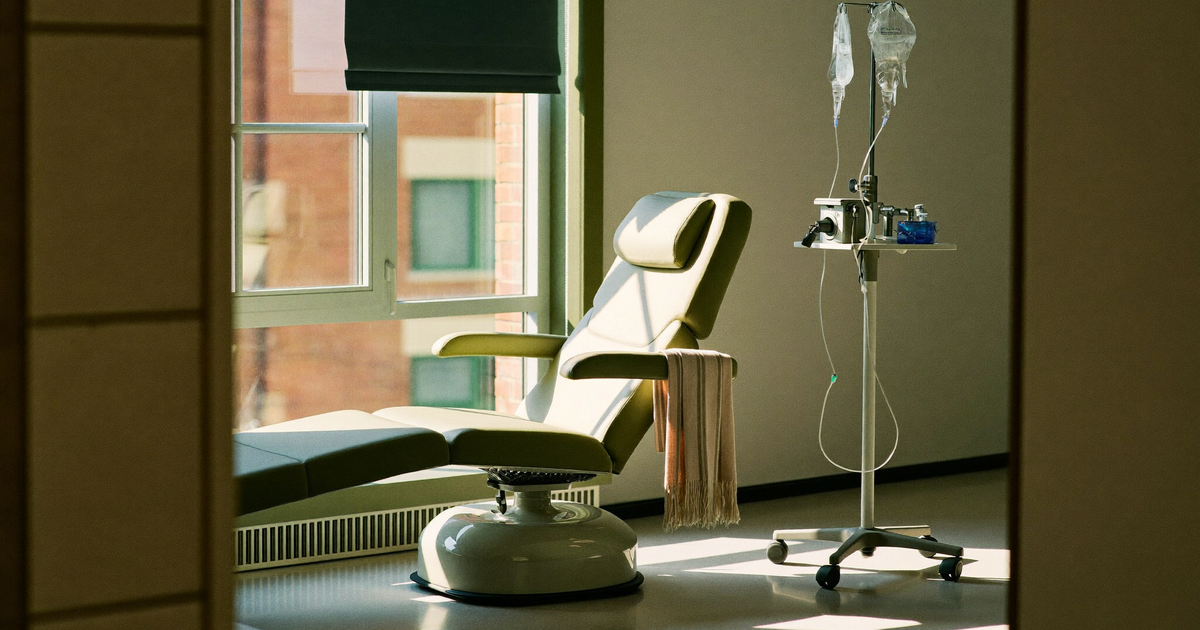
People raise this question for practical reasons as much as medical ones: years of feeling well, infusion or injection fatigue, cost and insurance churn, pregnancy plans, and worry about long-term infection and malignancy risk. These are legitimate inputs, not complaints to be waved away.
It is also a genuine clinical question. The SPARE investigators designed a formal de-escalation trial precisely because of concerns about keeping people on long-term combination therapy (1). Researchers are asking the same thing patients are.
One piece of framing matters for everything below. De-escalation means a planned, monitored reduction decided together with a gastroenterologist, with testing before and after. That is a different thing from stopping on your own, stretching doses to save money, or drifting out of treatment. The outcomes are not comparable.
Set expectations honestly too: there is no guideline rule telling anyone when to stop. The 2025 AGA living guideline on moderate-to-severe Crohn's disease covers which drugs to start and in what order, not when to withdraw them, and it openly names the remaining knowledge gaps (4).
What Happens When Biologics Are Stopped: The Trial Numbers
Across the main datasets, roughly a third to just under half of people with Crohn's relapse within a year or two of stopping an anti-TNF, and the risk keeps climbing with time rather than levelling off. The exact number depends heavily on how remission was defined before stopping and whether other medication was kept.
The Pooled Picture Across 37 Studies
A 2023 meta-analysis of 37 studies found an overall relapse rate of 43 percent in Crohn's disease after anti-TNF discontinuation (3). Broken out by follow-up length, 38 percent relapsed at 1 to 2 years, 53 percent at 3 to 5 years, and 49 percent beyond 5 years (3).
That trajectory is the part worth absorbing. Getting through the first year without trouble is encouraging, but it is not the finish line.
The SPARE Trial: Stopping Infliximab
SPARE randomised patients in steroid-free clinical remission on infliximab plus an immunosuppressant into three groups. At 2 years, relapse occurred in 14 percent of those who continued both drugs and 36 percent of those who stopped infliximab, a hazard ratio of 3.45 (95 percent CI 1.56 to 7.69, p=0.003) (1).
Reassuringly, no deaths or malignancies were recorded in the trial (1).
The EXIT Trial: A Blinded, Placebo-Controlled Withdrawal
EXIT took a stricter approach. All 140 participants stayed on an immunomodulator, withdrawal was blinded and placebo-controlled, and entry required endoscopic and radiological remission. Sustained clinical remission at 12 months was 76 percent in the withdrawal arm versus 84 percent on maintenance, a difference that was not statistically significant (2).
There is a catch. Objective inflammation still crept up quietly: fecal calprotectin above 250 micrograms per gram was found in 33 percent of the withdrawal group versus 13 percent of those who stayed on treatment (2).
So why do the trials seem to disagree? Mostly because of who was let in. EXIT required confirmed endoscopic and radiological healing and kept the immunomodulator running. SPARE required only steroid-free clinical remission. Selection explains much of the gap, which is exactly why "how deep is my remission" is the first question worth asking. As we cover in our guide to flares and remission in Crohn's disease, feeling well and being healed on imaging are not the same state.
Who Has the Lowest Relapse Risk After Stopping Biologics
Research suggests the risk is not evenly spread. The STORI study followed 115 Crohn's patients who stopped infliximab while continuing an antimetabolite and found a 1-year relapse rate of 43.9 percent, but within that group the odds varied enormously by profile (5).
STORI identified six factors linked to relapse (5):
- Male sex
- No previous surgical resection
- Leukocyte count above 6.0 x 10^9 per litre
- Hemoglobin at or below 145 grams per litre
- CRP at or above 5.0 milligrams per litre
- Fecal calprotectin at or above 300 micrograms per gram
The practical payoff is the headline. Patients with no more than two of those six factors, roughly 29 percent of the group, had only a 15 percent risk of relapse within a year (5). That turns a vague "it depends" into something closer to a profile you can actually be measured against.
Depth of remission carries its own weight. In the pooled analysis, requiring endoscopic healing in addition to clinical remission before stopping lowered the Crohn's relapse rate from 45 percent to 36 percent (3).
And in EXIT, baseline calprotectin was the only factor associated with a lower chance of sustained remission (2). That is a large part of why a stool test is usually part of this conversation. Our fecal calprotectin explainer walks through what the thresholds actually mean day to day.
The Finding That Surprised People: De-escalate the Immunosuppressant Instead
For anyone on combination therapy who simply wants fewer drugs, SPARE delivered a result that rarely makes it into patient conversations. The lowest-risk medication to withdraw was not the biologic. It was the immunosuppressant.
SPARE randomised patients on infliximab plus an immunosuppressant three ways: continue both, stop the infliximab, or stop the immunosuppressant (1). Stopping the immunosuppressant produced a 2-year relapse rate of 10 percent, slightly lower than continuing both at 14 percent, and far lower than stopping infliximab at 36 percent (1).
The authors concluded that withdrawing infliximab should only be considered after careful assessment of the risks and benefits for each individual patient, while withdrawing the immunosuppressant could generally be the preferable de-escalation strategy (1).
That said, it is a trade-off and not a free move. The 2025 AGA living guideline still suggests infliximab plus a thiopurine over infliximab alone for moderate-to-severe Crohn's disease (4). Dropping the thiopurine gives something up, and we explore that balance in our guide to combination therapy with a biologic and immunomodulator.
The useful takeaway for a patient appointment is simple: if the goal is fewer medications, ask which drug is actually on the table. There may be a lower-risk one to drop first.
If You Relapse, Does Restarting Work?
Yes, for most people. This is the part of the data that makes the decision feel less like a one-way door, and it deserves as much airtime as the relapse percentages.
In SPARE, 22 of 23 patients who relapsed after infliximab withdrawal regained remission once treatment was resumed or optimised (1). STORI reported that retreatment with infliximab was effective and well tolerated in 88 percent of those who relapsed (5). The meta-analysis found that retreatment with the same anti-TNF induced remission again in 76 percent of Crohn's patients (3).
The honest caveat is that "average" is not "guaranteed". A relapse can still mean a course of steroids, imaging, missed work, and real symptoms for weeks. In a minority of people, response is not fully regained on restarting. Those weeks count, and anyone weighing this should count them too.
How to Have This Conversation With Your Gastroenterologist
Bring questions rather than a conclusion. Four are worth asking directly: how deep is my remission on objective tests, which drug would come off first, how exactly would I be monitored, and what is the plan if inflammation returns.
Before a planned de-escalation, clinicians typically look for steroid-free clinical remission sustained over a meaningful stretch, plus calprotectin, CRP, and imaging or endoscopy to confirm healing rather than relying on how you feel. Healthcare systems differ worldwide in what testing is routinely available and how often, so what gets checked in practice varies by country.
Monitoring afterwards is the part people underestimate. EXIT showed inflammatory markers rising in the withdrawal group well before clinical relapse declared itself (2), which is the whole argument for scheduled testing rather than waiting for symptoms. Drug levels and antibody testing can be part of that picture too, as covered in our guide to therapeutic drug monitoring.
A clinician may also advise against it, and the reasons usually track the evidence: a short time in remission, no prior resection, active inflammatory markers, or a history of severe or complicated disease (1)(5).
One last thing matters more than anything else here. Never stop or space out a biologic without medical advice. Unplanned gaps can drive anti-drug antibodies and loss of response, which is a different and harder problem than planned, monitored withdrawal. If cost or access is the real pressure, that is worth saying plainly to your team, because there are usually other ways to address it.
Frequently Asked Questions
Can you ever stop biologics for Crohn's disease permanently?
Some people do, and stay in remission. Across 37 pooled studies, 57 percent of Crohn's patients had not relapsed after anti-TNF discontinuation overall, though relapse risk kept rising with follow-up, reaching 53 percent at 3 to 5 years (3). Whether it works long term depends heavily on how deep the remission was before stopping and on ongoing monitoring afterwards.
How long should I be in remission before discussing stopping?
There is no guideline number. The 2025 AGA living guideline addresses which drugs to start and sequence, not when to withdraw them (4). In practice, clinicians look for sustained steroid-free clinical remission plus objective evidence of healing on calprotectin, CRP and endoscopy or imaging, since EXIT required confirmed endoscopic and radiological remission at entry (2).
Is it safer to stop the biologic or the immunomodulator?
In SPARE, withdrawing the immunosuppressant was the lower-risk option, with a 2-year relapse rate of 10 percent versus 36 percent after withdrawing infliximab (1). The authors concluded that immunosuppressant withdrawal could generally be the preferable de-escalation strategy (1). It is still a trade-off, because AGA continues to suggest infliximab plus a thiopurine over infliximab alone (4).
What tests predict whether I will relapse?
STORI linked six factors to relapse, including CRP at or above 5.0 milligrams per litre and fecal calprotectin at or above 300 micrograms per gram, and patients with no more than two factors had a 15 percent 1-year relapse risk (5). In EXIT, baseline calprotectin was the only factor associated with a lower chance of sustained remission (2).
Will my biologic still work if I need to restart it?
Usually. In SPARE, 22 of 23 patients who relapsed regained remission after restarting or optimising treatment (1). STORI found retreatment effective and well tolerated in 88 percent (5), and the meta-analysis reported remission re-induced in 76 percent with the same anti-TNF (3). A minority do lose response, so it is not a certainty.
Is stopping covered or encouraged by insurance?
Coverage and access vary enormously between countries and insurers, and some patients find stopping is raised for cost reasons rather than clinical ones. Evidence indicates the decision should rest on depth of remission and individual risk factors (1)(5). If cost is driving the question, it is worth saying so directly so your team can look at other options first.
What happens if I just stop on my own?
That is a different situation from planned withdrawal and carries extra risk. Unplanned gaps in treatment can trigger anti-drug antibodies and loss of response, which can make the medication less effective if you need it again. The relapse and retreatment figures above come from monitored trial settings with testing built in, so they do not describe self-discontinuation.
References
- Louis E, et al. Withdrawal of infliximab or concomitant immunosuppressant therapy in patients with Crohn's disease on combination therapy (SPARE): a multicentre, open-label, randomised controlled trial. The Lancet Gastroenterology & Hepatology, 2023. Read study
- Chaparro M, et al. Withdrawal of antitumour necrosis factor in inflammatory bowel disease patients in remission: a randomised placebo-controlled clinical trial of GETECCU (EXIT study). 2025. Read study
- Long-term clinical outcomes after the discontinuation of anti-TNF agents in patients with inflammatory bowel disease: a meta-analysis. 2023. View on PubMed
- American Gastroenterological Association. AGA Living Clinical Practice Guideline on the Pharmacologic Management of Moderate-to-Severe Crohn's Disease. Gastroenterology, 2025;169(7):1397-1448. Read guideline
- Louis E, et al. Maintenance of remission among patients with Crohn's disease on antimetabolite therapy after infliximab therapy is stopped (STORI). Gastroenterology, 2012;142(1):63-70. View on PubMed
Recommended Resources
Browse ResourcesRelated Articles

HLA-DQA1*05 Genetic Testing for Crohn's Disease Biologics
HLA-DQA1*05 genetic testing predicts anti-drug antibody risk in Crohn's disease patients starting Humira or Remicade. Learn what your test results mean.

Mesalamine for Ulcerative Colitis: Doses, Forms, Side Effects
Mesalamine for ulcerative colitis explained: oral vs rectal forms, once-daily dosing evidence, kidney monitoring, side effects, generics, and when to step up.

Skyrizi Side Effects and Safety for Crohn's Disease
Skyrizi side effects in Crohn's disease: real trial rates, liver enzyme monitoring during IV induction, infection risk, pregnancy data, and what to watch.

Humira Biosimilars in 2026: Every Brand, Interchangeability, Cost
Every FDA-approved Humira biosimilar for Crohn's disease in 2026: all 10 brands, which are interchangeable, high vs low concentration, and real cost data.

Entyvio vs Skyrizi for Crohn's Disease: A Patient Comparison
Entyvio vs Skyrizi for Crohn's disease: how the two drugs work, what their trials showed, safety, dosing burden, and where 2025 AGA guidance puts each.

Rinvoq vs Stelara for Crohn's: Oral JAK or Biologic
Rinvoq vs Stelara for Crohn's disease: a daily pill or an injected biologic. What each trial showed, the boxed warning gap, dosing burden and 2026 costs.