
Crohn's Emergency Room Visits: When to Go, What to Expect

This article is for informational purposes only and does not constitute medical advice. Always consult your healthcare provider before making any changes to your treatment plan.
Most Crohn's emergency room visits involve a CT scan (72% of encounters in one 660-patient study), and 28.5% of those scans find obstruction, perforation, or an abscess, so the useful move is not resisting imaging but asking about low-dose protocols and sharing your prior scans (1).
If you live with Crohn's disease long enough, a Crohn's emergency room visit becomes less a hypothetical and more a question of when. Many of us have sat in a waiting-room chair at 2am, doubled over, wondering whether we overreacted or waited far too long. This guide covers the red flags, what to carry, why scans are so routine, and how to make the visit count.
Key Takeaways
- CT scans were performed in 72% of emergency department encounters among 660 previously diagnosed Crohn's patients (1)
- Of those scans, 28.5% showed bowel obstruction, perforation, or intra-abdominal abscess, and no reliable way was found to predict who would have urgent findings (1)
- Lifetime dose accumulates: 41% of that cohort had one scan, 43% had two to four, and 16% had more than five, with one patient reaching 24 (1)
- Being sent home is now the more common outcome. The admission rate for IBD emergency visits fell from 64.7% in 2006 to 52.6% in 2014 (2)
- Repeat visits are common (46% in one single-center cohort), so the follow-up appointment is the real safety net, not the ED itself (3)
- An unplanned Crohn's emergency room visit is not a personal failure: better regional gastroenterologist access was linked to lower odds of an IBD emergency visit (odds ratios 0.78 and 0.74) (5)

When a Crohn's Flare Becomes an Emergency
The three urgent findings that emergency imaging most often turns up in Crohn's disease are bowel obstruction, perforation, and intra-abdominal abscess (1). Those are the problems an emergency department is built to catch quickly. The harder judgment is everything short of them, because baseline symptoms vary so much between patients that no universal threshold exists.
Red Flags That Mean Go Now
These patterns point toward the complications above and generally warrant urgent assessment:
- Severe, unrelenting pain that differs in character or location from your usual flare pain
- Persistent vomiting with no stool or gas passing, which can signal obstruction
- High fever alongside abdominal pain, particularly on an immunosuppressant
- Abdominal rigidity, or pain so sharp that movement or coughing is intolerable
- Heavy rectal bleeding, dizziness on standing, or a racing heart rate
- Significant dehydration after days of high-volume diarrhea
What matters most is the pattern that is new or different for you, not the presence of pain. Many of us carry a daily background of cramping that would alarm someone else, and emergency clinicians cannot know that unless we say it.
Symptoms Your IBD Team Can Handle by Phone
A gradual increase in stool frequency, worsening but tolerable urgency, moderate fatigue, or a medication question is usually better served by a same-week call to your gastroenterology team than an overnight ED wait. Knowing the difference saves time, saves radiation, and often produces a better decision.
One step worth taking while you are well: ask your gastroenterologist to write a short action plan naming which symptoms warrant the emergency department for you. That decision is far easier made in advance than while you are in pain. Our guide to flares and remission in Crohn's disease sets out the baseline picture.
What to Bring to the Crohn's Emergency Room, and What to Say
The most valuable item you can bring to a Crohn's emergency room visit is a one-page summary of your disease. Emergency clinicians work without your history, often without access to your gastroenterology notes, and under time pressure. A sheet of paper that answers their first ten questions changes the quality of care you receive.
A One-Page Crohn's Summary
Keep a copy in your wallet and a photo on your phone:
- Diagnosis, year of diagnosis, and disease location (ileal, colonic, ileocolonic, perianal)
- Surgical history, including resections, strictureplasty, and any stoma
- Current biologic or immunomodulator with dose and last dose date, using generic names such as infliximab, adalimumab, or ustekinumab
- Other medications, allergies, and any history of abscess or fistula
- Your IBD team's contact number
- Dates and facility of your most recent CT, MRI, or intestinal ultrasound
That last line matters more than it looks. If prior images can be compared, a radiologist can often tell whether a stricture is new or old, which is sometimes the whole question at 3am.
Naming Your Immunosuppression Out Loud
If you take an immunosuppressant, say so explicitly and early, even if it is on your sheet. Immunosuppression changes how fever and abdominal pain are worked up: infection can present with a blunted picture, and an abscess can hide behind a mild-looking exam. Say the drug name, not just "a biologic".
Then offer the sentence that carries the most information: how today differs from your normal. "I usually have four stools a day with cramping; since yesterday, no stool at all, vomiting, pain in a new place" tells a clinician more than any pain score.
Why CT Scans Are So Common in the ED, and What to Ask
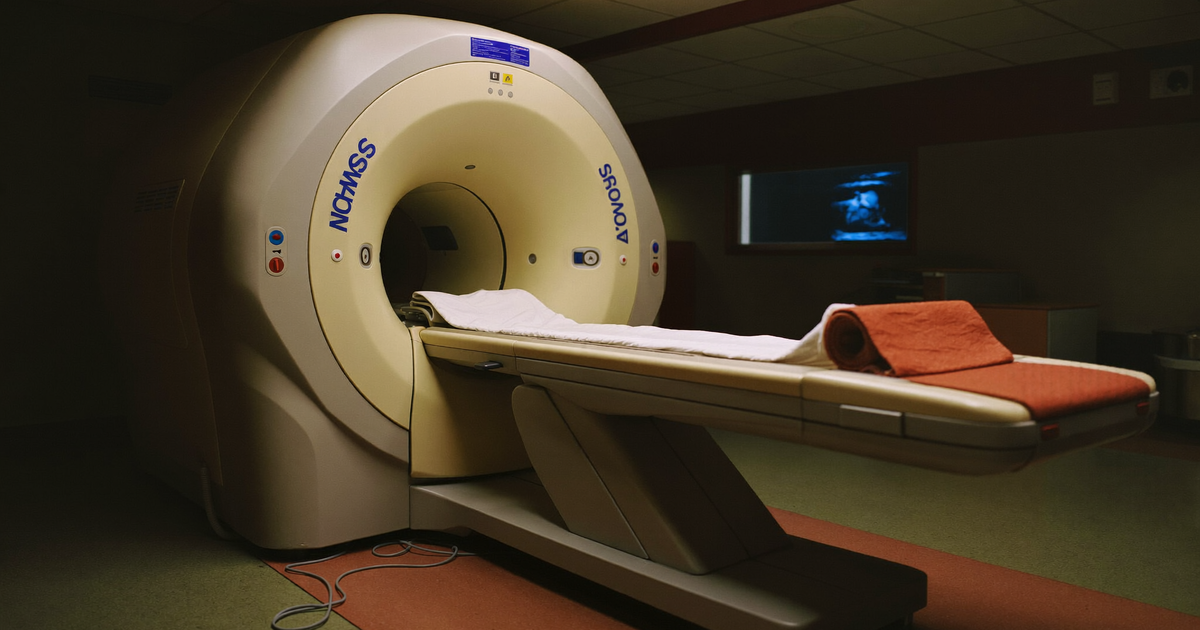
Expect imaging to be offered. Among 660 previously diagnosed Crohn's patients across three hospitals, CT was performed in 72% of emergency department encounters (1), and in a separate cohort of 559 IBD patients, 58% had at least one CT during emergency care (3). This is the norm, not an overreaction to your case.
How Often Scanning Happens, and Why It Is Usually Justified
It would be easy to read those numbers as reflex over-imaging, but the same research argues otherwise. Of the emergency CT scans in that cohort, 28.5% were positive for obstruction, perforation, or abscess, and the authors found that the factors they assessed could not reliably predict which patients would have urgent findings (1). Nearly three in ten scans changed the picture, with no dependable way to spot those patients beforehand.
Cumulative Dose Over a Lifetime of Flares
The genuine concern is not any single scan but the total. Crohn's is often diagnosed young and flares recur, so dose accumulates across decades. In that study, 41% of patients received one CT scan, 43% received two to four, and 16% received more than five, with a maximum of 24 (1). Radiation safety research in Crohn's imaging focuses on exactly this problem (4).
Questions Worth Asking
You are not obstructing care by asking these (4):
- Is a low-dose CT protocol available for this question?
- Could MRI or intestinal ultrasound answer the same question?
- Can my prior imaging be pulled for comparison?
- What are you looking for, and what changes if it is negative?
If a scan finds a stricture, the treatment that follows may be endoscopic rather than surgical. Our article on endoscopic balloon dilation for Crohn's strictures covers what that involves.
Pain, Steroids, and Decisions Made Under Time Pressure
Two medication issues come up repeatedly in emergency care for Crohn's: what is given for pain, and whether steroids are started. Both are decided quickly, by clinicians who are not managing your long-term disease, and both deserve a question from you.
Why NSAIDs Are Usually Avoided
Non-steroidal anti-inflammatory drugs such as ibuprofen and diclofenac are generally avoided in IBD because of their association with flares and mucosal injury, so pain control relies on other options. Paracetamol or acetaminophen is often the first step, with stronger analgesia used cautiously. If opioids are offered, ask about the plan for stopping them. Our guide to chronic pain management in Crohn's disease covers the longer-term picture.
Steroids Started in the ED
Corticosteroids are commonly started during emergency visits for IBD (3). If that is the plan, ask two things: is this a short course, and who will supervise the taper? A course begun overnight can cut across a longer-term plan, so anything started in the ED should reach your gastroenterologist promptly. Ask for the discharge paperwork to state exactly what was given and what imaging was done, so your IBD team is not reconstructing the visit from memory.
If you feel your pain or history is being dismissed, our self-advocacy guide for medical gaslighting in Crohn's disease includes concrete scripts for redirecting that conversation.
Admission, Discharge, and the Follow-Up That Matters
Being discharged is now the more likely outcome. The proportion of IBD emergency visits in the United States ending in admission fell from 64.7% in 2006 to 52.6% in 2014, while the number of such visits rose from 90,846 to 137,946, an increase of 51.8% against a 14.8% rise in all-cause ED visits (2). Crohn's accounted for more than twice as many of these visits as ulcerative colitis (2).
Being Sent Home Is Not Always Reassurance
Discharge means the emergency department ruled out what it was looking for tonight. It does not mean your flare is resolved. In one single-center cohort, 46% of IBD patients had more than one emergency visit (3), which is why the follow-up appointment is the real safety net.
The First Week After
Before you leave the building, try to do three things:
- Book or request a gastroenterology follow-up, ideally within days
- Ask who reviews any pending imaging or lab result, and how you will be told
- Write down what you were told while it is fresh, because instructions given during pain are easy to lose
Preventing the Next Unplanned Visit
Emergency use in IBD is shaped substantially by how reachable specialist care is. A population-based study found that patients in regions with moderate or high access to gastroenterologists had lower odds of an IBD-related emergency visit, with odds ratios of 0.78 and 0.74 compared with low-access regions (5). An unplanned visit is often a signal about access, not a verdict on your self-management.
What Good IBD Programs Do
Quality improvement work through the Crohn's and Colitis Foundation's IBD Qorus programme has reduced urgent care use, hospitalisation, and opioid use with a recognisable set of tools: high-risk patient lists, proactive outreach calls, reserved urgent appointment slots, and patient education (6).
Ask your own practice whether they offer a same-week urgent slot or a nurse advice line (6). In our community, that one piece of information has repeatedly been the difference between a phone call on Tuesday morning and an emergency trip on Monday night. Healthcare systems differ by country, so finding out what exists where you live is worth doing on a good day.
Frequently Asked Questions
When should I go to the ER with Crohn's instead of calling my doctor?
Go now for severe unrelenting pain that is different from your usual flare, persistent vomiting with no stool or gas passing, high fever with abdominal pain (especially on an immunosuppressant), abdominal rigidity, or heavy bleeding with dizziness. These point toward obstruction, perforation, or abscess, the findings emergency imaging most often identifies in Crohn's disease (1). Gradually worsening urgency is usually better handled by a same-week call.
Will I definitely get a CT scan in the emergency department?
Not definitely, but it is likely. CT was performed in 72% of emergency encounters among already-diagnosed Crohn's patients in one 660-patient study (1), and 58% of IBD patients in a separate cohort had at least one emergency CT (3). Rather than resisting, ask whether a low-dose protocol exists, whether MRI or ultrasound could answer the question, and whether prior images can be compared (4).
Should I worry about radiation from repeated CT scans?
It is worth raising, but not a reason to refuse necessary imaging. In one cohort, 16% of Crohn's patients had more than five emergency CT scans and one had 24 (1). Because Crohn's is often diagnosed young, dose accumulates over decades, which is why radiation safety research emphasises low-dose protocols and radiation-free alternatives where they answer the clinical question (4).
What should I bring to the emergency room for a Crohn's flare?
A one-page summary covering your diagnosis, disease location, surgical history, current biologic or immunomodulator with last dose date, allergies, your IBD team's contact details, and the dates and facility of your most recent CT, MRI, or ultrasound. Bring your medication list or the boxes themselves, and a second person to take notes.
Does being discharged mean my flare is not serious?
No. It means the emergency department has excluded the complications it was looking for that night. Discharge is now the more common outcome, with the admission rate for IBD emergency visits falling from 64.7% in 2006 to 52.6% in 2014 (2). Since 46% of patients in one cohort had repeat visits, the follow-up appointment is where flare management actually happens (3).
What should I ask my doctor about before my next flare?
Ask for a written action plan naming which symptoms warrant the emergency department for you, whether the practice holds same-week urgent slots, and whether there is a nurse advice line or direct email for flares (6). Also ask where your most recent imaging is stored, so you can tell an emergency team what to compare against.
Is it my fault if I keep ending up in the emergency department?
No. Emergency use in IBD is driven substantially by access to specialist care. Patients in regions with moderate or high gastroenterologist access had lower odds of an IBD-related emergency visit (odds ratios 0.78 and 0.74) than those in low-access regions (5). Repeat visits are common and reflect how reachable specialist advice is, not personal failure.
References
- Frequency of computed tomography scans in Crohn's disease patients in the emergency department. Inflammatory Bowel Diseases, 2026;32(6):1131-1137. View on PubMed
- Emergency department utilisation for inflammatory bowel disease in the United States from 2006 to 2014. Alimentary Pharmacology and Therapeutics, 2018;47(7):913-921. View on PubMed
- Risk Factors for and Frequency of CT Scans, Steroid Use, and Repeat Visits in Inflammatory Bowel Disease Patients Seen at a Single-Center Emergency Department: A Retrospective Cohort Study. Journal of Clinical Medicine, 2021;10(12):2679. View on PubMed
- Patient radiation safety in imaging in Crohn's disease. British Journal of Radiology, 2026;99(1177):14-23. View on PubMed
- Access to Specialists and Emergency Department Visits in Inflammatory Bowel Disease: A Population-Based Study. Journal of Crohn's and Colitis, 2019;13(3):330-336. View on PubMed
- Crohn's and Colitis Foundation. IBD Qorus: Urgent Care Best Practices. 2026. Read article
Recommended Resources
Browse ResourcesRelated Articles

Crohn's Disease Symptoms Decoded: What Each One Means and When to Call Your Doctor
Learn what each Crohn's disease symptom means and when to contact your doctor. Practical symptom guide for patients managing IBD day to day.

Tips When Traveling with Crohn's Disease: Western World Edition
Discover practical tips for Western World travel with crohn's disease. From packing medications to finding gut-friendly cuisine, make your journey stress-free!

History of Crohn's Disease: Who Discovered It and When
Who discovered Crohn's disease, why it carries Burrill Crohn's name, and the 1932 paper with Ginzburg and Oppenheimer that defined it. The full story.

The Role of Surgery in Crohn's Disease Management: When and Why It's Needed
Learn about the role of surgery in managing Crohn's disease, including when it's necessary, the types of surgeries available, and what patients can expect.

Prior Authorization for Crohn's Disease: An Appeals Guide
Prior authorization for Crohn's disease delays biologics and tests. Learn how denials work, what the 2026 CMS rule changes, and how to win your appeal.

Religious Fasting With Crohn's Disease: A Safety Guide
Religious fasting with Crohn's disease: what Ramadan and Yom Kippur research shows about flare risk, medication timing, and knowing when to break a fast.