
Maltodextrin and Crohn's Disease: What the Evidence Shows

This article is for informational purposes only and does not constitute medical advice. Always consult your healthcare provider before making any changes to your treatment plan.
If you have read about food additives and inflammatory bowel disease, you have probably seen maltodextrin named as something to cut out immediately. The research on maltodextrin and Crohn's disease is real, and some of it is unsettling. It is also more contradictory than the headlines suggest, because the same compound that depletes the protective mucus layer in mice is one of the commonest carbohydrate sources in the liquid formulas that put people with active Crohn's into remission.
Many of us have stood in a supermarket aisle doing this exact calculation, and the honest answer is more useful than a simple avoid-this rule. Here is what the evidence shows, where it is strong, and where it stops.
Key Takeaways
- Maltodextrin markedly increased biofilm formation and epithelial adhesion by the Crohn's-associated bacterium adherent-invasive E. coli LF82 in laboratory culture (4)
- Mice fed maltodextrin-enriched diets developed worse colitis through endoplasmic reticulum stress in mucus-producing goblet cells and reduced mucin-2 (3)
- A February 2026 study using stool from adults with Crohn's in remission found maltodextrin reduced Faecalibacterium, a beneficial butyrate producer, but also reduced Escherichia-Shigella, the opposite of what the earlier bacterial work predicted (1)
- Maltodextrin is among the commonest macronutrient sources in 61 enteral nutrition formulas with proven efficacy in active Crohn's, and remission rates did not differ between formulas containing implicated additives and those without (2)
- No randomized trial has tested whether removing maltodextrin from the diet improves Crohn's disease activity, so there is no evidence-based recommendation to avoid it
- This applies to anyone reading labels out of curiosity, and not to anyone considering stopping a prescribed enteral formula, which is a conversation for your IBD team
What Maltodextrin Actually Is
Maltodextrin is a processed starch, not a sweetener. The US Food and Drug Administration defines it as a nonsweet nutritive saccharide polymer of D-glucose units linked primarily by alpha-1-4 bonds, with a dextrose equivalent below 20, produced by the partial hydrolysis of corn, potato or rice starch (6). In plain terms, manufacturers break starch down part of the way, stopping before it becomes sugar.
It is affirmed as generally recognized as safe, or GRAS, for food use under 21 CFR 184.1444, which is why a product needs no special approval to contain it (6). Regulatory names and permitted uses vary between countries, but maltodextrin is broadly accepted worldwide.
One clarification matters before we go further: maltodextrin is not an artificial sweetener, and it is not an emulsifier. These three categories get lumped together in food-additive conversations, but they do different jobs and have separate bodies of evidence. For the emulsifier question specifically, see our guide to the low emulsifier diet for Crohn's disease and the ADDapt trial results.
Where It Hides in Everyday Food
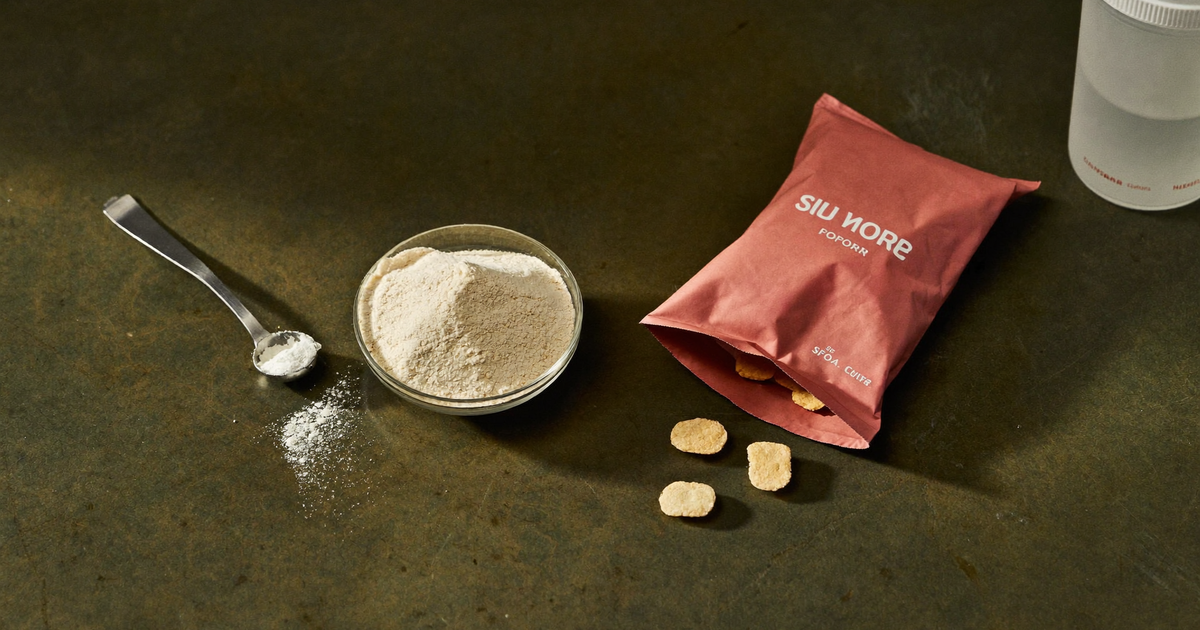
Maltodextrin works as a bulking agent, thickener, carrier and stabilizer, which makes it unusually versatile. It turns up in:
- Sauces, gravies, salad dressings and instant soups
- Crisps, savoury snacks and seasoning blends
- Protein powders, meal replacement shakes and sports drinks
- Sweetener sachets, where it carries the tiny amount of active sweetener
- Powdered drink mixes, and many medications and supplements as a filler
That last category surprises people. If you check your tablet excipients, maltodextrin may well be there.
Why Researchers Started Looking at It in Crohn's
The interest in maltodextrin and Crohn's disease did not come from a dietary survey. It came from a bacterial culture dish.
The Adherent-Invasive E. coli Finding
Adherent-invasive E. coli, usually shortened to AIEC, is frequently isolated from ileal lesions in Crohn's disease (4). That makes any dietary component helping AIEC stick to the gut wall worth investigating.
In a 2012 Cleveland Clinic laboratory study, maltodextrin markedly increased biofilm formation by the Crohn's-associated AIEC strain LF82, and the effect extended to other E. coli strains as well (4). Biofilm matters because bacteria inside one are harder for the immune system and antibiotics to clear.
The researchers also worked out how it happened. The effect required maltodextrin metabolism and the expression of type I pili, the hair-like structures bacteria use to attach, and it increased bacterial adhesion to human intestinal epithelial cell monolayers independently of the receptor CEACAM6 (4). The same study found that malX, a gene essential for maltodextrin metabolism, was more prevalent uniquely in the ileum of people with Crohn's disease compared with controls (4).
That is a coherent mechanistic story, and it is entirely cell and bacterial culture work. Nobody in that study ate maltodextrin, and nothing in it tells us what happens in a living human gut with a working immune system and a mucus layer.
What the Mouse Studies Found
Animal work took the question further, and this is where the findings look genuinely concerning.
Mucus Depletion and ER Stress
In a 2019 study, mice fed a maltodextrin-enriched diet had worse intestinal inflammation in two separate colitis models (3). Propylene glycol and animal gelatin, tested as comparison additives, did not produce that effect, so the result was specific to maltodextrin rather than a general reaction to any additive.
The mechanism involved endoplasmic reticulum stress in goblet cells, the cells that manufacture protective mucus, with reduced expression of mucin-2, the main structural component of that mucus (3). The researchers then did the experiment that makes this convincing: they gave the mice TUDCA, which inhibits endoplasmic reticulum stress, and it prevented the mucus loss and attenuated the colitis (3).
One detail often gets left out. There was no significant change in the mucosa-associated microbiota, so the damage was to the mucus barrier itself rather than to which bacteria were present (3). That is a different kind of harm than the bacterial story from 2012.
Weakened Antimicrobial Defense
An earlier 2014 study pointed in a similar direction. Mice drinking maltodextrin-supplemented water showed breakdown of the antimicrobial mucous layer and higher cecal bacterial loads after oral Salmonella infection (5).
The authors framed maltodextrin as a possible environmental priming factor rather than a cause of disease (5), and that framing deserves to carry through this whole discussion. It describes something that might make a gut more vulnerable to an insult, not something that creates Crohn's disease on its own.
The 2026 Crohn's-Specific Data: More Complicated Than Expected
Until recently there was almost no maltodextrin data using samples from people who actually have Crohn's disease. That changed in February 2026, when a University of Glasgow study ran in vitro faecal fermentations on stool from 6 healthy controls and 6 adults with Crohn's in clinical remission (Harvey Bradshaw Index below 5), testing 12 food additives (1). Carrageenan was among them, and we have a separate guide on that one.
What Changed and What Did Not
Maltodextrin shifted overall microbiome structure in both groups, with an R2 of 6.8 percent in healthy controls (p = 0.001) and 5.1 percent in the Crohn's group (p = 0.004), and it lowered total bacterial load (1). Within those shifts, two findings pull in opposite directions:
- Maltodextrin reduced Faecalibacterium in the Crohn's group. That is unwelcome, because Faecalibacterium produces butyrate and is usually already depleted in Crohn's disease (1).
- Maltodextrin also reduced Escherichia-Shigella abundance in the Crohn's group (1). That is the opposite direction from what the 2012 AIEC work would predict, since Escherichia is the genus that includes the adherent-invasive E. coli strains in question.
The short-chain fatty acid picture was mixed rather than uniformly bad: maltodextrin raised acetate production in both groups and lowered butyrate production in healthy controls (1).
The authors concluded that effects differed only modestly by health status. This also remains a test-tube model of a gut: stool in a fermentation vessel has no mucus layer, no epithelium and no immune system, which are exactly the things the mouse studies implicated.

The Awkward Part: Maltodextrin Is in the Formulas That Work
Here is the finding that rarely appears alongside the mouse data, and it changes how the whole picture reads.
Exclusive enteral nutrition, or EEN, is one of the best-evidenced dietary therapies for active Crohn's disease, particularly in children (2). It means taking all nutrition as a liquid formula for a defined period, and we go through it in detail in our guide to exclusive enteral nutrition for Crohn's disease.
What the EEN Formula Analysis Showed
A 2020 compositional analysis examined 61 EEN formulas with evidence of efficacy in active Crohn's disease. Maltodextrin, milk protein and vegetable or plant oils were the commonest macronutrient sources across those formulas (2).
The additive content was substantial: 56 different food additives across the formulas, a median of 11 per formula, including modified starches in 100 percent, carrageenan in 22 percent, carboxymethyl cellulose in 13 percent and polysorbate 80 in 5 percent (2).
Then came the test that matters. Remission rates did not differ between formulas containing those implicated additives and formulas without them, and the finding held when restricted to formulas used in the randomised controlled trials in the Cochrane meta-analysis (2).
The honest reading is uncomfortable but important: a compound can damage a mouse's mucus layer at research doses and still work as a harmless carbohydrate carrier inside a liquid diet that puts people into remission. Dose, food matrix and what else the diet removes all plausibly matter.
What This Means for Your Own Diet
We want to be plain here. No randomized trial has tested whether removing maltodextrin from the diet improves Crohn's disease activity. There is no evidence-based recommendation to avoid it, and anyone telling you otherwise has gone further than the research allows.
A Reasonable Position
Cutting back on maltodextrin in practice mostly means eating fewer ultra-processed foods, because that is where it lives. Reducing ultra-processed food intake has its own separate and better evidence base in IBD, which we cover in our article on ultra-processed foods and Crohn's disease risk. If you feel better after cutting maltodextrin-heavy products, the benefit may come from the broader dietary change rather than the additive.
A practical middle path looks like this:
- Read labels if it interests you, without building food fear around one additive
- Prioritise your overall dietary pattern and adequate calories over additive avoidance
- Treat maltodextrin as one small factor, not the explanation for your disease
One clear caution: please do not drop a prescribed enteral formula or supplement drink over its maltodextrin content without talking to your IBD team first. The nutrition is the point, and the evidence says those formulas work with the maltodextrin in them.
When Cutting It Back Is Worth Trying
If you track your symptoms and genuinely feel worse with maltodextrin-heavy products, you have reason to reduce them. In our community we have seen people identify consistent personal triggers that no trial has ever studied, and that is worth acting on for you even though it is not trial evidence and may not generalise to anyone else.
The useful distinction is between reducing something because you noticed a pattern in your own body, and avoiding it because the internet told you it causes Crohn's disease. The first is self-knowledge. The second is a claim the research does not support.
Frequently Asked Questions
Is maltodextrin bad for Crohn's disease?
The evidence is genuinely mixed. Laboratory and mouse studies show maltodextrin can increase bacterial biofilm formation and deplete the protective mucus layer (3, 4). But it is also a main carbohydrate source in enteral formulas proven to induce remission in active Crohn's, with no difference in remission rates compared with formulas lacking implicated additives (2). No human trial has tested avoidance.
Should I stop taking my enteral nutrition formula because it contains maltodextrin?
Please talk to your IBD team before changing anything. The 2020 analysis of 61 effective EEN formulas found maltodextrin among the commonest macronutrient sources, and remission rates were no different in formulas without implicated additives (2). The nutrition and the remission effect are why the formula was prescribed.
Is maltodextrin the same as an emulsifier or an artificial sweetener?
No. Maltodextrin is a partially hydrolysed starch, defined by the FDA as a nonsweet nutritive saccharide polymer of D-glucose units with a dextrose equivalent below 20 (6). Emulsifiers such as polysorbate 80 and carboxymethyl cellulose work differently and have their own evidence base, as do artificial sweeteners. The three get grouped together in food-additive discussions, but the research does not transfer between them.
What did the 2026 Crohn's study actually find about maltodextrin?
Using stool from 6 adults with Crohn's in remission and 6 healthy controls, maltodextrin shifted microbiome structure in both groups and lowered total bacterial load (1). In the Crohn's group it reduced Faecalibacterium, a beneficial butyrate producer, but it also reduced Escherichia-Shigella, which runs counter to the earlier adherent-invasive E. coli hypothesis (1). It raised acetate in both groups and lowered butyrate in controls.
How much maltodextrin is in my food, and can I tell?
Labels list maltodextrin as an ingredient but almost never give a quantity, so there is no practical way to total your intake, though ingredient order gives a rough sense of relative amount. The research doses in mouse studies were deliberately high and do not map onto a typical day of eating, which is one reason the animal findings are hard to translate.
What should I ask my doctor or dietitian about maltodextrin?
Useful questions include whether your symptoms suggest a dietary component at all, whether a structured elimination and reintroduction approach makes sense for you, and whether your calorie and protein intake is adequate before you remove any food group. An IBD dietitian is better placed than a general practitioner for this conversation.
References
- Papadopoulou R, et al. In Vitro Effects of Twelve Food Additives on Gut Microbiome and Its Fibre Fermentation Capacity in Adults with Crohn's Disease in Remission and Healthy Controls. 2026. View on PubMed
- Logan M, et al. Analysis of 61 exclusive enteral nutrition formulas used in the management of active Crohn's disease - new insights into dietary disease triggers. Alimentary Pharmacology and Therapeutics, 2020. View on PubMed
- Laudisi F, et al. The Food Additive Maltodextrin Promotes Endoplasmic Reticulum Stress-Driven Mucus Depletion and Exacerbates Intestinal Inflammation. Cellular and Molecular Gastroenterology and Hepatology, 2019. Read study
- Nickerson KP, McDonald C. Crohn's disease-associated adherent-invasive Escherichia coli adhesion is enhanced by exposure to the ubiquitous dietary polysaccharide maltodextrin. PLoS One, 2012. View on PubMed
- Nickerson KP, et al. The dietary polysaccharide maltodextrin promotes Salmonella survival and mucosal colonization in mice. PLoS One, 2014. View on PubMed
- US Food and Drug Administration. 21 CFR 184.1444 - Maltodextrin (GRAS affirmation). Read regulation
Recommended Resources
Browse ResourcesRelated Articles

Red Meat and Crohn's Disease: What the Evidence Shows
Red meat and Crohn's disease: a randomized trial found that cutting it out did not reduce flares. Here is what the evidence supports, and what it does not.

Gluten-Free Diet for Crohn's Disease: What Evidence Shows
Is a gluten free diet for Crohn's disease worth trying? Here is what the research shows on celiac risk, gluten sensitivity, fructans, and who benefits.

Kefir for Crohn's Disease: What Research Really Shows
Can kefir help Crohn's disease? What human trials and microbiome studies show, how it compares to yogurt, how to try it safely, and when to skip it.

Wormwood for Crohn's Disease: What the Evidence Shows
Wormwood (Artemisia absinthium) has been tested in two small Crohn's disease trials. Learn what the evidence shows on remission, TNF-alpha, and safety risks.

Melatonin for Crohn's Disease: What Research Really Shows
Can melatonin help Crohn's disease? What clinical trials and microbiome research show about the benefits, risks, dosing, and safety for IBD patients today.

Riboflavin for Crohn's Disease: What the Evidence Shows
Riboflavin for Crohn's disease showed reduced inflammation and improved symptoms in the RISE-UP trial. Learn about dosing, safety, mechanism, and evidence.