
Exclusive Enteral Nutrition for Crohn's Disease: A Guide

This article is for informational purposes only and does not constitute medical advice. Always consult your healthcare provider before making any changes to your treatment plan.
Exclusive enteral nutrition (EEN) replaces all regular food with a nutritionally complete liquid formula for 6 to 8 weeks and is a first-line treatment for children with active Crohn's disease (4).
When your gastroenterologist mentions replacing all meals with a liquid formula, the reaction is understandable - it sounds extreme. But for many people living with Crohn's disease, exclusive enteral nutrition has been a genuine turning point, calming inflammation, restoring weight, and inducing remission without the side effects of corticosteroids. Whether you are a parent exploring treatment options for a child who was recently diagnosed, or an adult weighing alternatives to steroids, understanding how EEN works - and what the evidence actually shows - can make a daunting conversation with your care team feel far more manageable.
Key Takeaways
- EEN replaces all regular food with a nutritionally complete liquid formula for 6 to 8 weeks and is a first-line treatment for children with active Crohn's disease (4)
- In adults, clinical remission rates of 60 to 86 percent have been reported across studies, though tolerability remains the main barrier (2)
- Meta-analyses found no significant difference in effectiveness between polymeric, elemental, and semi-elemental formulas, so better-tasting polymeric options are generally preferred (2)
- A 2025 randomized trial found 88 percent of young patients tolerated a whole-food diet versus 52 percent who tolerated EEN, highlighting adherence as a key challenge (3)
- Combining maintenance enteral nutrition with anti-TNF therapy produced remission in 69 percent of patients versus 45 percent on the biologic alone (1)
What Is Exclusive Enteral Nutrition?
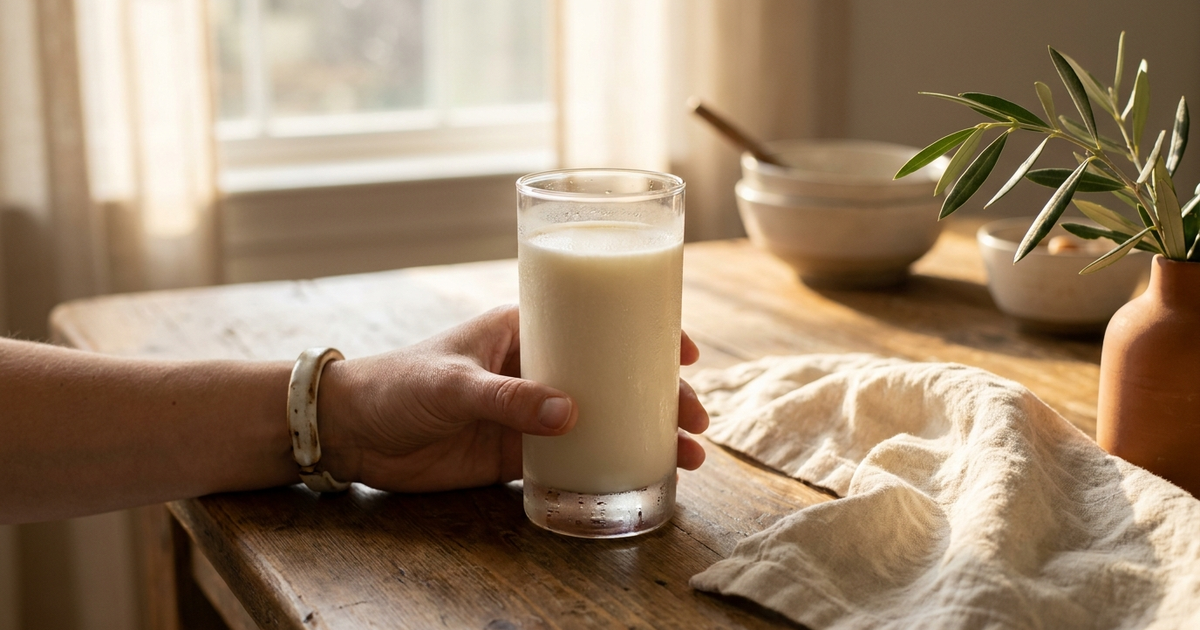
Exclusive enteral nutrition means receiving 100 percent of your daily calories from a nutritionally complete liquid formula, with no regular food allowed for the duration of treatment. It is not a supplement or a meal replacement shake you add to your regular meals - it is a medically supervised dietary therapy designed to induce remission in active Crohn's disease (5). The Crohn's & Colitis Foundation describes EEN as one of the established nutritional support therapies for inflammatory bowel disease.
EEN Versus Partial Enteral Nutrition (PEN)
Where EEN replaces all food, partial enteral nutrition (PEN) supplies roughly 30 to 50 percent of daily calories from formula, with the remaining calories coming from a normal or modified diet (5). PEN is often used as a maintenance strategy after an EEN induction course, or alongside dietary approaches like the Crohn's Disease Exclusion Diet. As we covered in our article on the Crohn's Disease Exclusion Diet (CDED), combining partial enteral nutrition with specific food exclusions has shown promising results in its own right.
Types of Formula: Polymeric, Elemental, and Semi-Elemental
EEN formulas come in three main categories, and the difference lies in how the protein is broken down. Polymeric formulas contain whole (intact) proteins, semi-elemental formulas use partially broken-down proteins, and elemental formulas deliver amino acids - the smallest building blocks of protein. For years, there was debate over whether pre-digested formulas worked better for inflamed guts. The evidence has settled that question: meta-analyses found no meaningful difference in efficacy between the three types (2). Because polymeric formulas taste significantly better and are easier to drink, they are generally the first choice for oral EEN. If you have explored enteral nutrition recipes before, you may recognize some polymeric options from our Modulen shake recipe, which uses one of the commonly prescribed polymeric formulas.
How EEN Calms Crohn's Inflammation
The honest answer is that the exact mechanism is still not fully understood - and researchers are upfront about that. Several leading theories have emerged, however, and they are not mutually exclusive (2).
One prominent explanation is that EEN works by removing dietary triggers. Processed foods, certain additives, emulsifiers, and specific dietary antigens may all contribute to intestinal inflammation in susceptible individuals. By replacing every meal with a controlled, simple formula, EEN essentially eliminates that variable.
A second theory centers on the gut microbiome. EEN appears to shift the composition and metabolic activity of intestinal bacteria, which in turn may influence the inflammatory cascade. The broader relationship between nutrition and gut health is something we have explored in detail in our nutrition and IBD overview.
A third, more practical mechanism is that EEN provides genuine bowel rest while still delivering full nutrition. Unlike fasting or severely restricted diets, the formula ensures patients receive all the macro- and micronutrients they need - addressing both the inflammation and the malnutrition that so often accompanies active Crohn's disease (2).
Who Benefits Most From EEN
EEN is not a one-size-fits-all approach, and the evidence is stronger for some groups than others.
Children and Adolescents
This is where EEN has its strongest footing. The ECCO/ESPGHAN consensus guidelines recommend exclusive enteral nutrition as a first-line induction therapy for children with active luminal Crohn's disease, with 96 percent expert agreement behind that recommendation (4). The preference for EEN over corticosteroids in pediatric patients is not just about inflammation control - it is about protecting growth. Corticosteroids can impair linear growth and bone density in children, while EEN supports both. For parents navigating a new diagnosis, this is a genuinely meaningful distinction. Our guide to Crohn's disease in children and adolescents covers the broader landscape of pediatric treatment decisions.
Adults With Crohn's
In adults, EEN is used less frequently, but it remains a valuable tool. Clinical remission rates of 60 to 86 percent have been reported across studies, with wide variation depending on the patient population and study design (2). In practice, EEN in adults tends to be used as an adjunct to drug therapy, as salvage therapy when medications alone are not achieving adequate control, or in situations where corticosteroids need to be avoided - such as patients with diabetes, osteoporosis, or a history of steroid side effects.
One particularly encouraging finding: a study found that combining maintenance enteral nutrition with anti-TNF therapy produced clinical remission in 69 percent of patients, compared with 45 percent receiving the biologic drug alone (1). That suggests enteral nutrition can amplify the effects of standard medical therapy, not just serve as a standalone alternative.
Before Surgery
EEN also plays an important role in the perioperative setting. Patients heading into bowel surgery often have significant malnutrition, and nutritional optimization beforehand can reduce surgical complications. EEN has been used to improve nutritional status, reduce inflammation, and even help manage fistulas prior to surgical intervention (1).

What to Expect During an EEN Course
A typical EEN induction course lasts 6 to 8 weeks. During that time, all regular food is replaced by the liquid formula. That means no meals, no snacks, no "just a bite" - the exclusivity is the point, and even small amounts of regular food can undermine the therapeutic effect (2).
The formula can be taken by mouth, sipped throughout the day, or - if taste or volume is a significant barrier - delivered through a nasogastric feeding tube. Oral intake is always the first approach, but a tube is not a failure; it is a practical solution that many patients, especially children, find more manageable than forcing themselves to drink large volumes.
Care teams typically check for a clinical response within about 2 weeks. If symptoms are not improving by that point, the guidelines recommend considering alternative treatment rather than extending the course indefinitely (4). This built-in checkpoint is important - it means you are not committing to 8 weeks without knowing whether the approach is working for you.
After the induction course, food is reintroduced gradually. This is not the time to celebrate with a large meal. A structured food reintroduction plan, ideally guided by a dietitian experienced in IBD, helps identify whether certain foods trigger a return of symptoms and builds a sustainable long-term eating pattern. Weekly dietitian support throughout the EEN course itself has been shown to improve adherence and outcomes (2).
The Evidence: How Well Does EEN Work?
Pediatric Outcomes
In children, EEN consistently achieves remission rates comparable to corticosteroids - with the added benefits of supporting growth, improving bone health, and avoiding steroid side effects (4). This is why the major gastroenterology guidelines in Europe and elsewhere recommend it as a first-line therapy ahead of steroids for pediatric Crohn's. EEN can also induce mucosal healing, a deeper measure of disease control than symptom relief alone, and one that is increasingly recognized as the true goal of treatment.
Adult Outcomes
The adult data is more heterogeneous. Clinical remission has been reported in 60 to 86 percent of adult patients, but study designs, patient populations, and definitions of remission vary considerably (2). What is consistent across the literature is that EEN can work in adults - the question is usually not "does it work?" but "can the patient tolerate it for long enough?"
EEN Versus Whole-Food Diets
A 2025 randomized trial brought a new dimension to this conversation. Researchers compared EEN with a whole-food diet in children and young adults with mild-to-moderate Crohn's disease. Both approaches induced remission, but adherence told a very different story: 88 percent of participants tolerated the whole-food diet, compared with just 52 percent who tolerated EEN (3). This trial does not mean EEN is obsolete - it remains more established and more broadly applicable, especially for moderate-to-severe disease. But it does underscore that tolerability is EEN's Achilles' heel, and that whole-food dietary approaches may offer a viable alternative for patients with milder disease who struggle with the idea of giving up all solid food.
Challenges, Practical Tips, and Talking to Your Care Team
Let's be honest: giving up all food for 6 to 8 weeks is hard. Palatability and the social difficulty of watching others eat are the two most-cited barriers to completing EEN (2). The formula does not taste like a milkshake, and mealtimes are deeply social events in every culture. Here are some practical strategies that patients and families have found helpful:
- Chill the formula. Most people find cold formula significantly more palatable than room-temperature formula.
- Sip slowly and spread intake across the day. Rather than trying to drink large volumes at set mealtimes, aim for smaller amounts more frequently.
- Use flavor packets if available. Some formulas come with approved flavor options that can break the monotony.
- Plan around social situations. Let friends and family know what you are doing and why. Many patients find that open communication reduces the awkwardness of not eating at shared meals.
- Ask about nasogastric tube delivery. If the taste or volume is genuinely unbearable, tube feeding - especially overnight - can make the course far more manageable while letting you go about your day without constant sipping.
It is also worth checking insurance coverage and cost early. EEN formulas are medical nutrition products, and coverage varies widely depending on where you live, your insurance plan, and whether the formula is classified as a food or a drug in your country. Your dietitian or care team's social worker can often help navigate this.
Above all, EEN should be supervised by a gastroenterologist and a dietitian experienced in IBD. This is not a do-it-yourself protocol. The monitoring, the food reintroduction plan, and the decision about when to stop or switch approaches all require professional guidance.
Frequently Asked Questions
Is exclusive enteral nutrition safe?
EEN has a strong safety profile when supervised by a gastroenterologist and dietitian. The formulas are nutritionally complete, so patients receive all essential nutrients. Side effects are generally mild and may include bloating, nausea, or altered taste. No serious adverse events directly attributable to EEN have been reported in major studies (2).
How long does it take for EEN to start working?
Most clinical protocols check for a response within about 2 weeks of starting EEN. If symptoms have not begun to improve by that point, guidelines recommend reassessing the treatment plan rather than continuing indefinitely (4). Full induction courses typically run 6 to 8 weeks.
Can adults use exclusive enteral nutrition, or is it only for children?
EEN works in adults as well as children. Clinical remission rates of 60 to 86 percent have been reported in adult studies (2). The main reason EEN is used less often in adults is tolerability - adults tend to find the formula harder to stick with for the full course compared with children, who often have more structured support at home.
Does the type of formula matter?
Multiple meta-analyses have found no significant difference in effectiveness between polymeric, elemental, and semi-elemental formulas (2). Because polymeric formulas taste better and are easier to drink, they are generally the first choice. Your dietitian will recommend a specific product based on availability, taste preference, and any allergies or intolerances.
Can I eat any food at all during EEN?
No. The "exclusive" in exclusive enteral nutrition means 100 percent of calories come from formula. Even small amounts of regular food can reduce the effectiveness of the treatment. Water, black tea, and black coffee are usually permitted, but always confirm with your care team.
Is EEN covered by insurance?
Coverage varies significantly by country and insurer. In some healthcare systems, EEN formulas are fully covered as a medical treatment; in others, they are classified as food products and not reimbursed. It is worth checking coverage before starting and asking your care team's social worker or patient advocate for help if needed.
What happens after the EEN course ends?
Food is reintroduced gradually over several weeks, following a structured plan developed with your dietitian. Many care teams then transition to partial enteral nutrition (PEN) - where you eat regular food but supplement with formula for a portion of your daily calories - as a maintenance strategy to help prolong remission (5).
References
- Konno, M., et al. Enteral Nutrition in Crohn's Disease: A Comprehensive Review of Its Role in Induction and Maintenance of Remission and Perioperative Management in Adult Patients. Nutrients, 2025. Read study
- Wall, C.L., et al. Exclusive enteral nutrition: An optimal care pathway for use in adult patients with active Crohn's disease. Journal of Human Nutrition and Dietetics, 2019. Read study
- Svolos, V., et al. Whole Food Diet Induces Remission in Children and Young Adults With Mild to Moderate Crohn's Disease and Is More Tolerable Than Exclusive Enteral Nutrition: A Randomized Controlled Trial. Gastroenterology, 2025. View on PubMed
- Ruemmele, F.M., et al. Consensus guidelines of ECCO/ESPGHAN on the medical management of pediatric Crohn's disease. Journal of Crohn's and Colitis, 2014. Read study
- Crohn's & Colitis Foundation. Nutritional Support Therapy. 2024. Read article
Recommended Resources
Browse ResourcesRelated Articles

Nutrition and Inflammatory Bowel Diseases (IBD)
Discover the power of nutrition in managing Inflammatory Bowel Diseases (IBD). Learn how to nourish your body for balance and tranquility.

Gluten-Free Diet for Crohn's Disease: What Evidence Shows
Is a gluten free diet for Crohn's disease worth trying? Here is what the research shows on celiac risk, gluten sensitivity, fructans, and who benefits.

Lactose Intolerance in Crohn's Disease: Should You Quit Dairy?
Lactose intolerance in Crohn's disease is real but often overestimated. What the evidence says about dairy, testing, symptoms, and protecting your bones.

Psyllium Fiber for Crohn's Disease: What Research Shows
Is psyllium safe with Crohn's? What the research shows about soluble fiber, the benefits, correct dosing, and when strictures make it a bad idea.

Kefir for Crohn's Disease: What Research Really Shows
Can kefir help Crohn's disease? What human trials and microbiome studies show, how it compares to yogurt, how to try it safely, and when to skip it.

Niacin (Vitamin B3) for Crohn's Disease: A Patient Guide
Niacin (vitamin B3) deficiency is common in Crohn's disease. Learn how malabsorption triggers pellagra, spot early skin signs, and pick safe daily doses.