
Specific Carbohydrate Diet for Crohn's: What Research Shows

This article is for informational purposes only and does not constitute medical advice. Always consult your healthcare provider before making any changes to your treatment plan.
In the randomized DINE-CD trial, the Specific Carbohydrate Diet and the Mediterranean diet produced nearly identical symptomatic remission rates in adults with mild-to-moderate Crohn's disease (46.5% versus 43.5%) (1), so the SCD is best used alongside medical treatment rather than as a replacement.
If you have spent any time in online Crohn's disease communities, you have almost certainly come across strong opinions about the specific carbohydrate diet Crohn's disease connection. Some patients swear by it; others tried it and found the restrictions unsustainable. What has been harder to find, until recently, is a clear-eyed look at what the randomized trial data actually says. That is what this article is about - not hype, not dismissal, but the evidence laid out honestly so you can have a better conversation with your care team.
We will walk through what the SCD is, what the landmark DINE-CD trial found when it compared the diet head-to-head with a Mediterranean diet, what the pediatric data shows, how the diet may affect the gut microbiome, and the practical realities of living on the SCD day to day.
Key Takeaways
- The DINE-CD trial found that the SCD and the Mediterranean diet produced nearly identical symptomatic remission rates in adults with mild-to-moderate Crohn's disease (46.5% vs. 43.5%) (1)
- Fecal calprotectin and C-reactive protein responses were also similar between diets, with neither achieving dramatic objective inflammation improvements (1)
- In a small pediatric trial, all 10 children who completed 12 weeks across SCD, modified SCD, and whole-foods arms reached clinical remission (2)
- Adherence to the SCD dropped notably once participants had to prepare meals on their own, highlighting the diet's practical demands (1)
- The SCD is not a substitute for medication in moderate-to-severe Crohn's disease and works best as part of a broader treatment plan guided by a gastroenterologist and registered dietitian
What the Specific Carbohydrate Diet Is and Where It Came From
The SCD restricts complex carbohydrates and favors monosaccharides - simple, single-molecule sugars - on the theory that they are easier to absorb in an inflamed gut. By starving certain gut bacteria of their preferred fuel, the diet aims to shift the intestinal environment toward less inflammation.
Origins of the SCD
The diet traces back to Dr. Sidney Haas in the mid-twentieth century and was later popularized by Elaine Gottschall in her book on the subject. For decades, the SCD lived almost entirely in the patient community, passed along through forums, Facebook groups, and personal testimonials. It is important to acknowledge that many people reported genuine benefit long before formal trials existed - but it is also important to note that personal experience, however powerful, is not the same as controlled evidence. As we have explored in our overview of nutrition and inflammatory bowel diseases, diet plays a real role in IBD management, and structured diets deserve rigorous study.
Foods Allowed and Foods Excluded
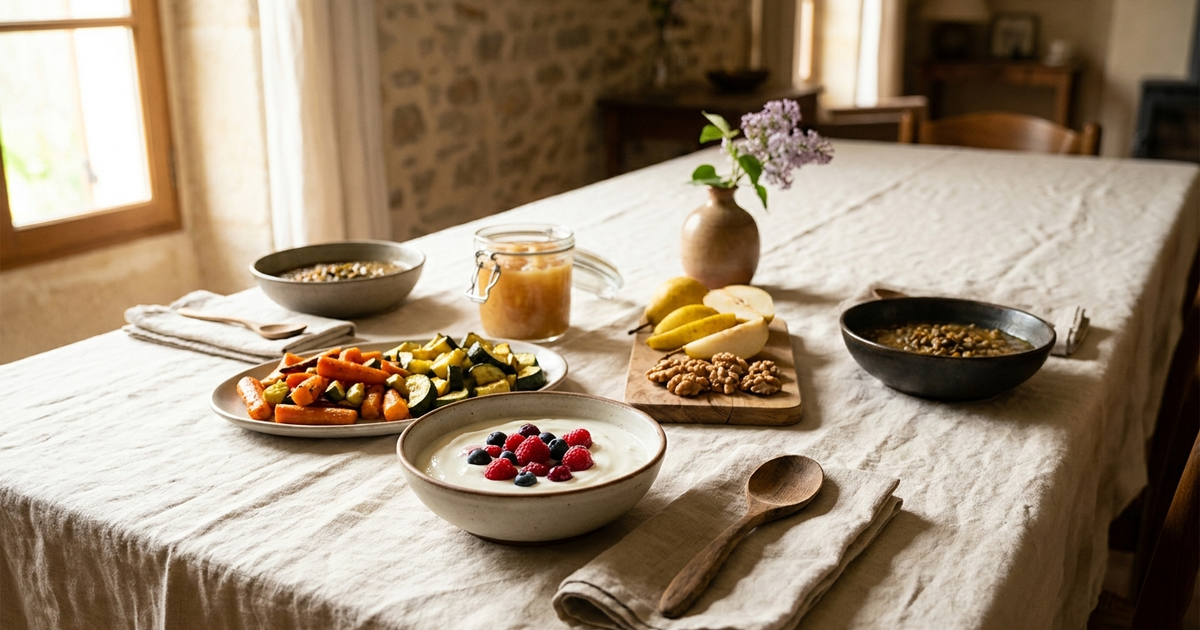
The SCD eliminates all grains (wheat, rice, corn, oats), most sugars (table sugar, maple syrup, agave - though honey is allowed), most dairy products, and nearly all processed or packaged foods. What remains includes meats, fish, eggs, most fruits, non-starchy vegetables, certain legumes (lentils and split peas after proper preparation), hard cheeses aged over 30 days, and homemade yogurt fermented for at least 24 hours to reduce lactose content.
In practice, this means almost every meal is cooked from scratch. There is no grabbing a granola bar or ordering a sandwich. For some patients, the structure feels empowering. For others, it feels like a second full-time job.
The DINE-CD Trial: SCD Compared to the Mediterranean Diet in Adults
Until the DINE-CD trial, most evidence for the SCD came from case series, small cohorts, and community testimony. DINE-CD changed that by putting the SCD diet for Crohn's head-to-head against another well-studied dietary pattern in a properly randomized design.
How the Trial Was Designed
DINE-CD randomized 194 adults with mild-to-moderate Crohn's disease to either the SCD or the Mediterranean diet for 12 weeks (1). For the first 6 weeks, participants received prepared meals delivered to their homes, removing most of the burden of food preparation. For weeks 7 through 12, they were on their own, following dietary guidelines but sourcing and cooking their own food.
This design was intentional. The investigators wanted to see what happened under ideal conditions (meal delivery) and under real-world conditions (self-managed). It is one of the things that makes the trial so useful for patients weighing whether to try this diet.
Primary and Secondary Outcomes
Symptomatic remission at week 6 - the primary endpoint - was 46.5% in the SCD group versus 43.5% in the Mediterranean diet group, a difference so small it was not statistically significant (P = 0.77) (1). In other words, both diets helped a meaningful number of participants feel better, but the SCD was not superior.
On the objective inflammation front, the results told a similar story. Fecal calprotectin response was 34.8% with the SCD versus 30.8% with the Mediterranean diet - again, not a significant difference (1). C-reactive protein response was uncommon in both groups, at just 5.4% with the SCD and 3.6% with the Mediterranean diet (1).
The Crohn's and Colitis Foundation summary of the trial noted that both diets improved symptoms and quality of life, while highlighting that the Mediterranean diet carries broader cardiovascular evidence and may be easier for most patients to maintain long term (3).
What the Pediatric Evidence Says About SCD for Crohn's
Adults are not the only population studied. Parents of children with Crohn's disease often turn to dietary interventions when the idea of long-term immunosuppression feels overwhelming, and researchers have begun to generate data specifically for this group.
Suskind 2020 Randomized Diet Trial
A 2020 randomized trial enrolled children aged 7 to 18 with mild-to-moderate Crohn's disease and assigned them to standard SCD, modified SCD (which allowed rice and oats), or a whole-foods diet for 12 weeks (2). All 10 children who completed the study achieved clinical remission, with Pediatric Crohn's Disease Activity Index (PCDAI) scores dropping sharply. In the SCD group specifically, mean PCDAI fell from 23.5 to 1.9 (2). Mean C-reactive protein in the SCD arm fell from 1.3 to 0.9 mg per dL (2).
These are encouraging numbers, and they mattered to the families involved. But the sample size - 10 completers across three diet arms - is too small to draw firm generalizable conclusions. The study was designed as a pilot, and it succeeded in showing the concept was worth studying further, not that the SCD is proven to work in children as a rule.
Earlier Pediatric Cohorts
Before the Suskind trial, several observational cohorts reported clinical and laboratory improvements in children following the SCD. Some showed drops in inflammatory markers and symptom scores. However, these studies did not consistently demonstrate mucosal healing on imaging or endoscopy, which is the deeper benchmark gastroenterologists use to assess whether inflammation is truly under control rather than just symptomatically masked.

How the SCD May Affect the Gut Microbiome
Part of what makes the SCD intellectually appealing is its mechanistic story. The diet is not just about avoiding "bad" foods - it is built on a specific hypothesis about what happens in the gut when certain carbohydrates are removed.
The Microbiome Hypothesis Behind the Diet
The SCD's proposed mechanism centers on shifting the gut microbiome away from organisms that thrive on poorly absorbed complex carbohydrates. In an inflamed gut, the theory goes, undigested starches and disaccharides fuel bacterial overgrowth and fermentation, producing byproducts that worsen inflammation. By restricting these substrates, the diet aims to starve those organisms and allow a healthier microbial balance to emerge. We have written about the broader relationship between gut microbiome diversity and Crohn's disease progression if you want to go deeper.
What Studies Have Actually Measured
Metabolomic analyses in pediatric SCD studies showed reduced starch breakdown activity and shifts in amino acid metabolism, suggesting the diet does change what gut bacteria are doing at a biochemical level. However, microbiome diversity changes have been mixed across studies. Some showed increased diversity in SCD participants, while others found comparable diversity between SCD and control groups.
This inconsistency is important to acknowledge honestly. The microbiome field is still developing the tools and frameworks to interpret these findings reliably, and most diet-microbiome trials in IBD have been small or conducted at single centers. The biology is suggestive, not conclusive.
Practical Realities: Living on the SCD
Research outcomes matter, but so does the lived experience of actually following a restrictive Crohn's disease elimination diet for weeks or months. Many of us in the Crohn's community know that a diet is only as good as your ability to sustain it.
Cost, Time, and Cooking Demands
The SCD requires almost all meals to be prepared from scratch. There are very few compliant packaged or convenience foods available. Grocery costs tend to rise because the diet relies heavily on fresh meats, fruits, vegetables, nuts, and homemade preparations like 24-hour yogurt. Time spent in the kitchen increases substantially.
For patients who enjoy cooking and have the time and financial flexibility, this can feel manageable. For those juggling work, family, fatigue, and the unpredictability of Crohn's symptoms, the demands can become a source of stress that undermines the very benefit the diet is supposed to provide.
Adherence and Burnout
The DINE-CD trial provided a real-world illustration of this challenge. During the first 6 weeks, when prepared meals were delivered, adherence was high. After week 6, when participants transitioned to self-managed meals, adherence declined notably (1). This pattern is not unique to the SCD - any restrictive dietary protocol faces similar drop-off - but it is especially pronounced with a diet that eliminates as many food categories as the SCD does.
Eating out becomes an exercise in interrogation. Traveling requires packing food or finding compliant options in unfamiliar places. Shared meals with friends and family can feel isolating. These are not trivial side effects. The emotional and social costs of dietary restriction are real, and many patients underestimate them at the start.
Working with an IBD-trained registered dietitian can help prevent unintended weight loss and nutrient gaps - both common pitfalls when major food groups are removed. A dietitian can also help you decide whether a modified version of the SCD, which allows a few additional foods like rice, might offer a more sustainable middle ground.
How Patients and Clinicians Can Approach SCD Today
Given everything the research shows - and everything it does not yet show - where does the SCD fit in a Crohn's treatment plan in 2026?
When SCD May Be Worth Discussing
The SCD is most reasonably considered for adults or children with mild-to-moderate Crohn's disease who are interested in dietary approaches as a complement to their existing treatment. It makes the most sense as part of a plan developed with your gastroenterologist and a registered dietitian, with objective markers like fecal calprotectin tracked over time to see whether the diet is actually making a measurable difference.
If you are comparing structured diets, the DINE-CD data suggests that the SCD vs Mediterranean diet IBD comparison does not clearly favor the SCD. The Mediterranean diet produced comparable symptom improvement and is generally easier to follow, more affordable, and backed by decades of cardiovascular and longevity research. We covered the Mediterranean approach in detail in our article on the Mediterranean diet for Crohn's disease.
That said, some patients feel genuinely better on the SCD than on other approaches, and individual response matters. The data tells us group averages; your body is not an average.
Important Cautions and Gaps
The SCD is not a substitute for medication in moderate-to-severe Crohn's disease. The trials that exist have generally enrolled mild-to-moderate cases, and there is no evidence supporting the SCD as a standalone therapy for more aggressive disease.
Stopping medications to attempt diet-only control of Crohn's disease has been linked to disease worsening in clinical experience and is not supported by current trial data. This is a point worth stating plainly, because online communities sometimes encourage medication-free approaches that sound empowering but carry real risk.
If symptoms do not clearly improve within 8 to 12 weeks on the SCD, the diet and the rest of the treatment plan should be revisited with your care team rather than tightened indefinitely. Other structured diets, such as the Crohn's Disease Exclusion Diet (CDED), may be worth exploring if the SCD has not delivered results.
Frequently Asked Questions
Is the Specific Carbohydrate Diet proven to work for Crohn's disease?
The SCD improved symptoms in roughly 46% of adults with mild-to-moderate Crohn's disease in the DINE-CD trial, but the Mediterranean diet achieved nearly identical results (43.5%) (1). The diet helps some patients, but it is not proven to be superior to less restrictive alternatives, and objective inflammation markers improved modestly in both groups.
Can the SCD replace my Crohn's medications?
No. The clinical trials that studied the SCD enrolled patients with mild-to-moderate disease, and the diet has not been tested as a replacement for medication in moderate-to-severe Crohn's. Stopping medications to rely on diet alone has been associated with disease worsening and is not recommended by current guidelines.
Does the SCD work for children with Crohn's disease?
A small 2020 pediatric trial showed promising results, with all 10 children who completed 12 weeks reaching clinical remission (2). However, the sample size was very small, and larger studies are needed before the SCD can be broadly recommended for pediatric patients. Any dietary intervention in children should be supervised by a pediatric gastroenterologist and dietitian.
How does the SCD compare to the Mediterranean diet for Crohn's?
In the DINE-CD trial, the two diets produced statistically similar rates of symptomatic remission, calprotectin response, and CRP response (1). The investigators noted that the Mediterranean diet may be easier to maintain long term and has stronger supporting evidence for cardiovascular health, making it a reasonable first choice for many patients (3).
What are the hardest parts of following the SCD?
The biggest challenges are the time required for meal preparation, the cost of fresh whole foods, and the social difficulty of eating out or sharing meals. Adherence in the DINE-CD trial dropped after prepared meal delivery ended at week 6 (1), reflecting how much harder the diet becomes when you are managing it entirely on your own.
How long should I try the SCD before deciding if it works?
Most clinicians and researchers suggest giving a structured diet 8 to 12 weeks with objective monitoring - such as fecal calprotectin testing - before drawing conclusions. If symptoms and markers have not improved in that window, the diet should be reassessed rather than made more restrictive.
Should I work with a dietitian while on the SCD?
Yes. An IBD-trained registered dietitian can help you avoid nutrient deficiencies, monitor your weight, adjust the diet to your specific needs, and determine whether a modified version of the SCD might work better for your situation. Dietary interventions are most effective when they are part of a coordinated care plan.
References
- Lewis JD, et al. A Randomized Trial Comparing the Specific Carbohydrate Diet to a Mediterranean Diet in Adults With Crohn's Disease. Gastroenterology, 2021. Read study
- Suskind DL, et al. The Specific Carbohydrate Diet and Diet Modification as Induction Therapy for Pediatric Crohn's Disease: A Randomized Diet Controlled Trial. Nutrients, 2020. Read study
- Crohn's and Colitis Foundation. Mediterranean Style Diet and Specific Carbohydrate Diet Can Improve Symptoms of Patients with Crohn's Disease. 2021. Read article
- Patient-Centered Outcomes Research Institute. Comparing Two Diets to Decrease Symptoms from Crohn's Disease - The DINE-CD Study. 2021. Read summary
- GI Nutrition Foundation. Specific Carbohydrate Diet (SCD) for IBD. 2024. Read article
Recommended Resources
Browse ResourcesRelated Articles

Mediterranean Diet for Crohn's Disease: What Research Shows
Discover how the Mediterranean diet can help manage Crohn's disease symptoms, reduce inflammation, and improve gut health based on recent clinical evidence.

Gluten-Free Diet for Crohn's Disease: What Evidence Shows
Is a gluten free diet for Crohn's disease worth trying? Here is what the research shows on celiac risk, gluten sensitivity, fructans, and who benefits.

Psyllium Fiber for Crohn's Disease: What Research Shows
Is psyllium safe with Crohn's? What the research shows about soluble fiber, the benefits, correct dosing, and when strictures make it a bad idea.

Kefir for Crohn's Disease: What Research Really Shows
Can kefir help Crohn's disease? What human trials and microbiome studies show, how it compares to yogurt, how to try it safely, and when to skip it.

Melatonin for Crohn's Disease: What Research Really Shows
Can melatonin help Crohn's disease? What clinical trials and microbiome research show about the benefits, risks, dosing, and safety for IBD patients today.

Mastic Gum for Crohn's Disease: What the Research Shows
Mastic gum for Crohn's disease: what small trials say about CDAI reduction, IL-6, CRP, dosing, side effects, and whether this ancient resin actually helps.