
IBD-AID Diet for Crohn's: Anti-Inflammatory Eating Guide

This article is for informational purposes only and does not constitute medical advice. Always consult your healthcare provider before making any changes to your treatment plan.
The IBD-AID diet for Crohn's is a structured anti-inflammatory eating plan developed at UMass Chan Medical School that blends the Specific Carbohydrate Diet with gut-friendly probiotics and prebiotics, with early data suggesting it can reduce symptoms and help some patients step down medications.
If you have been searching for a structured, evidence-based way to use food as a partner in managing Crohn's disease, the IBD-AID diet for Crohn's deserves a close look. Developed at UMass Chan Medical School, this anti-inflammatory eating plan blends ideas from the Specific Carbohydrate Diet with a modern focus on gut-friendly probiotics and prebiotics - and early clinical data suggests it can meaningfully reduce symptoms and even help some patients step down their medications.
In this guide, we walk through exactly what the IBD-AID diet is, how its three phases work in practice, what the research actually shows (including its limitations), and how to explore it safely with your care team.
Key Takeaways
- In the original 2014 case series, Crohn's patients on IBD-AID saw their Harvey Bradshaw Index drop from 11 to 1.5 after at least 4 weeks (1)
- 60% of 40 IBD patients offered IBD-AID reported a good or very good response to the diet (1)
- All 11 closely followed patients were able to reduce at least one IBD medication while on the diet (1)
- IBD-AID is designed as an adjunct to medical therapy, not a replacement for prescribed treatments
- The 2024 AGA Clinical Practice Update does not yet specifically endorse IBD-AID, favoring Mediterranean and CDED patterns (5)
- Larger randomized controlled trials are still needed before IBD-AID can be considered a standard recommendation
What Is the IBD-AID Diet?
The IBD-AID - short for Inflammatory Bowel Disease Anti-Inflammatory Diet - is a structured eating plan that restricts certain carbohydrates while actively emphasizing foods that support a healthier gut microbiome. It was created by Barbara Olendzki, RD, MPH, at the UMass Chan Medical School Center for Applied Nutrition, specifically for patients with inflammatory bowel disease (1).
The core idea is straightforward: reduce foods that may feed harmful gut bacteria and increase inflammation, while adding foods that nourish beneficial microbes and calm the immune response. In practice, this means cutting out refined sugars, most wheat products, and processed foods, while leaning into probiotic-rich and prebiotic-rich options at every meal (3).
Origins at UMass
The diet grew out of clinical observations that many IBD patients improved when following some form of carbohydrate restriction, but that existing plans like the Specific Carbohydrate Diet did not fully account for the growing science around the gut microbiome. Olendzki and her team at UMass built on the SCD framework - as we explored in our article on the Specific Carbohydrate Diet for Crohn's - by adding a deliberate focus on pro- and prebiotic foods to actively reshape the microbial environment in the gut (3).
How It Differs From SCD
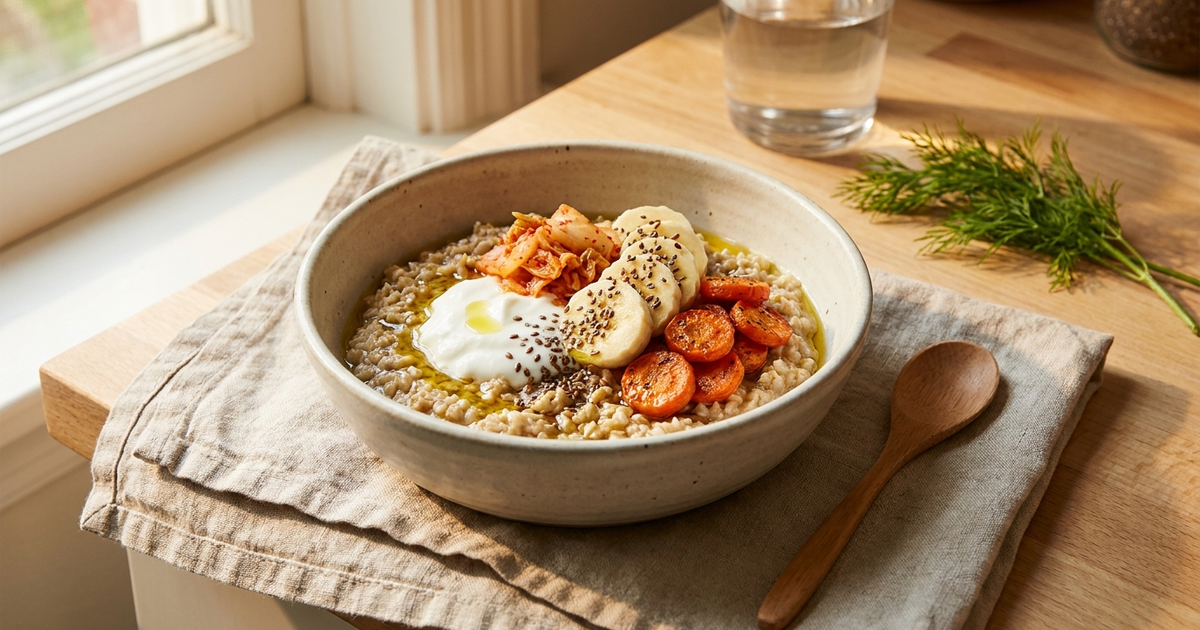
While IBD-AID shares the SCD's emphasis on removing complex carbohydrates that may be poorly absorbed, it departs in important ways. The SCD focuses primarily on exclusion. IBD-AID adds a second pillar: inclusion of specific foods designed to support beneficial gut bacteria. Think plain yogurt, kefir, kimchi, miso, and sauerkraut on the probiotic side, and steel-cut oats, bananas, flax seeds, and garlic on the prebiotic side (3). If you are interested in why those microbial communities matter so much, our piece on probiotics and prebiotics for gut health digs deeper into that science.
The 3 Phases of IBD-AID
One of the most practical features of IBD-AID is that it does not ask you to follow a single rigid list of allowed foods forever. Instead, the diet uses three phases that progress with your symptoms and tolerance, not on a fixed calendar (3). You move forward when your body is ready, not when the clock says so.
Phase 1: Active Symptoms
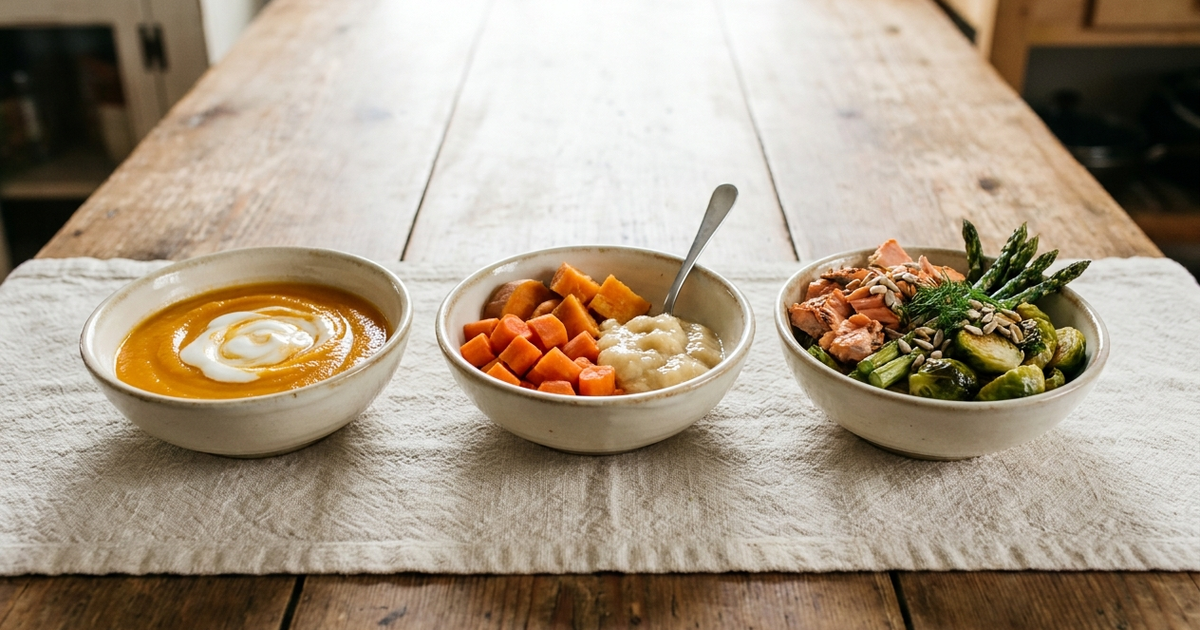
Phase 1 is designed for periods when you are in an active flare or experiencing significant symptoms. Foods are soft, pureed, or well-cooked to reduce the mechanical work your inflamed gut has to do. You might eat smooth soups, well-cooked vegetables, ground lean meats, yogurt, and soft fruits like ripe bananas. Raw vegetables, nuts, seeds in whole form, and fibrous textures are set aside for now. The goal is to calm things down and give your gut a gentler workload while still delivering probiotic and prebiotic benefits.
Phase 2: Reintroduction
As symptoms ease, Phase 2 reintroduces more texture and variety. Soft-cooked vegetables with more structure, nut butters, and a wider range of fermented foods come back into the rotation. This phase is about testing your tolerance gradually - adding one or two new foods at a time and watching how your body responds over a few days before adding more.
Phase 3: Maintenance
Phase 3 is the long-term eating pattern. By this point, you have identified which foods work well for you and which ones do not. The diet expands to include a fuller variety of whole foods - lean proteins, omega-3-rich fish, healthy fats, a broader range of fruits and vegetables, and fermented foods as daily staples. Wheat, lactose, refined sugar, corn, and heavily processed foods generally remain off the list, but the overall eating experience is much less restrictive than Phase 1 (3).
Foods to Include and Foods to Avoid
Understanding which foods belong in your kitchen - and which ones to set aside - is the most actionable part of IBD-AID. The diet draws a clear line between ingredients that tend to reduce gut inflammation and those that may feed it.
Encouraged Foods
The IBD-AID diet actively promotes several food categories (3):
- Probiotic foods: plain yogurt (if tolerated), kefir, kimchi, miso, sauerkraut, and other naturally fermented options
- Prebiotic-rich foods: steel-cut oats, bananas, flax seeds, chia seeds, garlic, onions (cooked in Phase 1), and leeks
- Lean proteins: chicken, turkey, fish (especially omega-3-rich varieties like salmon and sardines), and eggs
- Healthy fats: olive oil, avocado, nut butters (Phase 2 onward), and omega-3 sources
- Soluble fiber sources: well-cooked carrots, squash, sweet potatoes, and oatmeal
Foods to Limit
On the other side, IBD-AID asks you to reduce or eliminate (3):
- Lactose: except for fermented dairy like yogurt and aged cheeses, which are lower in lactose
- Wheat and gluten-containing grains: replaced with oats, rice, and other tolerated grains
- Refined sugar: including high-fructose corn syrup and sugary processed foods
- Corn: and corn-derived products
- Heavily processed foods: packaged snacks, fast food, and items with long ingredient lists of additives
The underlying principle is to reduce pro-inflammatory carbohydrates and saturated fats while building meals around foods that actively support microbial diversity and gut barrier integrity.
What the Research Shows
The honest answer is that the evidence for IBD-AID is promising but still early. It is important to know both what the studies found and where the gaps remain.
The Original Case Series
The most cited study is a 2014 case series from UMass, published in Nutrition Journal, which followed 40 IBD patients offered the IBD-AID (1). Of those 40 patients, 13 (33%) declined to try the diet at all - a reminder that any restrictive eating plan faces real-world adherence challenges. Among the 27 who did try it, 24 (60% of the original 40) reported a good or very good response.
The standout finding came from the 11 patients who were followed closely for at least 4 weeks. In that group, the mean Harvey Bradshaw Index - a standard measure of Crohn's disease activity - dropped from 11 (moderately active disease) to 1.5 (clinical remission) (1). Even more strikingly, all 11 of those patients worked with their gastroenterologists to downscale at least one IBD medication during the study period (1).
Those are meaningful numbers, but they come with important caveats: this was not a randomized controlled trial, there was no control group eating a different diet, the sample was small, and patients who self-selected into the diet may have been more motivated than average.
Newer Trials and Limitations
More recent research has explored related anti-inflammatory dietary strategies. A 2024 pilot randomized controlled trial published in the European Journal of Clinical Nutrition studied a related approach - the IBD-MAID (Modified Anti-Inflammatory Diet), which emphasizes reducing food additives alongside anti-inflammatory eating (4). That trial achieved 92% adherence over 8 weeks and showed within-group improvements in symptoms, quality of life, and fecal calprotectin levels (4). However, between-group differences were not statistically significant, likely due to the small sample size inherent in a pilot study.
It is also worth noting what the professional guidelines say right now. The 2024 AGA Clinical Practice Update on diet and IBD - a key reference document for gastroenterologists - does not yet specifically name IBD-AID among its endorsed dietary approaches (5). Instead, it emphasizes a Mediterranean dietary pattern and the Crohn's Disease Exclusion Diet (CDED) as the options with the strongest current evidence base. We have covered the CDED in detail in our guide to the Crohn's Disease Exclusion Diet, and you can explore how the Mediterranean diet applies to Crohn's as well.
This does not mean IBD-AID is dismissed - it means larger, well-designed randomized trials are needed before professional bodies feel confident placing it alongside these other approaches.
How to Try IBD-AID Safely
If the concept resonates with you, the most important step is not rushing to Phase 1 on your own. Dietary interventions for IBD require thoughtful planning to avoid unintended consequences.
Working With a Dietitian
Talk with your gastroenterologist before making any significant dietary changes. IBD-AID restricts gluten, most dairy, and processed carbohydrates, which can create nutritional gaps if not carefully managed (2). A registered dietitian familiar with IBD can help you design meals that meet your caloric and micronutrient needs in every phase, monitor for deficiencies in iron, calcium, B12, and vitamin D, and adjust the plan based on your specific disease location and severity.
This is especially important because IBD-AID is an adjunct therapy - it works alongside your prescribed medications, not instead of them (1). No patient in the original case series stopped all medication; they reduced dosages in consultation with their doctors.
Tracking Progress
If you and your care team decide to explore IBD-AID, consider tracking several markers along the way:
- Daily symptoms: bowel frequency, pain levels, energy, and any new foods introduced
- Fecal calprotectin: if your gastroenterologist monitors this biomarker, it provides an objective measure of gut inflammation separate from how you feel
- Weight and nutritional labs: regular check-ins to catch any emerging deficiencies early
- Food diary: noting which foods from each phase you tolerate well and which ones cause trouble
This kind of structured self-monitoring not only helps your team fine-tune the approach but also builds a personal dataset that makes the diet work better for you over time.
Bottom Line for Crohn's Patients
IBD-AID is one of the most studied named anti-inflammatory diets designed specifically for inflammatory bowel disease. The early evidence - a Harvey Bradshaw Index dropping from 11 to 1.5, 60% of patients reporting a good response, every closely tracked patient reducing at least one medication - is genuinely encouraging (1). But those results come from small, non-randomized studies, and the professional community is waiting for larger trials before it joins the ranks of AGA-endorsed dietary strategies.
For patients exploring a Crohn's disease diet plan, IBD-AID offers a structured, phase-based framework that is more specific than general healthy eating advice and more inclusive than pure elimination diets. It gives you something concrete to try with your care team - not as a substitute for medical therapy, but as a carefully considered addition to it.
The best version of this approach is the one you build with a registered dietitian and your gastroenterologist, tailored to your specific disease, your nutritional needs, and your life. Food will never be the whole answer for Crohn's disease, but for many of us, it can be a meaningful part of one.
Frequently Asked Questions
Is the IBD-AID diet safe for people with strictures or recent surgery?
Phase 1 of IBD-AID uses soft, pureed, and well-cooked foods, which may be appropriate for some patients with strictures. However, the diet was not specifically studied in post-surgical patients or those with significant narrowing. Discuss your specific situation with your gastroenterologist and dietitian before starting, as fiber and texture tolerances vary widely depending on the location and severity of stricturing disease.
How long does each phase of IBD-AID last?
There are no fixed timelines for the three phases. You advance from Phase 1 to Phase 2, and eventually to Phase 3, based on how your symptoms respond - not on a set number of days or weeks (3). Some patients spend several weeks in Phase 1 during an active flare, while others move through more quickly. The pace is guided by your body's tolerance and your care team's assessment.
Can I follow IBD-AID while taking biologics or immunosuppressants?
Yes. IBD-AID is designed to work alongside conventional medications, not replace them (1). In the original case series, patients continued working with their gastroenterologists on medication management throughout the study. Some patients were able to reduce medications over time, but this was always done under medical supervision.
What is the difference between IBD-AID and the Mediterranean diet for Crohn's?
Both diets emphasize whole foods, lean proteins, and healthy fats while reducing processed foods. The key difference is that IBD-AID specifically structures foods into three phases based on symptom severity, restricts certain carbohydrates more tightly, and actively includes probiotic and prebiotic foods as a core element (3). The Mediterranean diet is broader and currently has more endorsement from the AGA as a general pattern for IBD patients (5).
Does IBD-AID work for ulcerative colitis as well?
The original case series included both Crohn's disease and ulcerative colitis patients under the umbrella of IBD (1). However, most of the detailed outcome data focused on the Crohn's patients. The principles of reducing inflammatory foods and supporting the microbiome apply to both conditions, but specific food tolerances may differ. Work with your care team to adapt the approach for your diagnosis.
Will insurance cover a dietitian to help me with IBD-AID?
Coverage for registered dietitian visits varies significantly by country, insurance plan, and diagnosis. In the United States, many insurance plans cover medical nutrition therapy when referred by a physician for a diagnosed condition like Crohn's disease. In other healthcare systems, dietitian access may be available through public services or require private referral. Ask your gastroenterologist's office to help you navigate a referral.
What should I ask my doctor before starting the IBD-AID diet?
Consider asking: "Is my current disease status stable enough to try a dietary intervention?" and "Are there any nutritional deficiencies I should address first?" You should also ask whether your care team can monitor fecal calprotectin or other inflammatory markers to objectively track whether the diet is helping, and whether your current medications interact with any dietary changes.
References
- Olendzki BC, Silverstein TD, Persuitte GM, Ma Y, Baldwin KR, Cave D. An anti-inflammatory diet as treatment for inflammatory bowel disease: a case series report. Nutrition Journal, 2014. Read study
- Shafiee NH, Manaf ZA, Mokhtar NM, Raja Ali RA. Anti-inflammatory diet and inflammatory bowel disease: what clinicians and patients should know? Intestinal Research, 2021. Read study
- UMass Chan Medical School Center for Applied Nutrition. IBD Anti-Inflammatory Diet (IBD-AID). 2024. Read article
- Marsh A, Chachay V, Banks M, Okano S, Hartel G, Radford-Smith G. A pilot randomized controlled trial investigating the effects of an anti-inflammatory dietary pattern on disease activity, symptoms and microbiota profile in adults with inflammatory bowel disease. European Journal of Clinical Nutrition, 2024. Read study
- Hashash JG, Elkins J, Lewis JD, Binion DG. AGA Clinical Practice Update on Diet and Nutritional Therapies in Patients With Inflammatory Bowel Disease: Expert Review. Gastroenterology, 2024. Read study
Recommended Resources
Browse ResourcesRelated Articles

Low-Fiber Diet for Crohn's Disease: Who Actually Needs It
A low fiber diet for Crohn's disease has a real but narrow role. Research links routine fiber avoidance to more flares, not fewer. Here is the evidence.

Gluten-Free Diet for Crohn's Disease: What Evidence Shows
Is a gluten free diet for Crohn's disease worth trying? Here is what the research shows on celiac risk, gluten sensitivity, fructans, and who benefits.

Semi-Vegetarian Diet for Crohn's Disease: Chiba Protocol
Semi-vegetarian diet for Crohn's disease showed 92% two-year remission in Chiba's trial. Learn the SVD protocol, the evidence, and how to try it safely.

Autoimmune Protocol (AIP) Diet for Crohn's: A Patient Guide
Learn how the Autoimmune Protocol (AIP) diet may help Crohn's disease. Evidence from clinical trials, food lists, phases, risks, and how to try it safely.

Low FODMAP Diet for Crohn's: Evidence-Based Patient Guide
Low FODMAP diet for Crohn's disease in IBD remission: 2025 evidence on symptom relief, microbiota impact, and how to safely reintroduce common trigger foods.

Specific Carbohydrate Diet for Crohn's: What Research Shows
The Specific Carbohydrate Diet (SCD) cuts grains, most sugars, and complex starches. See what the DINE-CD trial shows about SCD for Crohn's disease symptoms.