
Red Meat and Crohn's Disease: What the Evidence Shows

This article is for informational purposes only and does not constitute medical advice. Always consult your healthcare provider before making any changes to your treatment plan.
Red meat is one of the first things many of us give up after a Crohn's diagnosis. Nobody usually tells us to, and that is the odd part: the question of red meat and Crohn's disease has been tested in a randomized trial, and the people who kept eating it did not relapse sooner than those who cut it out. That result almost never reaches the avoid-lists.
Here is the full picture, including the places where red meat genuinely does look like a problem. Those places exist, but they are not the ones most of us were worried about.
Key Takeaways
- A 49-week randomized trial in 214 adults with Crohn's in remission found no significant difference in time to relapse between high and near-zero red meat intake (1)
- IOIBD guidance states that restricting moderate unprocessed red meat is unnecessary in Crohn's disease, at evidence level high (2)
- The same guidance calls reducing red and processed meat prudent in ulcerative colitis, at evidence level low, which is where most alarming advice starts (2)
- In a European cohort of 413,593 people, red meat was linked to ulcerative colitis risk but no animal protein source was linked to Crohn's risk (3)
- Processed meat is still classified as carcinogenic for colorectal cancer, a separate issue from flares (5)
- Eliminating unprocessed red meat has a real nutritional cost when protein and iron needs run high
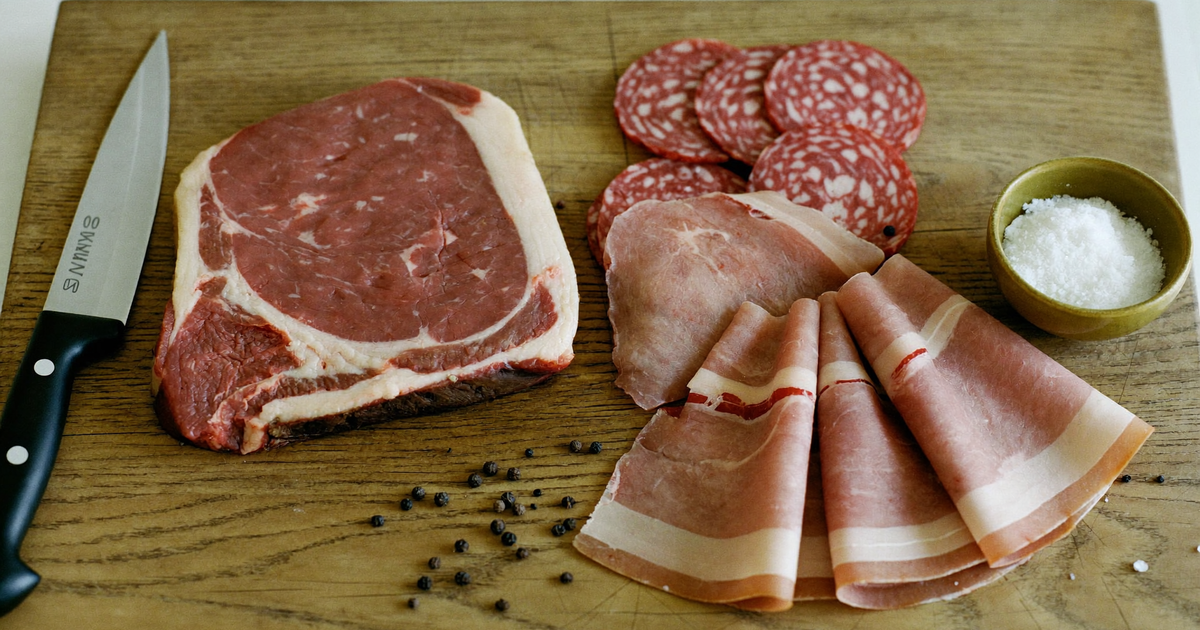
Why Red Meat Gets Blamed for Crohn's Flares
Red meat lands on self-elimination lists more often than almost any other food in IBD, and usually not because a clinician suggested it. The advice travels through forums and well-meaning relatives until it sounds settled. In our community we have heard from people who avoided steak for a decade without ever being told to.
The reasoning is not invented. Red meat carries heme iron, which can promote oxidative stress in the colon, and sulfur-containing amino acids that gut bacteria convert into hydrogen sulfide, which can impair the gut barrier at high concentrations. It is also higher in saturated fat, and high-temperature cooking produces heterocyclic amines and advanced glycation end products.
Every one of those mechanisms is plausible, and none is the same as a measured clinical effect in people who already have Crohn's. Mechanism tells you what might happen in a mouse model; a trial tells you what happens to the person eating dinner.
One more distinction explains the rest of the confusion. The evidence splits two ways at once: between Crohn's disease and ulcerative colitis, and between the risk of developing IBD and the risk of flaring once you have it. Keep those four categories apart and the picture gets specific.
The FACES Trial: The Only Randomized Test in Crohn's
In the only randomized controlled trial to test red meat reduction in Crohn's disease, 214 adults in remission were assigned to either high or very low intake for 49 weeks, and there was no significant difference between the groups in time to relapse (1). It is the most directly relevant study for anyone weighing whether to cut meat out, and it is rarely cited in patient-facing material.
How the trial was designed
FACES enrolled adults with Crohn's in remission who already ate red meat at least weekly, so nobody was asked to start a food they avoided. Participants were randomized to one of two arms (1):
- High meat arm (n = 118): at least 2 servings per week of red or processed meat
- Low meat arm (n = 96): no more than 1 serving per month
It ran through IBD Partners, an internet-based patient cohort, with symptoms reported remotely, and was registered on ClinicalTrials.gov before enrollment.
What the results actually showed
Relapse occurred in 62 percent of the high-meat group and 42 percent of the low-meat group. That raw gap looks meaningful, and readers notice it. But the trial's actual endpoints, time to any relapse and time to moderate or severe relapse, showed no significant difference (p = 0.61 and p = 0.50) (1).
The distinction matters. A raw percentage asks how many people relapsed at some point. A time-to-event analysis asks when they relapsed and whether the groups diverged in a pattern unlikely to be chance, accounting for how long each person was followed. It is the more reliable test, and the curves did not separate.
The limitations worth knowing
Adherence was badly lopsided. The high-meat arm met its target in 98.5 percent of observed weeks; the low-meat arm managed 18.8 percent (1). Dropping to one serving a month for nearly a year is very hard, so the trial did not fully test the diet it set out to test. It was also unblinded, with symptoms self-reported rather than verified by endoscopy.
So FACES shows that a deliberate push to cut red meat did not delay relapse here. It cannot tell us what happens at extremes of intake, or in very active disease, since everyone enrolled was in remission.
What the Observational Evidence Shows, and Why Colitis Is Different
In large observational studies, red meat intake is associated with a higher risk of developing ulcerative colitis but not Crohn's disease. That split is the main reason red meat has a bad reputation across all of IBD, even though the signal sits on the colitis side.
The EPIC cohort
The European Prospective Investigation into Cancer and Nutrition followed 413,593 people across eight countries for a mean of 16 years, during which 177 developed Crohn's disease and 418 developed ulcerative colitis. Red meat intake was associated with higher ulcerative colitis risk, hazard ratio 1.61 (95 percent CI 1.10 to 2.36) for the highest versus lowest quartile. No animal protein source was associated with Crohn's risk (3).
Umbrella review of the wider literature
A 2024 umbrella review, pooling findings across systematic reviews and meta-analyses, lists high intake of red and processed meat among dietary factors associated with increased IBD incidence or progression (4). That is a fair summary of the literature, and also the kind of broad statement repeated without the Crohn's-versus-colitis detail attached.
Here is the step that matters most if you are already diagnosed. These cohorts measured who went on to develop IBD, not who flared afterward, and those are different questions with different answers. A pattern that influences whether inflammation starts in a healthy gut may say little about keeping established disease quiet. For the foods that do have evidence behind avoiding them, see our guide to foods to avoid with Crohn's disease.

What Guidelines Actually Recommend
The International Organization for the Study of Inflammatory Bowel Diseases states that in Crohn's disease there is evidence it is unnecessary to restrict moderate consumption of unprocessed red meat, lean chicken breast, and eggs, rated evidence level high (2). For ulcerative colitis, the same guidance says it is prudent to reduce red and processed meat, rated evidence level low (2).
Read those two sentences together and the picture clicks into place. This is one of the clearest spots in IBD nutrition where guidance for the two diseases diverges, and in practice the direction gets reversed: Crohn's patients are handed the colitis recommendation, with its weaker evidence, while the stronger Crohn's-specific statement goes unmentioned. Some trial diets for active Crohn's even required daily lean chicken breast and two eggs, and still produced high remission rates (2).
IOIBD does separately advise limiting food additives and highly processed foods across all IBD (2). That overlaps with processed meat, but for reasons connected to emulsifiers and degree of processing rather than red meat as a category. Our article on ultra-processed foods and Crohn's disease risk covers that evidence.
The Separate Question: Processed Meat and Colorectal Cancer
Processed meat is classified by the International Agency for Research on Cancer as Group 1, carcinogenic to humans, based on sufficient evidence for colorectal cancer, while red meat is Group 2A, probably carcinogenic (5). IARC estimated that each 50 gram daily portion of processed meat raises colorectal cancer risk by roughly 18 percent (5).
This is a different conversation from flares and deserves to stay separate. People with long-standing colonic Crohn's already carry elevated colorectal cancer risk from the inflammation itself, which makes a known dietary carcinogen worth weighing on its own terms. Our colon cancer screening guide covers what surveillance is recommended.
The honest framing is this: moderating processed meat can be reasonable for colorectal and cardiovascular reasons, and may do nothing for your flare frequency. Both are true at once. IARC also noted that red meat has nutritional value, and that the aim is balancing risks and benefits rather than treating a classification as a prohibition (5).
How to Decide About Red Meat in Your Own Diet
For most people with Crohn's disease, moderate unprocessed red meat does not need to be eliminated, and removing it carries a nutritional cost that rarely gets weighed. Protein and iron needs often run higher in Crohn's, particularly after surgery or with ongoing blood loss, and red meat is one of the densest sources of both. Our guide to protein intake in Crohn's disease covers targets and alternatives.
A few distinctions matter more than the meat itself:
- Unprocessed versus processed. The evidence treats a lean cut of beef and a packet of salami very differently. If you limit one, the processed one has more behind it.
- Portion and fat content. Large, fatty portions are harder on digestion regardless of inflammation; smaller servings of leaner cuts often land better.
- Preparation method. Braised or minced meat is easier to handle than a seared steak, and charring generates the compounds of most concern.
- Texture, not inflammation. If steak causes trouble during a flare or with a known stricture, the issue is usually mechanical, which calls for softer preparations rather than permanent elimination.
If you notice a reliable, repeated pattern with a specific food, that observation still counts. Trials describe averages; you are one person with your own disease location, surgical history, and microbiome. A food diary showing a consistent link is worth bringing to your team.
Questions worth raising with a gastroenterologist or IBD dietitian:
- Is a restriction I already follow still serving a purpose, or did I inherit it?
- Given my disease location, is this advice for Crohn's or generalized from colitis?
- Are my protein and iron adequate, and have they been checked?
- Do I have a stricture that changes how I should prepare meat?
Frequently Asked Questions
Is red meat bad for Crohn's disease?
For most people with Crohn's, moderate unprocessed red meat is not shown to worsen the disease. The only randomized trial found no significant difference in time to relapse between adults eating at least 2 servings per week and those cutting to one serving a month (1). IOIBD rates restriction as unnecessary in Crohn's at evidence level high (2).
Can I eat steak with Crohn's disease?
Many people with Crohn's eat steak without issues. When it does cause trouble, the reason is often texture and residue rather than inflammation, especially during a flare or with a known narrowing. Slow-cooked, braised, or minced preparations are usually easier to tolerate.
Why do so many sources say people with IBD should avoid red meat?
Because most of it comes from ulcerative colitis research and risk-of-onset studies, then gets applied to all of IBD. In the EPIC cohort of 413,593 people, red meat was associated with ulcerative colitis risk but no animal protein source was associated with Crohn's risk (3).
Is processed meat different from unprocessed red meat?
Yes, and the distinction matters more than most avoid-lists suggest. Processed meats such as deli slices, sausages, and bacon are classified by IARC as Group 1 carcinogenic for colorectal cancer, with each 50 gram daily portion estimated to raise risk by about 18 percent (5). IOIBD also advises limiting highly processed foods across IBD (2).
Does cutting out red meat help prevent flares?
The available randomized evidence says no. In FACES, relapse occurred in 62 percent of the high-meat group and 42 percent of the low-meat group, but time to any relapse (p = 0.61) and to moderate or severe relapse (p = 0.50) did not differ significantly (1). Low-meat adherence was only 18.8 percent of weeks, a genuine limitation (1).
Should I worry about colorectal cancer risk if I keep eating red meat?
Processed meat carries established colorectal cancer evidence, and long-standing colonic Crohn's already raises baseline risk through inflammation, so moderating it is reasonable on those grounds (5). That is separate from flare prevention, and IARC notes red meat has nutritional value and the goal is balancing risks and benefits (5).
References
- A Diet Low in Red and Processed Meat Does Not Reduce Rate of Crohn's Disease Flares. 2019. View on PubMed
- International Organization for the Study of Inflammatory Bowel Diseases. Dietary Guidance From the International Organization for the Study of Inflammatory Bowel Diseases. 2020. View on PubMed
- Meat Intake Is Associated with a Higher Risk of Ulcerative Colitis in a Large European Prospective Cohort Study. 2022. View on PubMed
- Diet, Food, and Nutritional Exposures and Inflammatory Bowel Disease or Progression of Disease: an Umbrella Review. 2024. View on PubMed
- International Agency for Research on Cancer. IARC Monographs evaluate consumption of red meat and processed meat. Press Release N. 240, 2015. Read release
Recommended Resources
Browse ResourcesRelated Articles

Gluten-Free Diet for Crohn's Disease: What Evidence Shows
Is a gluten free diet for Crohn's disease worth trying? Here is what the research shows on celiac risk, gluten sensitivity, fructans, and who benefits.

Kefir for Crohn's Disease: What Research Really Shows
Can kefir help Crohn's disease? What human trials and microbiome studies show, how it compares to yogurt, how to try it safely, and when to skip it.

Wormwood for Crohn's Disease: What the Evidence Shows
Wormwood (Artemisia absinthium) has been tested in two small Crohn's disease trials. Learn what the evidence shows on remission, TNF-alpha, and safety risks.

Melatonin for Crohn's Disease: What Research Really Shows
Can melatonin help Crohn's disease? What clinical trials and microbiome research show about the benefits, risks, dosing, and safety for IBD patients today.

Riboflavin for Crohn's Disease: What the Evidence Shows
Riboflavin for Crohn's disease showed reduced inflammation and improved symptoms in the RISE-UP trial. Learn about dosing, safety, mechanism, and evidence.

Butyrate for Crohn's Disease: What the Evidence Shows
What randomized trials show about sodium butyrate supplements in Crohn's disease, which forms and doses were studied, side effects, and who responds best.