
Colon Cancer Screening in Crohn's Disease: A Patient Guide

This article is for informational purposes only and does not constitute medical advice. Always consult your healthcare provider before making any changes to your treatment plan.
Colon cancer screening in Crohn's disease follows a different timeline than general population screening, with surveillance colonoscopy typically starting 8 to 10 years after symptom onset for patients with colonic involvement - and newer chromoendoscopy techniques nearly doubling the detection of precancerous changes compared to standard scopes (5).
If you have lived with Crohn's disease for several years, the words "cancer screening" probably stir up a tangle of questions and anxiety. How much does Crohn's actually raise your risk? When should screening start? And what exactly happens during a surveillance colonoscopy that is different from a regular one? The answers depend heavily on where your disease sits and how long you have had it - and the good news is that modern surveillance tools are catching precancerous changes earlier and more reliably than ever before. Here is what the latest evidence says, broken down in plain language.
Key Takeaways
- Colorectal cancer risk in Crohn's disease is concentrated in colonic and ileocolonic disease, with relative risks of 3.29 and 4.53 respectively, while isolated ileal Crohn's carries minimal extra risk (2)
- Surveillance colonoscopy should start 8 to 10 years after symptom onset for patients whose Crohn's affects more than one colonic segment or over 30% of the colon (3, 4)
- Dye chromoendoscopy detects dysplasia in nearly twice as many patients as standard high-definition white-light endoscopy (18.8% vs 9.4%) based on 2024 trial data (5)
- Patients with concurrent primary sclerosing cholangitis (PSC) need annual surveillance starting at PSC diagnosis due to a 4- to 5-fold higher cancer risk (4)
- There is no routine small bowel cancer screening program, but long-standing strictures and unexplained symptom changes warrant closer evaluation (6)

Why Colon Cancer Screening Matters More When You Have Crohn's
The overall relative risk of colorectal cancer in Crohn's disease is approximately 2.5 compared to the general population, but that single number hides enormous variation depending on where your disease lives and how long it has been active (1). Understanding your personal risk profile is the first step toward a screening plan that protects you without over-testing.
How Crohn's changes your colorectal cancer risk
Not everyone with Crohn's faces the same cancer risk - and this is one of the most important things to understand about surveillance. A landmark meta-analysis found that colorectal cancer risk was heavily concentrated in patients with colonic disease (relative risk 4.5, 95% CI 1.3-14.9), while patients with isolated ileal Crohn's had essentially no excess risk (RR 1.1, 95% CI 0.8-1.5) (1). A more recent 2026 meta-regression confirmed the pattern, reporting standardized incidence ratios of 3.29 for colonic Crohn's, 4.53 for ileocolonic disease, and 1.95 for isolated ileal disease (2).
What does this mean practically? If your Crohn's affects only the small bowel and has never extended into the colon, your colorectal cancer risk is close to that of the general population. If your disease involves the colon - especially extensive colonic or ileocolonic Crohn's - you need IBD-specific surveillance, not just age-based screening.
The role of colonic involvement, duration, and inflammation
It is tempting to focus on how many years you have had Crohn's, but emerging evidence suggests that cumulative inflammatory burden may be a stronger driver of cancer risk than disease duration alone. Chronic, uncontrolled inflammation damages the colonic lining over time, creating a pathway from inflammation to dysplasia to cancer that can take a decade or more to unfold. This is actually encouraging news: it means that keeping inflammation well controlled with effective therapy does not just make you feel better - it may directly reduce your cancer risk. Compared to older studies from the 1970s and 1980s, colorectal cancer rates in IBD patients have declined, likely because of better disease management and earlier surveillance (7).
When to Start Screening and Why the 8-Year Mark Matters
Current guidelines recommend beginning surveillance colonoscopy 8 to 10 years after the onset of IBD symptoms in patients with Crohn's colitis that involves more than one colonic segment or over 30% of the colon (3, 4). This timeline reflects the observation that dysplasia and cancer are uncommon in the first decade after symptom onset but begin to increase after that point.
Standard timing: 8 to 10 years from symptom onset
The clock starts from when your symptoms began, not necessarily from when you were officially diagnosed - a distinction that matters, since many of us spent months or years seeking answers before getting a diagnosis. If your Crohn's primarily affects the colon and you are approaching or past the 8-year mark, it is time to have a conversation with your gastroenterologist about your first surveillance colonoscopy if you have not already.
Patients with pure ileal Crohn's - where the disease has never involved the colon - generally follow the same age-based screening schedule as the general population. That typically means beginning colorectal cancer screening at age 45 (or earlier with a family history), using the method recommended in your country's guidelines.
Situations that call for earlier or immediate screening
Several factors can push the start of surveillance earlier than the 8-year mark:
- Primary sclerosing cholangitis (PSC): This liver condition dramatically increases colorectal cancer risk in IBD patients by 4- to 5-fold. If you are diagnosed with PSC, surveillance colonoscopy should begin immediately, regardless of how long you have had Crohn's, and continue annually (4).
- Family history of colorectal cancer: A first-degree relative with CRC may prompt your doctor to recommend earlier or more frequent screening.
- Prior dysplasia: If previous biopsies have shown dysplastic (precancerous) changes, your gastroenterologist will likely intensify surveillance.
- Extensive disease at young onset: Patients diagnosed in childhood or adolescence with widespread colonic disease may reach the 8-year threshold while still in their twenties. As we discussed in our guide on aging with Crohn's disease, long-standing disease brings unique long-term health considerations.
How Often You Need a Colonoscopy: Risk-Based Intervals
After your baseline surveillance colonoscopy, the frequency of follow-up exams depends on what was found and what risk factors you carry. This is not a one-size-fits-all schedule - it is a risk-stratified conversation between you and your gastroenterologist (3, 4).
Average-risk surveillance schedule
For patients at average risk - meaning your baseline surveillance was normal, you have good disease control, no PSC, no prior dysplasia, and no family history of CRC - guidelines suggest repeating surveillance every 1 to 3 years. After two consecutive negative surveillance exams, some guidelines allow extending the interval to every 3 to 5 years, though your doctor will weigh your individual situation (3, 4).
High-risk factors that shorten the interval
Annual surveillance is recommended if you have any of the following:
- Primary sclerosing cholangitis
- Prior dysplasia or neoplasia found on biopsy
- Ongoing active inflammation or persistent moderate-to-severe disease
- Strictures in the colon
- Extensive pseudopolyps that limit visualization
- First-degree family history of colorectal cancer
These factors matter because they each independently raise the chance that dysplasia could develop between exams. If several apply to you, your gastroenterologist may recommend annual colonoscopy without exception. The key takeaway is that your screening interval is personalized - discuss your specific risk factors at every visit so the plan can adapt as your disease evolves.
What Happens During a Surveillance Colonoscopy
A surveillance colonoscopy is not quite the same as a standard diagnostic colonoscopy. The technique, the time spent examining the colon, and the biopsy strategy are all tailored toward finding subtle precancerous changes that might not be visible to the untrained eye or standard scope.
High-definition white light, chromoendoscopy, and virtual chromoendoscopy
The biggest shift in IBD surveillance over the past decade has been the move from random biopsies toward targeted biopsies of visible abnormalities - and the technologies that make those abnormalities visible in the first place.
High-definition white-light endoscopy (HD-WLE) is the current minimum standard. Most modern endoscopy units use HD scopes as a baseline, and skilled endoscopists can identify many dysplastic lesions this way. However, flat or subtle lesions can be difficult to distinguish from the inflamed, irregular mucosa common in Crohn's colitis.
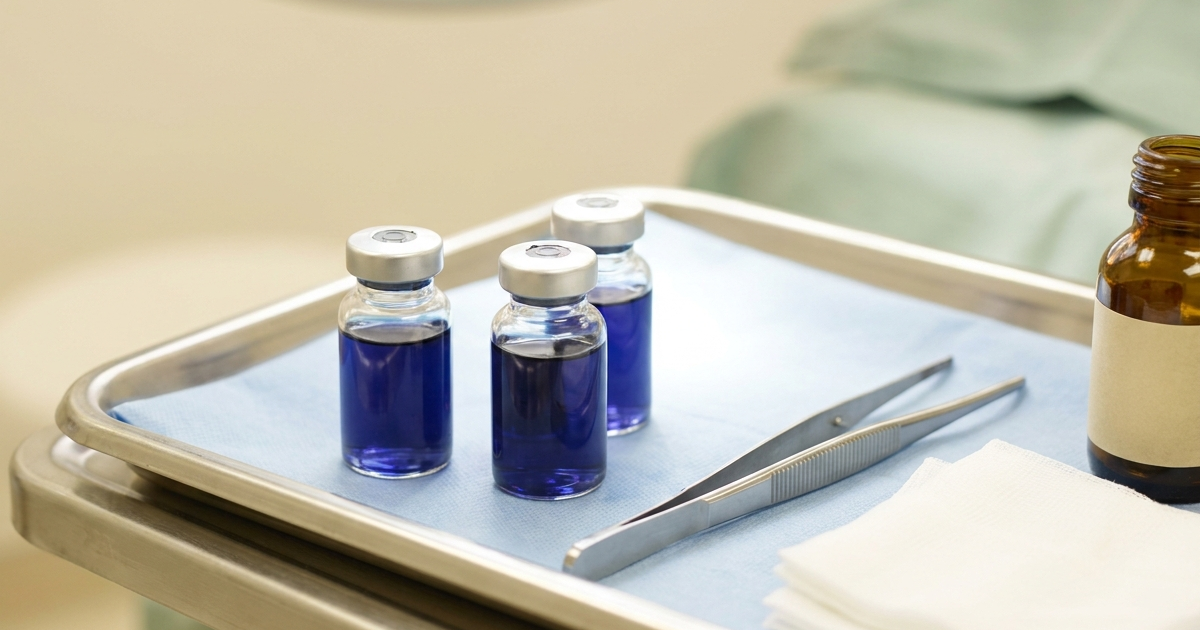
Dye chromoendoscopy takes it a step further. During the procedure, a blue dye (usually methylene blue or indigo carmine) is sprayed directly onto the colon lining, enhancing the surface pattern and making flat or raised lesions far easier to spot. A 2024 meta-analysis of six randomized trials involving 978 patients found that dye chromoendoscopy detected dysplasia in 18.8% of patients, compared to 9.4% for HD white-light endoscopy alone - an odds ratio of 1.94 (5). In practical terms, chromoendoscopy nearly doubles the chance of catching precancerous changes during your surveillance exam.
Virtual chromoendoscopy - technologies like narrow-band imaging (NBI) and iScan - uses light filters built into the endoscope to enhance tissue contrast without physical dye application. Recent studies suggest performance comparable to dye-based methods, and many centers are adopting these as a convenient, dye-free alternative (4).
Targeted vs random biopsies
The older approach to surveillance involved taking four random biopsies every 10 centimeters throughout the colon, sometimes resulting in 30 or more tissue samples from a single exam. This was necessary when endoscopic visualization was less advanced, but it was also time-consuming, expensive, and prone to missing flat lesions that happened to fall between biopsy sites.
Today, the emphasis has shifted to targeted biopsies of any visible lesion identified during the examination, especially when chromoendoscopy is used. This approach detects more dysplasia while requiring fewer total biopsies (4, 5). That said, random biopsies still have a role for very high-risk patients - particularly those with PSC, prior neoplasia, or a tubular, featureless colon where landmarks are difficult to identify.
If you are scheduling a surveillance colonoscopy, it is worth asking your gastroenterologist whether chromoendoscopy will be part of the exam. Not all centers use it routinely, and knowing ahead of time gives you the chance to request it or seek a center that offers it.
Small Bowel Cancer and the Ileal Crohn's Question
Many patients with ileal Crohn's reasonably wonder: if the colon is not heavily involved, does the small bowel carry its own cancer risk? The short answer is that small bowel adenocarcinoma is rare in absolute terms, but the relative risk is significantly elevated in long-standing small bowel Crohn's disease (6).
Why small bowel adenocarcinoma is rare but concerning
Population studies estimate the relative risk of small bowel adenocarcinoma in Crohn's disease at between 18 and 31 times higher than the general population (6). That sounds alarming, but context is everything: small bowel cancer is extremely rare in the general population, so even a 20-fold increase translates to a low absolute number. Most gastroenterologists will not encounter many cases in a career. Still, when it does occur, it tends to arise in areas of chronic inflammation - particularly in long-standing strictures of the distal ileum.
When a stricture deserves closer attention
There is no established routine screening program for small bowel cancer in Crohn's disease, which means awareness of red flags is your best defense. Clinical scenarios that warrant closer evaluation include:
- A stricture that has been present for many years and suddenly stops responding to medical therapy
- New or worsening symptoms - such as unexplained weight loss, bleeding, or obstruction - after a prolonged quiescent period
- Imaging findings on MR enterography that suggest a mass rather than simple fibrosis
Capsule endoscopy can visualize the small bowel mucosa directly, though it cannot biopsy tissue and carries a risk of capsule retention in patients with strictures. MR enterography remains the primary imaging tool for evaluating small bowel complications, including the possibility of occult malignancy. When a long-standing stricture is resected surgically, pathologists examine the specimen carefully for dysplasia or cancer - underscoring why surgical specimens in Crohn's are not just about relieving obstruction.
The most important prevention strategy for small bowel cancer in Crohn's is the same one that reduces colorectal cancer risk: keeping inflammation well controlled over the long term.
Preparing for Your Surveillance Colonoscopy
The surveillance colonoscopy itself may take longer than a standard exam - especially if chromoendoscopy is used - but the preparation is largely the same, with a few Crohn's-specific considerations.
Bowel prep with Crohn's disease
Bowel prep is no one's favorite experience, and it can feel especially daunting when you are already managing an unpredictable gut. A few practical tips:
- Split-dose prep (half the evening before, half the morning of) is generally better tolerated and produces a cleaner colon. Ask your doctor about this option if it is not already the default.
- Stay hydrated. Clear fluids, electrolyte drinks, and broths are your allies during prep. Dehydration is a real concern for patients with Crohn's, especially those with prior bowel resections or high-output stomas.
- Manage nausea proactively. If you have struggled with prep in the past, ask about anti-nausea medication to take alongside it.
- Medications: For most patients on biologics or immunosuppressants, no changes are needed around a surveillance colonoscopy. Always confirm with your prescribing doctor, but this is rarely a reason to delay or skip a dose.
Questions to ask your gastroenterologist
Going into a surveillance exam informed helps you get the most out of the appointment. Consider asking:
- What did you see during the exam? Were there any areas of concern?
- How many biopsies were taken, and were they targeted or random?
- Was chromoendoscopy (dye spray or virtual) used during the exam?
- Based on what you found, when should my next surveillance colonoscopy be?
- Can I get a copy of the full endoscopy report and pathology results for my records?
Keeping your own file of endoscopy and pathology reports is genuinely useful - especially if you ever change gastroenterologists, move to a different country, or need a second opinion. Many of us in the Crohn's community have learned the hard way that being your own health advocate starts with having your own records.
Frequently Asked Questions
Does everyone with Crohn's disease need colon cancer screening?
Not necessarily. IBD-specific surveillance colonoscopy is recommended for patients whose Crohn's involves the colon - specifically, disease affecting more than one colonic segment or over 30% of the colon. Patients with isolated ileal Crohn's that has never extended into the colon generally follow the same age-based screening guidelines as the general population (3, 4).
How much does Crohn's disease increase colorectal cancer risk?
The overall relative risk is approximately 2.5, but this varies dramatically by disease location. Colonic Crohn's carries a relative risk around 3.3 to 4.5, ileocolonic disease around 4.5, and isolated ileal disease shows little to no excess risk (1, 2). Duration of disease and cumulative inflammation also play important roles.
What is chromoendoscopy and should I ask for it?
Chromoendoscopy involves spraying a blue dye onto the colon lining during colonoscopy to enhance the visibility of subtle or flat lesions. A 2024 meta-analysis showed it detects dysplasia in nearly twice as many patients compared to standard high-definition white-light endoscopy (5). It is worth asking your gastroenterologist whether chromoendoscopy or virtual chromoendoscopy will be used during your surveillance exam.
Can I reduce my colorectal cancer risk if I have Crohn's?
Yes. Keeping colonic inflammation well controlled is the most effective strategy, and this is supported by the declining cancer rates seen in more recent patient cohorts with access to modern therapies and surveillance programs (7). Adhering to your recommended surveillance colonoscopy schedule allows precancerous changes to be detected and removed before they progress.
What happens if dysplasia is found during surveillance?
If biopsies reveal dysplasia (precancerous cells), the response depends on the type and extent. A clearly visible, well-defined dysplastic polyp can often be removed during the colonoscopy itself. Invisible or multifocal dysplasia, or dysplasia arising in flat mucosa, may prompt a recommendation for more frequent surveillance or, in some cases, discussion about surgery. Your gastroenterologist and a pathologist experienced in IBD will guide the next steps (3).
Is surveillance colonoscopy different in different countries?
The core principles are consistent internationally - surveillance starting around 8 years, risk-based intervals, and a preference for chromoendoscopy - but specific guidelines vary. The AGA, BSG (British Society of Gastroenterology), and ECCO (European Crohn's and Colitis Organisation) all publish their own recommendations. Your local gastroenterologist will follow the guidelines relevant to your healthcare system, and the intervals may differ slightly.
Should I worry about small bowel cancer if I have ileal Crohn's?
Small bowel adenocarcinoma in Crohn's disease is rare in absolute terms, even though the relative risk is elevated (6). There is no routine screening program for it. The best strategy is to maintain good inflammation control and be aware of red flags - such as a longstanding stricture that stops responding to treatment, unexplained weight loss, or new symptoms after a quiet period - and report these to your gastroenterologist promptly.
References
- Canavan C, Abrams KR, Mayberry J. Meta-analysis: colorectal and small bowel cancer risk in patients with Crohn's disease. Alimentary Pharmacology & Therapeutics, 2006. View on PubMed
- Risk of intestinal cancer in Crohn's disease: re-analysis and meta-regression of population-based cohort studies. Journal of Crohn's and Colitis, 2026. Read study
- Murthy SK, Feuerstein JD, Nguyen GC, Velayos FS. AGA Clinical Practice Update on Endoscopic Surveillance and Management of Colorectal Dysplasia in Inflammatory Bowel Diseases: Expert Review. Gastroenterology, 2021. Read article
- Fatakhova K, Rajapakse R. From random to precise: updated colon cancer screening and surveillance for inflammatory bowel disease. Translational Gastroenterology and Hepatology, 2024. Read article
- Dye Chromoendoscopy Outperforms High-Definition White Light Endoscopy in Dysplasia Detection for Patients With Inflammatory Bowel Disease: An Updated Meta-Analysis of Randomized Controlled Trials. American Journal of Gastroenterology, 2024. View on PubMed
- Endoscopic colorectal cancer surveillance in inflammatory bowel disease: Considerations that we must not forget. World Journal of Gastroenterology, 2022. Read article
- Crohn's & Colitis Foundation. The Risk of Colorectal Cancer in Crohn's Disease and Ulcerative Colitis Patients. 2024. Read article
Recommended Resources
Browse ResourcesRelated Articles

Skyrizi Side Effects and Safety for Crohn's Disease
Skyrizi side effects in Crohn's disease: real trial rates, liver enzyme monitoring during IV induction, infection risk, pregnancy data, and what to watch.

Humira Biosimilars in 2026: Every Brand, Interchangeability, Cost
Every FDA-approved Humira biosimilar for Crohn's disease in 2026: all 10 brands, which are interchangeable, high vs low concentration, and real cost data.

Entyvio vs Skyrizi for Crohn's Disease: A Patient Comparison
Entyvio vs Skyrizi for Crohn's disease: how the two drugs work, what their trials showed, safety, dosing burden, and where 2025 AGA guidance puts each.

Rinvoq vs Stelara for Crohn's: Oral JAK or Biologic
Rinvoq vs Stelara for Crohn's disease: a daily pill or an injected biologic. What each trial showed, the boxed warning gap, dosing burden and 2026 costs.

Entyvio vs Stelara for Crohn's Disease: How They Compare
Entyvio vs Stelara for Crohn's disease: how these two biologics compare on mechanism, dosing, real-world evidence, safety and what the guidelines say.

Is Stelara Safe Long Term? 5 Years of Crohn's Evidence
Is Stelara safe long term? Here is what pooled Crohn's trial data through 5 years, registry safety, pregnancy outcomes and the FDA label actually show.