
Religious Fasting With Crohn's Disease: A Safety Guide

This article is for informational purposes only and does not constitute medical advice. Always consult your healthcare provider before making any changes to your treatment plan.
Most writing about fasting and Crohn's assumes you chose it. Religious fasting with Crohn's disease is a different question, because the fast is not a wellness experiment you can abandon on a bad morning. It is Ramadan, Yom Kippur, Lent, and behind it sits obligation, family, and identity. The numbers are more reassuring than many patients fear and less reassuring than many communities assume.
Key Takeaways
- In a study of 536 IBD patients across 8 countries, 61.8% chose to fast and 27.4% of those who fasted had a flare or exacerbation (1)
- 9.1% of fasting patients were admitted to hospital for a severe flare, and 21.3% had worsening diarrhea or bleeding (1)
- Only 64.6% spoke to a physician before deciding to fast, making that conversation the single most actionable step you can take (1)
- Across a month of Ramadan, Crohn's patients showed no significant change in disease activity, while ulcerative colitis patients worsened (2)
- Stable documented remission with normal blood work is the baseline most guidance sets before fasting is considered (5)
- Every major tradition exempts the sick: religious fasting with Crohn's disease is a medical decision, not a measure of devotion

What the Research Says About Religious Fasting With Crohn's Disease
Most people with IBD who fast for religious reasons do not flare, but the flare rate is not zero. In the largest study of its kind, 27.4% of patients who fasted experienced an exacerbation and 9.1% required hospital admission (1). The authors still concluded that religious fasting is overall not dangerous for IBD patients, which tells you how much depends on who fasts.
The Multinational Religious Fasting Study
That study followed 536 IBD patients across 15 referral centers in 8 countries: Iran, Iraq, Egypt, Indonesia, Ethiopia, Syria, Malaysia, and the United Kingdom. Of those, 331 (61.8%) chose to fast, and 21.3% of them reported worsening diarrhea or bleeding during or immediately after the fast (1).
The quietest finding is the most useful: only 64.6% consulted a physician before deciding, and the authors' conclusion was not "do not fast" but "talk to someone first" (1).
The Ramadan Prospective Cohort
A prospective cohort followed 80 IBD patients, 60 with ulcerative colitis and 20 with Crohn's disease, across a complete month of Ramadan. In the Crohn's group, the Harvey-Bradshaw index shifted from a median of 4 to 5, which was not statistically significant (p = 0.41). CRP moved from a median of 0.53 to 0.50 mg/dl (p = 0.27) and fecal calprotectin from 163 to 218 mcg/g (p = 0.62), neither reaching significance (2).
That is reassuring, though not proof of safety in active disease. Two patients, both with ulcerative colitis, stopped on days 20 and 22 as their disease deteriorated, and both improved on prednisolone 20 mg (2).
Why Crohn's and Ulcerative Colitis Behave Differently
In the same cohort, the partial Mayo score in ulcerative colitis patients rose significantly (p = 0.02) while the Crohn's measure did not (2). A 2023 review reported that fasting was tolerated in 94% of Crohn's cases in one study, and concluded that mild, uncomplicated Crohn's carries a low risk of flares while elderly ulcerative colitis patients carry higher risk (3).
The samples are small and follow-up is short. The evidence base is thin rather than settled, and none of it can tell you what your own bowel will do. This is also separate from fasting used deliberately as therapy, which our article on the fasting-mimicking diet for Crohn's disease covers in depth.
Why Faith Is Not a Side Issue in Chronic Illness
Faith is not a soft extra in IBD care. In a 2-year longitudinal study of 90 patients with moderately to severely active Crohn's disease, baseline spirituality (OR 1.309, 95% CI 1.104 to 1.552, p = 0.002) and intrinsic religiousness (OR 1.682, 95% CI 1.221 to 2.317, p = 0.001) predicted clinical remission at 2 years (4). This is an association, and the mechanism is unknown.
What the Remission Data Shows and Does Not Show
That study is easy to misuse. The same analysis found that religiousness and spirituality did not predict quality of life, anxiety, or depression scores (4). Nobody prayed their way out of inflammation, and nothing here suggests a patient who flares was insufficiently devout. What it does suggest is that faith is not irrelevant to illness, and deserves better than being treated as a scheduling inconvenience.
The Guilt of Being Exempt
Many of us living with Crohn's know the particular loneliness of the year you sit out. Missing a fast is not skipping a meal. It is losing a piece of identity and belonging that arrives once a year and does not wait.
Patients tell us they feel judged, that they are failing their community, or that they will fast anyway because the alternative feels worse than the risk. That guilt is itself a health issue worth naming to a clinician, and our guide to the emotional side of living with Crohn's covers that ground more fully.
Deciding Whether to Fast: A Pre-Fast Checklist
The baseline most clinical guidance sets is stable, documented remission with normal blood work, assessed by a physician before the fast rather than during it (5). Feeling well is not the same as being in remission, and the gap between them is where most avoidable trouble lives.
Green Flags
- Stable disease in documented remission, not just a good few weeks
- Normal recent blood work, including inflammatory markers
- Medications that can be timed around the fasting window
- Physician approval obtained in advance (5)
- Adequate nutritional status and stable weight
If you are unsure whether you are in remission or simply having a quiet spell, our guide to flares and remission in Crohn's disease explains what clinicians actually measure.
Red Flags That Mean This Is Not Your Year
- Active disease, even when symptoms feel mild
- Abnormal inflammatory markers such as CRP or fecal calprotectin
- Recent surgery or post-surgical weakness (5)
- Malnutrition, or a weight recovery that is still in progress (5)
- Medications that cannot be postponed or taken without food (5)
Patients with strictures, high stoma output, or short bowel need individual advice and should not generalize from population data. Ask early, and a script that works is this: "I am planning to fast for [occasion] in about six weeks. Can we check whether my disease is quiet enough, look at my recent CRP and calprotectin, and work out how to time my medication?" Asking weeks ahead leaves room for a blood test. Asking the night before leaves room for nothing.
Medication Timing Around a Fast
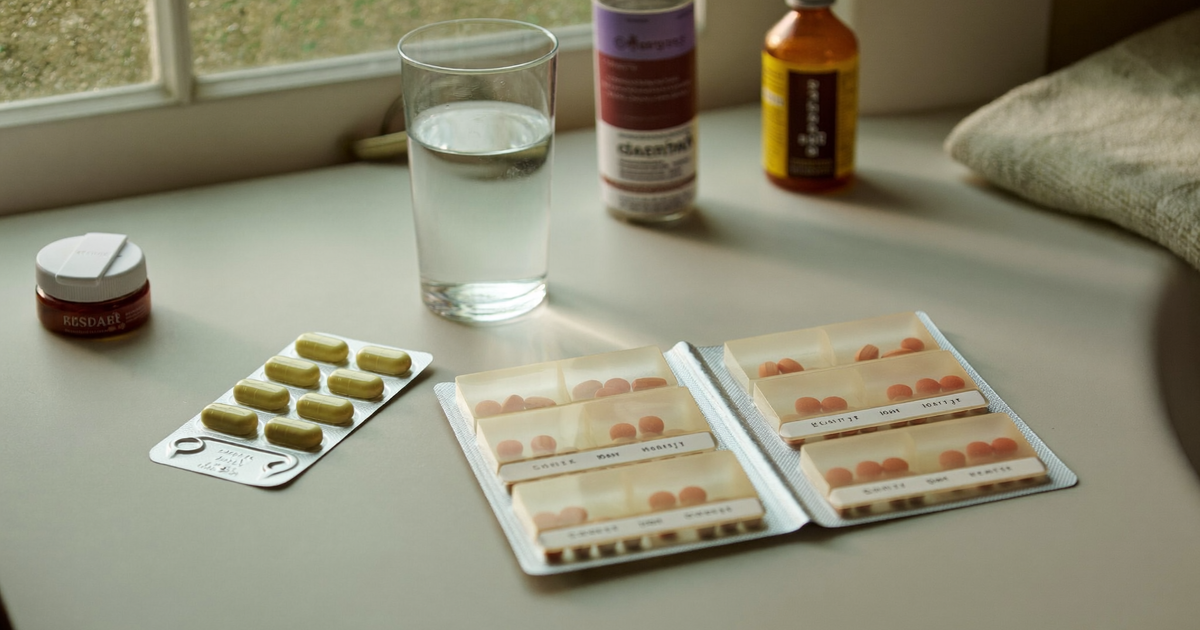
Where possible, clinicians can favor once or twice daily dosing so doses are not all crammed into the hours after a fast ends (3). This is a prescriber decision made in advance, not one you make alone on the day.
Drugs That Need Food, and Drugs You Never Skip
Corticosteroids are not a medication to skip or self-taper for a fast. Abrupt changes carry real risk, and any adjustment belongs with the prescriber.
Where a dose genuinely cannot be postponed, some clinical guidance supports eating a small amount of food with it rather than skipping it (5). Raise that with your gastroenterologist and, if it matters to you, your religious authority, since several traditions already treat medicine differently from food.
The shortcut we see most often is stopping maintenance therapy for a whole fasting month. It feels tidy, and it is a reliable way to lose remission.
What Does Not Change
Biologic infusions and injections run on their own schedule and are generally unaffected by a daily fast. The wrinkle is logistical: an infusion landing on a fast day may be worth moving, particularly where the protocol expects you to be hydrated. Medication names and availability vary between countries, so use generic names and confirm locally.
A Practical Plan for a Fasting Day
Dehydration is the recurring risk across all fasting guidance, and it matters most for patients with high output, a history of kidney stones, or a shortened bowel (6). Many patients also report their worst symptoms not during the fast but straight after it.
Before the Fast
Guidance for IBD patients emphasizes low glycemic index complex carbohydrates and deliberate hydration in the day beforehand, plus avoiding alcohol and fermented drinks (5).
Breaking the Fast
Break it gradually. A large, heavy, celebratory meal after many hours without food is where many patients describe their symptoms turning. Starting with fluid and something gentle, then eating slowly over the evening, is a small change that people report makes a real difference.
Warning Signs to Stop
Stop eating and drinking again, and contact a clinician, if you notice:
- New or worsening rectal bleeding
- Severe abdominal pain
- Dizziness, fainting, or confusion
- Vomiting or inability to keep fluids down
- Signs of dehydration such as very dark urine or no urine output (5)
Decide these rules in advance, while you are calm and well, and tell someone in your household what they are. Stopping mid-fast is a planned, permitted outcome, not a failure, and it is far easier to act on a decision you already made than one you are making at hour nineteen.
Observing Without Fasting
Every major religious tradition makes room for the sick. Jewish law explicitly permits and in some circumstances requires breaking a fast when health is endangered, and describes shiurim, measured small amounts taken at intervals, as a middle path for medically at-risk patients rather than an all-or-nothing choice (6). The Yom Kippur fast runs roughly 25 hours, which is a long time to improvise.
Ask Your Own Religious Authority
We are not the right source for what your tradition permits, and neither is the internet at large. The principle that illness is a recognized exemption runs across traditions, but the details differ and are decided by people with standing in your community.
Talk to your imam, rabbi, priest, or community leader in advance, framing it as seeking guidance rather than permission to opt out. Many patients are surprised by how firmly the answer comes back on the side of their health. For how Crohn's is understood and treated in different countries, see Crohn's disease treatment around the world.
Other Ways to Observe
Patients in our community have described charitable giving in place of a fast, making up fasts later in a year when they are in remission, extra prayer or study, community service, and attending everything around the meal without eating.
Medical fitness to fast and religious devotion are two different things. Conflating them is what drives people to fast when they should not, and it is a conflation your body will not honor.
Frequently Asked Questions
Can you fast with Crohn's disease?
Many people can, but it depends on your disease state. In a multinational study, 27.4% of IBD patients who fasted experienced a flare and 9.1% needed hospital admission (1), while a Ramadan cohort found no significant change in Crohn's disease activity (2). The deciding factors are documented remission, normal blood work, and medication that can be timed around the fast (5).
Does fasting cause a Crohn's flare?
It can contribute, but it is not an automatic trigger. Across a month of Ramadan, the Harvey-Bradshaw index in Crohn's patients moved from a median of 4 to 5, which was not significant (p = 0.41), and CRP and calprotectin did not shift meaningfully (2). Risk rises with active disease, dehydration, and missed medication rather than with the absence of food.
Is fasting riskier with ulcerative colitis than with Crohn's?
The available data suggests so. In the Ramadan cohort, the partial Mayo score in ulcerative colitis patients rose significantly (p = 0.02) while the Crohn's measure did not, and both patients who stopped early had ulcerative colitis (2). A 2023 review concluded that mild uncomplicated Crohn's carries low flare risk while elderly ulcerative colitis patients carry higher risk (3).
How do I take my Crohn's medication during Ramadan?
Ask your prescriber weeks in advance. Guidance suggests favoring once or twice daily dosing so doses are not all crowded into the hours after the fast (3), and where a dose cannot be postponed, taking it with a small amount of food beats skipping it (5). Corticosteroids should never be skipped or self-tapered, and stopping maintenance therapy for a month is high-risk.
What should I do if I start feeling unwell mid-fast?
Eat and drink, then contact a clinician. New or worsening bleeding, severe pain, dizziness, vomiting, or signs of dehydration are all reasons to stop immediately (5). Deciding these stop rules before the fast begins makes them far easier to act on. Stopping is a permitted outcome, not a failure of will.
Is it religiously acceptable not to fast when you have Crohn's?
Every major tradition exempts the sick, and Jewish law explicitly permits and can require breaking a fast where health is endangered, with shiurim, measured small amounts, offered as a middle path (6). The specifics belong to your own religious authority, so ask an imam, rabbi, priest, or community leader in advance. Being medically unfit to fast says nothing about your devotion.
References
- Alavi Nejad P, Ebrahimi Daryani N, Ramezani E, et al. P1268 Impact of religion fasting on the condition of Inflammatory Bowel Disease: primary results of a multicenter multinational study. Journal of Crohn's and Colitis, 2026;20(Supplement_1). Read study
- Negm M, Bahaa A, Farrag A, Lithy RM, Badary HA, et al. Effect of Ramadan intermittent fasting on inflammatory markers, disease severity, depression, and quality of life in patients with inflammatory bowel diseases: A prospective cohort study. BMC Gastroenterology, 2022;22:203. Read study
- Tibi S, Ahmed S, Nizam Y, Aldoghmi M, Moosa A, Bourenane S, Yakub M, Mohsin R. Implications of Ramadan Fasting in the Setting of Gastrointestinal Disorders. Cureus, 2023. Read study
- Salomao de Campos RJD, Lucchetti G, Lucchetti ALG, Chebli LA, Pereira LS, Chebli JMF. Influence of Religiousness and Spirituality on Remission Rate, Mental Health, and Quality of Life of Patients With Active Crohn's Disease: A Longitudinal 2-Year Follow-up Study. Journal of Crohn's and Colitis, 2021;15(1):55-63. Read study
- Shaare Zedek Medical Center, Institute of Paediatric Gastroenterology and Nutrition. Fasting and Inflammatory Bowel Diseases. 2024. Read article
- Gupta N, Gusdorf J. Guidance for Physicians on the Yom Kippur Fast. Georgetown Medical Review, 2023;7(1). Read article
Recommended Resources
Browse ResourcesRelated Articles

Skyrizi Side Effects and Safety for Crohn's Disease
Skyrizi side effects in Crohn's disease: real trial rates, liver enzyme monitoring during IV induction, infection risk, pregnancy data, and what to watch.

Blood Clots and Crohn's Disease: A Patient Safety Guide
Blood clots and Crohn's disease are closely linked. Find out when your clot risk peaks, the warning signs to watch for, and how prevention actually works.

Ozempic and Crohn's Disease: A Patient Safety Guide
Considering Ozempic with Crohn's disease? Learn what 2025 research shows about GLP-1 agonist safety, weight loss benefits, flare risks, and stricture concerns.

Fasting-Mimicking Diet for Crohn's Disease: New Evidence
New 2026 Nature Medicine research shows a fasting-mimicking diet helped nearly 70% of people with mild-to-moderate Crohn's disease. Evidence explained.

Prior Authorization for Crohn's Disease: An Appeals Guide
Prior authorization for Crohn's disease delays biologics and tests. Learn how denials work, what the 2026 CMS rule changes, and how to win your appeal.

Suicide Risk in Crohn's Disease: What Patients Should Know
Suicide risk in Crohn's disease is real but preventable. Learn the evidence, warning signs, protective steps, and how to reach 988 for free 24/7 crisis support.