
Restroom Anxiety in Crohn's Disease: A Practical Guide

This article is for informational purposes only and does not constitute medical advice. Always consult your healthcare provider before making any changes to your treatment plan.
Restroom anxiety is one of the most common stressors in Crohn's disease, and evidence-based coping skills, your legal rights under Ally's Law, and brain-gut therapies can help break the anxiety-urgency cycle.
If you have Crohn's disease, there is a good chance you have already done the mental math before leaving the house: Where is the nearest bathroom? What if I cannot make it? What if someone hears me? Restroom anxiety in Crohn's disease is one of the most commonly reported stressors among patients - and one of the least talked about. In this guide we combine the latest 2024-2025 research, your legal rights under Ally's Law, hands-on tools for daily life, and evidence-based therapies that can break the anxiety-urgency cycle.
Key Takeaways
- In a 2024 qualitative study, 86% of Crohn's participants had experienced urgency-related fecal incontinence and 57% reported anxiety tied to bowel urgency (1)
- A 2024 global survey found 13-17% of Crohn's patients have persistent bowel urgency even while on therapy (2)
- Ally's Law (the Restroom Access Act) protects patients in about 20 U.S. states plus Washington D.C., and free Restroom Access Cards are available from the Crohn's and Colitis Foundation (3, 4, 5)
- A 2025 meta-analysis of 19 RCTs with 1,637 participants confirmed that CBT, ACT, and mindfulness interventions reduce anxiety, depression, and quality-of-life burden in IBD (7)
- Brain-gut behavior therapy is a short-term, skill-based approach that retrains how the brain and gut communicate - and it can be delivered via telehealth (6)
Why Restroom Anxiety Is So Common in Crohn's Disease
Restroom anxiety is a specific, often overwhelming fear centered on finding, reaching, and using a bathroom in time. It goes beyond general health anxiety because it is rooted in very real physical experiences - urgency, incontinence, and the unpredictability of Crohn's symptoms. A 2024 qualitative study of 40 adults with IBD (21 with Crohn's) put numbers to what many of us already knew: 86% of Crohn's participants had experienced urgency-related fecal incontinence, and 57% reported anxiety directly tied to bowel urgency (1).
Bowel urgency is unpredictable, even in remission
One of the cruelest features of Crohn's-related urgency is that it does not always follow the rules. You can be in clinical remission - labs looking good, inflammation under control - and still have mornings where the urge hits without warning. A 2024 real-world global survey across six countries found that 13-17% of Crohn's patients experience persistent bowel urgency regardless of whether they are receiving conventional or targeted therapy (2). If you are dealing with urgency even though your treatment appears to be working, you are not doing something wrong. This is a recognized pattern in the disease.
What patients actually fear
The fears driving restroom anxiety are layered. At the surface there is the immediate worry: What if I do not make it in time? Beneath that sit deeper concerns about embarrassment, judgment from strangers, burdening friends or partners, and losing control of your body in public. In the 2024 qualitative study, patients described avoiding restaurants, canceling trips, and leaving social events early - not because of active symptoms in that moment, but because of the possibility of symptoms (1). This anticipatory dimension is what separates restroom anxiety from ordinary inconvenience.
The Vicious Cycle: How Anxiety Worsens Urgency
Restroom anxiety and bowel urgency feed each other in a cycle that can feel impossible to break. The gut-brain axis - the two-way communication highway between your central nervous system and your digestive tract - means that anxiety does not just live in your head. When stress hormones like cortisol and adrenaline spike, they directly increase gut motility, making urgency worse in real time (6). Your brain is telling your gut to speed up, which reinforces the very fear that triggered the stress response.
Anticipatory anxiety and the gut-brain axis
Here is how it typically plays out. You have a dinner planned. The moment you start thinking about whether you will need the bathroom, your nervous system registers a threat. Stress hormones rise. Gut motility increases. You feel a twinge that may or may not be genuine urgency. The twinge confirms your fear, anxiety spikes further, and by the time you arrive at the restaurant you are already scanning for the restroom sign. This sequence is not weakness or overthinking - it is a well-documented neurological loop (6). Understanding it as biology rather than a personal failing is the first step toward breaking it.
Avoidance behaviors that quietly shrink life
The natural response to this cycle is avoidance. You stop going to new restaurants. You decline the road trip invitation. You choose the aisle seat, just in case - and then feel anxious about the aisle seat choice itself. Each avoided situation brings temporary relief, but it also teaches your brain that the situation was genuinely dangerous. Over time, your world gets smaller. Patients in the 2024 qualitative research described significant social, professional, and emotional impacts - missed work, strained relationships, and a shrinking sense of who they are outside of their disease (1). As we discussed in our guide to the emotional challenges of living with Crohn's, these hidden costs deserve just as much clinical attention as inflammation markers.
The encouraging news is that this cycle is treatable. The same gut-brain connection that amplifies anxiety can be retrained to calm it down.
Your Legal Rights: Ally's Law and the Restroom Access Act
Beyond coping strategies, patients in the United States have concrete legal protections. Ally's Law - formally known as the Restroom Access Act - requires certain retail establishments to allow customers with qualifying medical conditions to use employee restrooms when no public restroom is available. Knowing your rights can remove a significant layer of worry.
Who was Ally Bain and how the law started
Ally's Law takes its name from Ally Bain, a 14-year-old girl from Illinois living with Crohn's disease who was denied access to an employee restroom during a flare. Her experience prompted her mother to advocate for legal change, and Illinois became the first state to sign the Restroom Access Act into law in August 2005 (3). Since then, the movement has expanded across the country.
Which U.S. states have enacted it
As of 2024, about 20 U.S. states plus Washington D.C. have enacted some version of the Restroom Access Act (4). The specifics vary by state - some cover all retail establishments with three or more employees, while others have narrower definitions. Eligible conditions typically include Crohn's disease, ulcerative colitis, other forms of IBD, IBS, ostomy use, and in some jurisdictions, pregnancy (4). If you are outside the United States, many countries do not have equivalent laws, but carrying a medical card or letter from your gastroenterologist can still open doors.
How to use a Restroom Access Card in real life
The Crohn's and Colitis Foundation provides free Restroom Access Cards that you can carry in your wallet or on your phone (5). These cards briefly explain that you have a medical condition requiring immediate restroom access. Here is a practical approach:
- What to say: "I have a medical condition that requires urgent restroom access. Here is my Restroom Access Card." Keep it simple and direct.
- If refused: Calmly mention the Restroom Access Act by name if your state has one, and note that the law requires compliance. If the employee still refuses, ask for a manager.
- Filing a complaint: In states with Ally's Law, businesses that refuse access can face fines. You can file a complaint with your state's Attorney General office or consumer protection division.
- Outside the U.S.: Organizations like the International Foundation for Gastrointestinal Disorders (IFFGD) and national IBD foundations offer similar cards. If you use an ostomy, many countries also have separate ostomy access cards.
Practical Tools That Lower Daily Bathroom Worry
You do not need to wait for a therapy appointment to start reducing restroom anxiety. Several practical strategies can make a noticeable difference starting today.
Restroom finder apps and pre-trip planning
Knowing where bathrooms are before you arrive changes the emotional equation. Several free apps can help:
- SitOrSquat - crowdsourced restroom database with cleanliness ratings
- Flush - covers over 200,000 public restrooms worldwide with offline maps
- Bathroom Scout - community-driven app that lets users share hidden and accessible restrooms
Before any outing, take two minutes to check the route and destination for bathroom locations. This is not obsessive - it is the same kind of practical preparation as checking the weather before a hike. Many patients find that simply having a plan in place reduces anxiety more than the plan itself ever gets used.
Emergency bag essentials
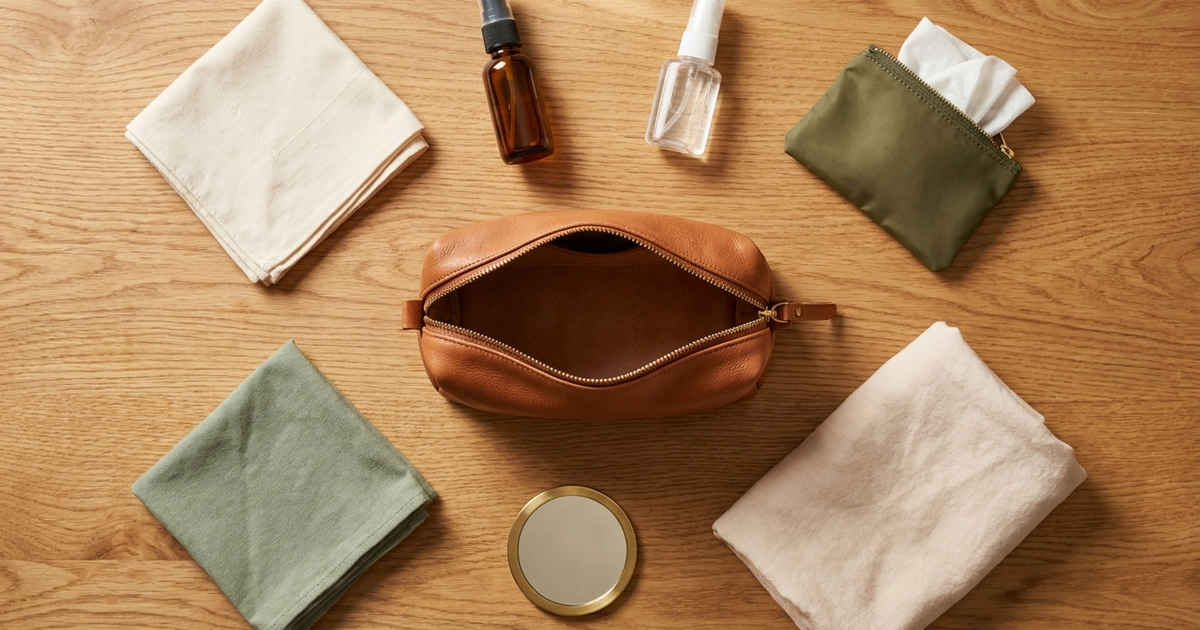
Carrying a small kit removes the catastrophic "what if" from the equation. Consider packing:
- Spare underwear and a lightweight change of pants
- Unscented wet wipes
- Small sealable bags (for discreet disposal)
- Travel-size hand sanitizer
- A compact odor-neutralizing spray
This is not about expecting the worst. It is about giving yourself permission to go places by knowing you are prepared for any scenario.
Sound masking and odor management without shame
Let us be honest about something many guides tiptoe around: a big part of restroom anxiety is not just urgency itself - it is the sounds and smells that come with it. Normalizing simple strategies matters:
- Running the tap or flushing during use is completely reasonable
- A small deodorizing spray used before and after works well in close quarters
- Travel with a personal sound machine or noise-canceling earbuds if bathroom sounds trigger anxiety in shared spaces
These are not things to feel embarrassed about. They are practical tools, the same way someone with mobility issues uses a handrail.
Travel-specific tips
Travel amplifies restroom anxiety because the environment is unfamiliar. A few targeted strategies help:
- Book aisle seats on flights and trains so you can reach the restroom without climbing over anyone
- Time hydration carefully - stay hydrated, but front-load water intake rather than drinking large amounts right before departure
- On flights, familiarize yourself with the bathroom layout during boarding and do not hesitate to use it before the seatbelt sign comes on
- For road trips, map rest stops in advance and build in buffer time so stops feel planned, not panicked
Evidence-Based Therapies for Restroom Anxiety
When self-management tools are not enough, structured psychological therapies offer real, measurable relief. A 2025 network meta-analysis published in Frontiers in Medicine reviewed 19 randomized controlled trials involving 1,637 IBD participants and concluded that CBT, ACT, and mindfulness interventions significantly reduce anxiety, depression, and quality-of-life burden in IBD (7). This is not fringe wellness advice - it is robust clinical evidence.
Brain-gut behavior therapy (BGBT) and gut-directed CBT
Brain-gut behavior therapy is a short-term, skill-based treatment specifically designed to modify the communication patterns between the brain and gut (6). Unlike general talk therapy, BGBT targets the exact neural pathways that drive the anxiety-urgency cycle. Sessions typically involve:
- Psychoeducation about the gut-brain axis and how anxiety amplifies urgency
- Cognitive restructuring - identifying and reframing catastrophic thoughts about bathroom access
- Graded exposure - gradually practicing feared situations like leaving the house without scouting bathrooms, sitting through a meeting without pre-checking the restroom, or asking a store clerk for restroom access
- Relaxation training - diaphragmatic breathing and progressive muscle relaxation to lower baseline gut reactivity
Graded exposure is often the most powerful component. By repeatedly experiencing the feared situation without the catastrophe occurring, your nervous system learns that the threat level is lower than it assumed.
ACT and mindfulness for living alongside symptoms
Acceptance and Commitment Therapy takes a different angle. Rather than trying to eliminate restroom anxiety, ACT helps you change your relationship to it - acknowledging the fear without letting it dictate your choices. As we covered in depth in our ACT for Crohn's disease guide, the approach builds psychological flexibility so you can carry anxious thoughts without being controlled by them.
Mindfulness practices, including those drawn from mindfulness-based stress reduction (MBSR), complement both CBT and ACT by training present-moment awareness. When you notice the thought "I will not make it" and can label it as a thought rather than a fact, its grip loosens.
What a course of therapy typically looks like
Most brain-gut behavior therapy programs run 6-12 sessions, weekly or biweekly. You do not need to commit to years of therapy. The skills are concrete and learnable, and many patients see meaningful improvement within the first few weeks. Importantly, gut-directed psychologists can now deliver these interventions via telehealth, which removes one of the biggest barriers - leaving the house for an appointment about being afraid to leave the house.
Structured digital programs can also serve as useful starting points. Apps like Mahana (which delivers CBT-based IBS/IBD support) and Nerva (gut-directed hypnotherapy) offer guided programs that teach many of the same skills. These are best used as supplements to professional care, not replacements for it, especially if your anxiety is significantly limiting your daily life.
When to Reach Out for Extra Support
Self-help strategies and apps have their place, but some signs suggest it is time to bring in professional help.
Signs that anxiety is bigger than self-management can handle
Consider seeking a referral if you are experiencing any of the following:
- You have become largely housebound or avoid most activities outside the home
- You experience panic attacks related to bathroom access
- Anxiety about urgency is affecting your ability to work, care for family, or maintain relationships
- You have thoughts of self-harm or feel hopeless about your situation
- Avoidance behaviors have increased over the past few months despite your best efforts
These are not signs of failure. They are signs that the anxiety has grown beyond what solo strategies can address - and targeted treatment works well at this level.
How to find a GI psychologist
GI psychologists (also called psychogastroenterologists) are psychologists who specialize in the brain-gut connection. They understand IBD in ways that general therapists may not. To find one:
- Ask your gastroenterologist for a referral to a GI behavioral health specialist
- Search the Rome Foundation's Psychogastroenterology directory for providers near you or offering telehealth
- Check the Crohn's and Colitis Foundation's mental health resources page for additional referral pathways
Talking to your gastroenterologist about urgency
If you have not brought up restroom anxiety with your GI doctor, you are not alone - many patients feel it is "not medical enough" to mention. But urgency is a treatable symptom, and your gastroenterologist needs to know about it. A simple opener: "I am managing the inflammation well, but I still have urgency that is really affecting my quality of life. Can we talk about what else might help?"
Your GI may adjust medications, investigate additional causes of urgency, or refer you to a GI psychologist. If anxiety is severe, a psychiatrist can evaluate whether medication for anxiety might help alongside behavioral therapy - this is a decision that should involve a qualified prescriber, not something to self-manage with supplements or over-the-counter options.
Restroom anxiety responds well to targeted treatment. The combination of practical preparation, legal knowledge, and evidence-based brain-gut therapies gives you multiple paths forward. You do not have to let the fear of a bathroom - or the absence of one - determine the size of your life.
Frequently Asked Questions
Is restroom anxiety a real medical condition or just normal worry?
Restroom anxiety is a recognized psychological pattern that frequently accompanies IBD and other gastrointestinal conditions. It goes beyond normal worry because it is rooted in real experiences with urgency and incontinence, and it can significantly impair quality of life. Research shows 57% of Crohn's patients in one study reported anxiety directly tied to bowel urgency (1). Mental health professionals who specialize in GI conditions treat it as a specific, treatable concern.
Can restroom anxiety make my Crohn's disease symptoms worse?
Yes. The gut-brain axis means anxiety and gut motility influence each other in both directions. When stress hormones like cortisol rise due to restroom-related worry, they can directly increase gut motility and worsen urgency (6). This creates a cycle where anxiety triggers physical symptoms, which then increase anxiety further. Breaking this cycle through brain-gut therapies is one of the most effective approaches.
Does Ally's Law apply in every U.S. state?
No. As of 2024, about 20 U.S. states plus Washington D.C. have enacted some form of the Restroom Access Act (4). Coverage and specific requirements vary by state. Even in states without the law, carrying a Restroom Access Card from the Crohn's and Colitis Foundation (5) can help - many businesses will honor it out of goodwill. Outside the United States, equivalent legal protections are uncommon, but medical cards and letters from your doctor are widely recognized.
What is a Restroom Access Card and how do I get one?
A Restroom Access Card is a wallet-sized card that explains you have a medical condition requiring urgent restroom access. The Crohn's and Colitis Foundation provides them free of charge (5). You can request one through their website or contact them directly. Some patients also carry a brief letter from their gastroenterologist for situations where additional documentation is helpful.
How long does brain-gut behavior therapy take to work?
Most programs run 6-12 sessions over several weeks or months. Many patients notice improvement within the first few sessions as they begin practicing exposure exercises and relaxation techniques. The skills are concrete and build on each other, so benefits tend to accumulate. Sessions can often be delivered via telehealth, which is especially helpful if leaving the house is part of what makes you anxious (6).
Are there apps that can help with restroom anxiety?
Several apps address different aspects of the problem. Restroom finder apps like SitOrSquat, Flush, and Bathroom Scout help you locate bathrooms in advance. For the psychological component, Mahana offers structured CBT programs and Nerva provides gut-directed hypnotherapy. These apps work best as supplements to professional care rather than standalone treatments, particularly if anxiety is significantly affecting your daily functioning (7).
Should I tell my gastroenterologist about restroom anxiety?
Absolutely. Urgency is a treatable symptom that your GI team needs to know about - even if your inflammatory markers look good. Persistent urgency despite remission affects 13-17% of Crohn's patients (2), and your doctor may be able to adjust treatment, investigate additional causes, or refer you to a GI psychologist. A simple way to start: "My inflammation seems controlled, but I still have urgency that is really affecting my quality of life."
References
- Hunter Gibble, et al. Patient perception of bowel urgency and remission in moderately to severely active Crohn's disease or ulcerative colitis: a qualitative study. Journal of Patient-Reported Outcomes, 2024. Read study
- Atreya, et al. Burden of Bowel Urgency in Patients With Ulcerative Colitis and Crohn's Disease: A Real-World Global Study. Crohn's & Colitis 360, 2024. View on PubMed
- Restroom Access Act (Ally's Law). Wikipedia, 2024. Read article
- Ally's Law: What to know about the Restroom Access Act. Medical News Today, 2024. Read article
- Restroom Access - State Laws. Crohn's & Colitis Foundation, 2024. Read article
- The Role of Mental Health in IBD Management: Understanding Bowel Urgency and Psychological Therapies. Canadian Digestive Health Foundation, 2024. Read article
- Wang, et al. Efficacy of different psychological interventions for the treatment of inflammatory bowel disease: a systematic review and network meta-analysis. Frontiers in Medicine, 2025. Read study
Recommended Resources
Browse ResourcesRelated Articles

Needle Anxiety and Biologic Injections for Crohn's: A Guide
Needle anxiety with biologic injections for Crohn's is common but treatable. Learn evidence-based coping tips, calming techniques, and device options today.

Ally's Law for Crohn's Disease: The Restroom Access Act Guide
The Restroom Access Act (Ally's Law) gives Crohn's patients the legal right to employee-only restrooms in 22 U.S. states. Full state list, ID cards, and tips.

The Emotional Side of Crohn's: Managing Anxiety, Depression, and Mental Health
The emotional toll of Crohn's disease is real. Learn about anxiety, depression, and mental health strategies that support IBD patients long-term.

Prior Authorization for Crohn's Disease: An Appeals Guide
Prior authorization for Crohn's disease delays biologics and tests. Learn how denials work, what the 2026 CMS rule changes, and how to win your appeal.

Religious Fasting With Crohn's Disease: A Safety Guide
Religious fasting with Crohn's disease: what Ramadan and Yom Kippur research shows about flare risk, medication timing, and knowing when to break a fast.

Suicide Risk in Crohn's Disease: What Patients Should Know
Suicide risk in Crohn's disease is real but preventable. Learn the evidence, warning signs, protective steps, and how to reach 988 for free 24/7 crisis support.