
IBD Medications Compared: Crohn's and Colitis Treatments

This article is for informational purposes only and does not constitute medical advice. Always consult your healthcare provider before making any changes to your treatment plan.
Inflammatory bowel disease (IBD) is treated with five main medication groups: aminosalicylates (5-ASAs), corticosteroids, immunomodulators, biologics, and oral small molecules, chosen by disease type, severity, and how you respond, with no single drug that is best for everyone (1).
If you have Crohn's disease or ulcerative colitis, the list of treatment names can feel overwhelming: Humira, Remicade, Stelara, Skyrizi, Entyvio, Rinvoq, Omvoh, Velsipity, and more. This guide groups every major option by how it works, how it is given, and which condition it treats, and links to our detailed patient guide for each one. It is a reference, not medical advice, so always confirm current options and approvals with your gastroenterologist.
Key Takeaways
- IBD medications fall into five groups: aminosalicylates, corticosteroids, immunomodulators, biologics, and oral small molecules (1).
- Aminosalicylates (mesalamine, sulfasalazine) are mainly for mild to moderate ulcerative colitis; they are not effective for most Crohn's disease (1).
- Corticosteroids work fast for flares but are for short-term use only, not long-term control, because of serious side effects (1).
- Biologics and small molecules are used for moderate to severe disease and include anti-TNF agents, anti-integrins, IL-12/23 and IL-23 inhibitors, JAK inhibitors, and S1P modulators (1).
- There is no universally best drug; guidelines now list several high-efficacy options as reasonable first choices and stress shared decision-making (2).
How IBD Medications Are Grouped
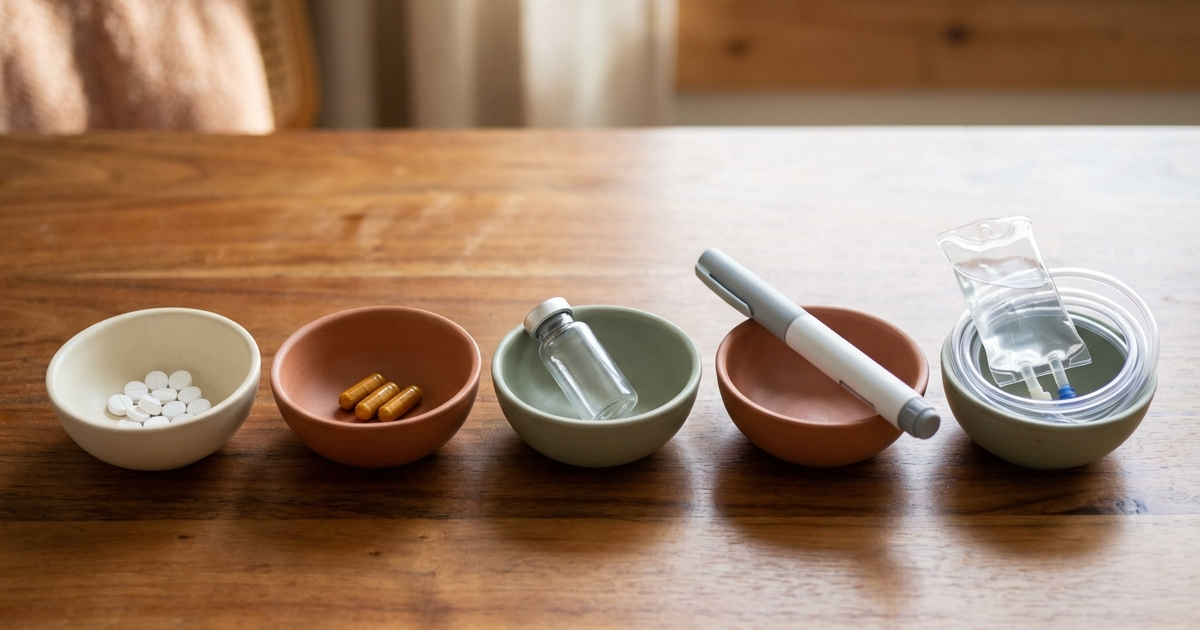
Doctors generally match the strength of the medication to the severity and type of disease. Milder ulcerative colitis often starts with aminosalicylates, while moderate to severe Crohn's or colitis usually needs a biologic or an oral small molecule, sometimes started early rather than stepped up slowly (2). For a deeper look at choosing among the advanced options, see our guide to the best biologic for Crohn's disease and the ulcerative colitis treatment guide.
IBD Medications at a Glance
The table below summarizes the major advanced therapies. Approval details change over time, so confirm current status with your care team.
| Drug (brand) | Class | Route | Approved for | Learn more | | --- | --- | --- | --- | --- | | Infliximab (Remicade) | Anti-TNF | IV infusion (or subcutaneous) | Crohn's and UC | Biosimilars guide | | Adalimumab (Humira) | Anti-TNF | Subcutaneous | Crohn's and UC | Biosimilars guide | | Subcutaneous infliximab (Zymfentra) | Anti-TNF | Subcutaneous | Crohn's and UC (maintenance) | Zymfentra guide | | Vedolizumab (Entyvio) | Anti-integrin (gut-selective) | IV or subcutaneous | Crohn's and UC | Entyvio guide | | Ustekinumab (Stelara) | IL-12/23 inhibitor | IV then subcutaneous | Crohn's and UC | Stelara guide | | Risankizumab (Skyrizi) | IL-23 inhibitor | IV then subcutaneous | Crohn's and UC | IL-23 inhibitors | | Mirikizumab (Omvoh) | IL-23 inhibitor | IV then subcutaneous | UC and Crohn's | IL-23 inhibitors | | Guselkumab (Tremfya) | IL-23 inhibitor | Subcutaneous or IV | UC and Crohn's | IL-23 inhibitors | | Upadacitinib (Rinvoq) | JAK inhibitor | Oral | Crohn's and UC | Rinvoq guide | | Tofacitinib (Xeljanz) | JAK inhibitor | Oral | UC | UC treatment guide | | Etrasimod (Velsipity) | S1P modulator | Oral | UC | New IBD treatments | | Ozanimod (Zeposia) | S1P modulator | Oral | UC | New IBD treatments |
Aminosalicylates (5-ASAs)
Aminosalicylates such as mesalamine and sulfasalazine reduce inflammation in the lining of the intestine and are a first step for mild to moderate ulcerative colitis, both to calm a flare and to maintain remission (1). They can be taken by mouth or given rectally for disease limited to the lower colon and rectum. They are generally well tolerated but are not effective for most people with Crohn's disease (1).
Corticosteroids
Steroids such as prednisone and budesonide are powerful, fast-acting anti-inflammatories for flares of moderate to severe disease. They are meant for short-term use because long-term use causes serious side effects such as weakened bones, high blood sugar, and higher infection risk, so doctors taper them once a flare settles (1). For the long-term picture, see our guide on the long-term effects of steroid use.
Immunomodulators
Immunomodulators such as azathioprine, 6-mercaptopurine, and methotrexate change how the immune system works to reduce inflammation. They can take months to reach full effect, so they are sometimes combined with a faster-acting steroid or biologic (1).

Biologics
Biologics are antibody drugs that target specific proteins driving inflammation. The main classes in IBD are:
- Anti-TNF agents (infliximab, adalimumab, and others) block tumor necrosis factor and have the longest track record, with strong evidence in fistulizing Crohn's. Biosimilar versions are now widely available; see our biosimilars guide.
- Anti-integrin (vedolizumab) is gut-selective and has a favorable safety profile.
- IL-12/23 inhibitor (ustekinumab) blocks the shared p40 subunit.
- IL-23 inhibitors (risankizumab, mirikizumab, guselkumab) are a newer, more targeted class; see our overview of IL-23 inhibitors and the head-to-head Skyrizi vs Stelara comparison.
An investigational class, TL1A inhibitors, is in late-stage trials and may target both inflammation and fibrosis in the future.
Oral Small Molecules
These are pills rather than injections or infusions:
- JAK inhibitors (upadacitinib and tofacitinib) block inflammatory signaling inside cells. They carry boxed safety warnings about serious infections, blood clots, and cardiovascular events, so they are usually used after other therapies (3).
- S1P receptor modulators (etrasimod and ozanimod) keep certain immune cells from reaching the gut and are oral options for ulcerative colitis (1).
When Is Surgery Considered?
Medication does not work for everyone. In ulcerative colitis, surgery to remove the colon and rectum can be curative; in Crohn's, surgery removes damaged segments but the disease can recur. See our overviews of the role of surgery in Crohn's and the Crohn's vs ulcerative colitis differences.
Frequently Asked Questions
What is the most common first treatment for IBD?
It depends on the disease and severity. Mild to moderate ulcerative colitis often starts with an aminosalicylate such as mesalamine, while moderate to severe Crohn's disease or colitis usually starts with a biologic or oral small molecule, sometimes early rather than after a slow step-up (1)(2).
What is the difference between a biologic and a small molecule?
Biologics are large antibody proteins given by injection or infusion that target specific immune proteins. Small molecules such as JAK inhibitors and S1P modulators are pills that act inside cells. Both are used for moderate to severe disease, and the choice depends on your situation and preferences (1).
Are biosimilars as effective as the original biologics?
Yes. Biosimilars are rigorously tested and shown to have no clinically meaningful differences from their reference biologic in safety or effectiveness, and they often cost less. See our biosimilars guide for details.
Which IBD drugs are pills instead of injections?
The oral options are the JAK inhibitors (upadacitinib and tofacitinib) and the S1P modulators (etrasimod and ozanimod). Aminosalicylates, corticosteroids, and immunomodulators also have oral forms, while most biologics are given by injection or infusion (1).
Is there a single best medication for Crohn's or colitis?
No. Major guidelines list several high-efficacy options as reasonable first choices rather than naming one winner, and they stress that the decision should be made jointly by you and your gastroenterologist based on your disease and priorities (2).
This article is for informational purposes only and is not a substitute for professional medical advice. Always consult your healthcare provider about treatment options and current drug approvals.
References
- National Institute of Diabetes and Digestive and Kidney Diseases. Treatment for Crohn's Disease and Ulcerative Colitis. Read more
- Feuerstein JD, et al. AGA Clinical Practice Guidelines on the Medical Management of Moderate to Severe Crohn's Disease. Gastroenterology, 2021. Read guideline
- U.S. Food and Drug Administration. RINVOQ (upadacitinib) Prescribing Information (boxed warning for JAK inhibitors). Read label
Recommended Resources
Browse ResourcesRelated Articles

Mesalamine for Ulcerative Colitis: Doses, Forms, Side Effects
Mesalamine for ulcerative colitis explained: oral vs rectal forms, once-daily dosing evidence, kidney monitoring, side effects, generics, and when to step up.

Entyvio vs Skyrizi for Crohn's Disease: A Patient Comparison
Entyvio vs Skyrizi for Crohn's disease: how the two drugs work, what their trials showed, safety, dosing burden, and where 2025 AGA guidance puts each.

Crohn's Disease vs Ulcerative Colitis: Key Differences
Crohn's disease vs ulcerative colitis: Crohn's can affect any part of the GI tract through all bowel-wall layers, while UC affects only the colon's lining.

New IBD Treatments in 2026: What Patients Should Know
Every newly approved Crohn's and colitis treatment through 2026: IL-23 inhibitors, JAK pills, S1P modulators, Zymfentra and biosimilars, explained.

Ulcerative Colitis Symptoms: A Complete Patient Guide
Ulcerative colitis symptoms include bloody diarrhea, urgency, rectal bleeding, and cramping. Learn how they vary by location, severity, and warning signs.

Ulcerative Colitis Treatment: A Patient Guide
Ulcerative colitis treatment uses 5-ASAs, steroids, immunomodulators, biologics, and small molecules to induce and maintain remission, with surgery as a cure.