
Food Insecurity and Crohn's Disease: How to Get Help

This article is for informational purposes only and does not constitute medical advice. Always consult your healthcare provider before making any changes to your treatment plan.
Almost every IBD diet article ever written assumes you can buy whatever the diet calls for. The research says many of us cannot: in the 2023 National Health Interview Survey, 13.48% of US adults with IBD reported food insecurity, compared with 8.96% of adults without IBD (1).
If you have ever stood in a grocery aisle doing arithmetic between the food your gut tolerates and the food your budget allows, you already know the thing the literature has only recently started measuring. Food insecurity and Crohn's disease travel together, and the consequences land in the middle of your treatment. Here is what the numbers show, what food insecurity does to diet and medication, a validated two-question check you can run right now, and where help exists.
Key Takeaways
- In the 2023 National Health Interview Survey, 13.48% of US adults with IBD reported food insecurity versus 8.96% of adults without IBD, p equals 0.01 (1).
- In a single-center cohort of 128 adults at a nutrition-focused IBD clinic, 45% reported difficulty with sufficient grocery access at least sometimes in the past 12 months (2).
- Adults with IBD and food insecurity were far more likely to report cost-related medication nonadherence (OR 8.07, 95% CI 3.16-20.6) and financial distress (OR 6.92, 95% CI 2.28-21.0) (5).
- Patients at high risk for food insecurity ate more ultra-processed food (54% versus 27%, p equals 0.001) and less unprocessed food (32% versus 61%, p equals 0.001) (2).
- Only a small percentage of the patients at highest risk in that clinic cohort were enrolled in any federal food assistance program for groceries (2).
- Prevalence estimates range widely, from 5% to 45.5% across 25 US studies of chronic gastrointestinal and liver conditions, so no single number is the whole truth (3).
What Food Insecurity Actually Means
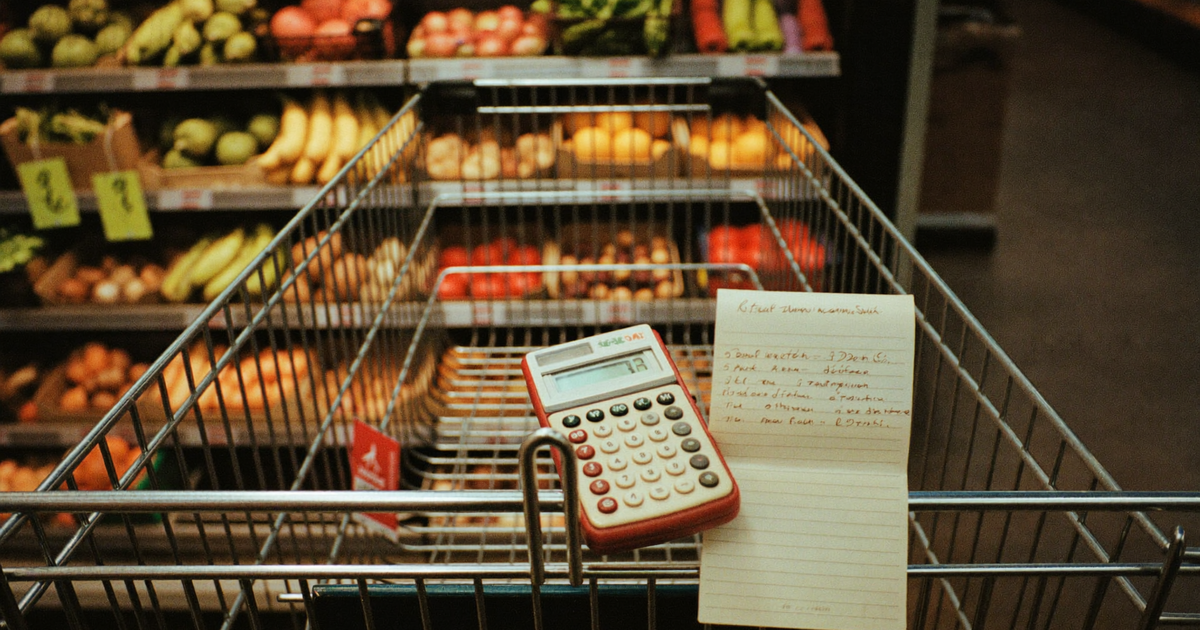
Food insecurity is a measured condition with official categories, not a vague sense of being stretched. The USDA defines low food security as reduced quality, variety or desirability of diet, and very low food security as multiple indications of disrupted eating patterns and reduced food intake (4). The first is eating worse than you should. The second is eating less than you need.
Low food security versus very low food security
The distinction matters in Crohn's disease, because the two create different problems. Low food security narrows what you eat down to whatever is cheapest and keeps longest. Very low food security means meals get skipped or shrunk, which collides with a condition where malnutrition and weight loss are already risks. The USDA also recognises marginal food security, where anxiety about the food supply has begun but intake has not yet changed (4).
Why this is a medical issue, not just a money issue
Nearly every diet recommended for IBD, whether low residue during a flare, a Mediterranean pattern in remission, or a specific exclusion protocol, assumes a shopping list you can afford to fill. Fresh produce, lean protein, lactose-free substitutes and oral nutrition supplements all cost money, and a flare can cut your income in the same month it raises your food costs.
Then there is the trade-off many of us have made quietly and rarely said out loud: food money versus medication money. That is not a budgeting failure. It is a documented pattern with measurable consequences.
How Common Food Insecurity Is in IBD
Nationally, roughly one in seven US adults with IBD reports food insecurity. The 2023 National Health Interview Survey put it at 13.48% among adults with IBD versus 8.96% among adults without, p equals 0.01, and pooled 2015-2016 data showed a similar gap at 12.43% versus 9.43% (1). The difference holds across survey years.
The national picture
The same analysis ran multivariable models to identify who carries the highest risk. Food insecurity was associated with IBD status itself (OR 1.85), being uninsured (OR 2.02), having Medicaid (OR 1.85), non-Hispanic Black race (OR 1.88), Hispanic ethnicity (OR 1.24), female sex (OR 1.16) and SNAP use (OR 2.49), all with p values below 0.01 (1).
Insurance appearing twice, as both uninsured and Medicaid, points at coverage and cost as a shared root with medication access; our guide to choosing a health insurance plan with Crohn's disease covers that side. The race and ethnicity findings sit alongside a wider pattern we have written about in racial disparities in Crohn's disease care.
Clinic-based estimates run higher
If the national figure feels low compared with what you see around you, clinic data agrees. In a single-center retrospective cohort of 128 adults at a nutrition-focused IBD clinic, 45% reported difficulty with sufficient grocery access at least sometimes in the past 12 months, and 10% reported decreased food access often in the prior year (2). That is a specialist clinic population, so the 45% is not a national figure.
We would rather be honest about the spread than hand you one tidy number. A 2026 systematic review of 25 US studies covering 54,034 participants found prevalence ranging from 5% to 45.5% across chronic gastrointestinal and liver conditions, with five IBD studies included, and only 8 of the 25 used the gold standard 18-item US Household Food Security Survey Module (3). Measurement is still catching up to the problem.
What Food Insecurity Does to Crohn's Management
Food insecurity changes what lands on the plate and whether the prescription gets filled, and both have been measured. The clinic cohort found a clear shift in diet quality, and national survey data found a strong association with skipping medication because of cost (2)(5). These are not side issues to your treatment.
Diet quality and ultra-processed food
In that 128-patient cohort, patients at high risk for food insecurity were significantly more likely to eat NOVA 4 ultra-processed foods (54% versus 27%, p equals 0.001) and significantly less likely to eat NOVA 1 unprocessed foods (32% versus 61%, p equals 0.001) (2).
The mechanism needs no moralizing. Shelf-stable, calorie-dense, inexpensive food keeps for weeks, stretches across more meals and does not go to waste when a flare wrecks your appetite for three days. Choosing it on an unreliable food budget is rational. Why it matters clinically is a separate question, and we have gone through the evidence on ultra-processed foods and Crohn's disease risk in its own article.
Skipped medication and financial strain
This is the most clinically serious finding in the evidence base. In the NHIS 2015 analysis, 42% of an estimated 3.1 million US adults with IBD reported at least one negative social determinant of health, and 12% reported both food insecurity and lack of social support. Food insecurity was associated with cost-related medication nonadherence (OR 8.07, 95% CI 3.16-20.6), financial distress (OR 6.92, 95% CI 2.28-21.0) and financial hardship from medical bills (OR 3.31, 95% CI 1.48-7.39) (5).
An odds ratio of 8.07 for skipping medication because of cost is the food-versus-medication trade-off showing up in the data. Our guide to financial planning with Crohn's disease deals with the wider cost picture.
One thing to be clear about: in that same analysis, food insecurity and lack of social support were not associated with increased emergency department use (5). The outcome evidence is thinner than the prevalence evidence, and we will not overstate it.
A Two-Question Check You Can Do Right Now
The Hunger Vital Sign is a validated two-question screen you can run on yourself in about ten seconds. Think about the past 12 months and answer often true, sometimes true or never true to each statement (6).
- "Within the past 12 months we worried whether our food would run out before we got money to buy more."
- "Within the past 12 months the food we bought just didn't last and we didn't have money to get more."
The scoring rule is simple: often true or sometimes true to either statement, rather than never true, indicates risk of food insecurity (6).
This is a real screening instrument, not a quiz. It was developed and validated by the Children's HealthWatch team in 2010 for families with young children, and later validated for youth in 2015 and adults in 2017 (6). Plenty of clinics use exactly these two questions.
A positive screen is information, not a verdict. It is also the precise thing worth raising with your care team.
Where to Get Help
Start with the most actionable finding in the literature: in that nutrition-focused clinic cohort, only a small percentage of the patients at highest risk for food insecurity were enrolled in a federal food assistance program for grocery support (2). The help is not reaching the people who qualify for it.
Federal food assistance
SNAP, still widely called food stamps, is the main federal grocery program in the US. Eligibility is set by your state, and both your income and the money you have in the bank are considered. You apply through your state or local SNAP office, online, in person, by mail or by fax, and an interview may be required. The official starting point is the government's own guide at usa.gov food assistance, which links to the USDA directory of state SNAP offices (7, checked 2026-10-26).
We are deliberately not quoting income limits, asset limits or benefit amounts, because they vary by state and change over time, and a stale number could talk you out of applying when you actually qualify.
One point worth asking about directly: some households with an elderly or disabled member may be able to deduct certain out-of-pocket medical expenses when SNAP income is calculated. With IBD costs, that can change the arithmetic. The rules vary by state, so ask your state SNAP office what applies where you live.
Local and clinic-based support
- Food banks and pantries. Local, little paperwork, often able to help the same week, and many will note dietary restrictions if you tell them.
- Hospital social workers. Often the single most useful phone call, because they know the local programs and the application shortcuts.
- Clinic dietitians. A dietitian who knows your budget can build a plan around what you can actually buy.
- Patient assistance programs. Drug manufacturers run these for the medication side of the trade-off; your IBD nurse or pharmacist can point you at the right one.
- Disease organizations. Groups such as the Crohn's and Colitis Foundation maintain resource lists and patient navigation services.
On the food itself, a few things stretch a budget without fighting an IBD gut: frozen and canned produce with no added salt or sugar, cheaper than fresh and keeps indefinitely; eggs, canned fish and lentils where tolerated as lower-cost protein; batch cooking during remission and freezing portions for flare weeks; and a short list built around foods you know you tolerate, so less gets wasted. None of this substitutes for having enough money for food. It just helps at the margins.
How to Raise This With Your Care Team
Both the nationwide analysis and the 2026 systematic review conclude that clinicians should routinely screen IBD patients for food insecurity and connect them to dietitians and social workers (1)(3). You can reasonably expect to be asked. If nobody asks, raise it first.
Plain wording works best. "Affording the food this diet needs is a problem for me right now." Or, if it has gone further: "I have been stretching my medication because of grocery costs." Both are clinical information, not a confession.
That framing matters, because diet advice that never gets followed and doses that get missed read as disinterest from the other side of the desk. Named out loud, they read as a resource problem with a resource solution, and the team can route you to the social worker or dietitian who handles exactly this.
As for the shame, and there usually is some: this affects roughly one in seven US adults with IBD (1). That makes it common. Common is not shameful.
What This Means in Practice
If the Hunger Vital Sign came back positive for you, three steps follow. Check SNAP eligibility through your state office via the official route, because most people at highest risk are not enrolled (2)(7). Ask for a hospital social worker, who will know more local options than any article can list. And tell your gastroenterologist or IBD nurse the plain version, especially if medication costs have started competing with food costs, because cost-related nonadherence is the association the data flag hardest (5). This is a clinical problem with clinical consequences, which means it belongs in your clinical conversations.
Frequently Asked Questions
How common is food insecurity in people with Crohn's disease?
Nationally, about one in seven. The 2023 National Health Interview Survey found 13.48% of US adults with IBD reported food insecurity versus 8.96% of adults without, p equals 0.01 (1). Clinic estimates run higher, with 45% reporting grocery access difficulty in one 128-patient nutrition clinic cohort (2). A 2026 review of 25 US studies found estimates from 5% to 45.5%, so the figure depends heavily on the population measured (3).
Does food insecurity actually affect my Crohn's treatment?
The strongest signal is on medication. Adults with IBD and food insecurity were much more likely to report cost-related medication nonadherence (OR 8.07, 95% CI 3.16-20.6) and financial distress (OR 6.92, 95% CI 2.28-21.0) (5). Diet quality shifts too, toward more ultra-processed and less unprocessed food (2). Notably, that analysis did not find an association with increased emergency department use (5).
Can I qualify for SNAP if I have Crohn's disease?
Possibly, but having Crohn's disease is not by itself the qualifying factor. Eligibility is set by your state and considers both income and money in the bank, and you apply through your state or local SNAP office online, in person, by mail or by fax (7). Some households with an elderly or disabled member may be able to deduct certain out-of-pocket medical expenses from income, which can matter with IBD costs, but the rules vary by state.
What is the Hunger Vital Sign?
A validated two-question screen for food insecurity risk. It asks whether, in the past 12 months, you worried food would run out before you had money for more, and whether the food you bought did not last with no money to get more. Answering often true or sometimes true to either, rather than never true, indicates risk (6). It was validated in 2010 for families with young children, and later for youth in 2015 and adults in 2017 (6).
Why do I end up eating so much processed food when I know it is not ideal?
Because it is the rational choice on an unreliable budget, and the data support that rather than blaming you. Patients at high risk for food insecurity were more likely to eat ultra-processed foods (54% versus 27%, p equals 0.001) and less likely to eat unprocessed foods (32% versus 61%, p equals 0.001) (2). Shelf-stable food lasts, stretches further and does not get wasted when a flare kills your appetite.
Should I tell my gastroenterologist I cannot afford food?
It is worth doing, and clinical guidance is moving that way. Both the nationwide analysis and the 2026 systematic review recommend that clinicians routinely screen IBD patients for food insecurity and refer to dietitians and social workers (1)(3). Saying it plainly also explains diet nonadherence and missed doses that would otherwise look like disinterest.
Where do I get help fastest if I have no food this week?
Local food banks and pantries are usually quickest, with little paperwork and same-week help in many areas. A hospital social worker is the other fast call, since they know local programs and hospital funds. Federal SNAP applications take longer and may require an interview (7), so it is worth starting that in parallel rather than instead.
References
- Baniqued MR, Greb AC, Shah ND, Parian AA, Li Z, Limketkai BN. Nationwide Analysis of Food Insecurity among Individuals with Inflammatory Bowel Disease in the United States. Inflammatory Bowel Diseases, 2026;32(4):695-701. View on PubMed
- Gold SL, Kohler D, Freid H, Haskey N, Raman M. Food Insecurity Is Common in Patients with Inflammatory Bowel Disease and Is Associated with Increased Ultra-Processed Food Intake. Nutrients, 2024;16(21):3736. View on PubMed
- Zeky N, Previtera M, Dhaliwal J. Food Insecurity and Chronic Liver and Gastrointestinal Conditions: A Systematic Review of Prevalence and Clinical Outcomes. Gastro Hep Advances, 2026;5(10):101057. View on PubMed
- US Department of Agriculture, Economic Research Service. Definitions of Food Security. Accessed 2026. Read definitions
- Nguyen NH, Khera R, Ohno-Machado L, Sandborn WJ, Singh S. Prevalence and Effects of Food Insecurity and Social Support on Financial Toxicity in and Healthcare Use by Patients With Inflammatory Bowel Diseases. Clinical Gastroenterology and Hepatology, 2021;19(7):1377-1386.e5. View on PubMed
- Children's HealthWatch. Hunger Vital Sign. Accessed 2026. Read about the tool
- USA.gov. Food assistance programs (SNAP, WIC and more). Accessed 2026-10-26. Read guide
Recommended Resources
Browse ResourcesRelated Articles

Fear of Food with Crohn's Disease: Coping With ARFID
Fear of food with Crohn's disease is common and often misunderstood. Learn what ARFID is, why it develops, and evidence-based ways to eat with less anxiety.

Crohn’s Disease and Creativity: How Art, Music, and Writing Help Patients Cope
Discover how art, music, and writing can help Crohn’s Disease patients manage stress, express emotions, and build resilience in their health journey using creativity.

Can Exercise Help Manage Inflammatory Bowel Disease (IBD) Symptoms?
Discover the benefits of exercise for IBD patients. Learn how physical activity can improve quality of life, reduce inflammation, and manage symptoms.

IgG Food Sensitivity Tests for Crohn's: Do They Work?
Is an IgG food sensitivity test worth it for Crohn's? What the sham-controlled trial found, why allergy societies reject the panels, and what to do instead.

Entyvio Cost Without Insurance: Prices, Copay and Help
What does Entyvio cost without insurance? Verified 2026 Medicare prices, the $20,000 copay program, and Takeda's free-drug route for uninsured patients.

Could a Digital Twin of Your Gut Help Predict Crohn’s Disease Flares?
Discover how digital twin technology is transforming Crohn’s disease care by simulating gut health, predicting flares, and personalizing treatments.