
Ileostomy Diet for Crohn's: What to Eat and How to Hydrate

This article is for informational purposes only and does not constitute medical advice. Always consult your healthcare provider before making any changes to your treatment plan.
Most advice about an ileostomy diet arrives as a list: eat these, avoid those, good luck. That list is not where the real trouble lives. The two things that actually drive how you feel day to day are how much your stoma puts out and how much sodium leaves with it, and once you understand those, the food questions get much easier to answer for yourself.
Key Takeaways
- An established ileostomy normally puts out roughly 600 to 1200 mL in 24 hours, and output above about 1.5 to 2.0 L per 24 hours is classed as a high-output stoma (2)
- Ileostomy output carries around 100 mmol/L of sodium, in a range of 80 to 140, so the losses are salt losses as much as water losses (2)
- For high output, published guidance is to limit plain water, tea, coffee and juice to roughly 0.5 to 1.0 L in 24 hours and replace the rest with a glucose-saline solution containing at least 90 mmol/L of sodium (2)
- A 2026 review found restrictive eating after ileostomy was associated with a net reduction of 158 kcal per day, about 8.4 percent of intake (1)
- The same review reports that 31 percent of people surveyed had never received any dietary advice, and that no consensus dietary guidelines exist for people living with an ileostomy (1)
- This applies to people with an ileostomy. If you have a colostomy, your colon is still doing much of this work and the fluid and salt advice here does not transfer
Why an Ileostomy Changes What You Eat
An ileostomy diverts output before it reaches the colon, and the colon is where most of the body's water and sodium are reclaimed. That single change explains nearly everything else: fluid and salt now leave in the bag instead of being absorbed, which is why hydration and sodium sit at the centre of ileostomy eating rather than any particular food.
Many of us living with Crohn's arrive at a stoma after an ileal resection, which matters here. Losing part of the ileum adds its own absorption problems on top of the stoma, particularly for vitamin B12 and for bile salts. Two separate issues, one bag, and they need separate attention.
If you are also working through the practical and emotional side of stoma life, our guide to living with an ostomy covers the ground beyond diet.
What your colon used to do for you
The large bowel absorbs the bulk of daily water and sodium and finishes breaking down residue the small bowel leaves behind. Without it in the stream, the output arriving at your stoma is looser and saltier by design, not because something has gone wrong.
There is also no large bowel left to finish breaking food down, so what reaches the stoma is closer to what you swallowed. This is the reason chewing thoroughly matters more with an ileostomy than with a colostomy (3).
Why output volume and salt matter more than any food list
An established ileostomy typically puts out about 600 to 1200 mL in 24 hours (2). That is normal function, not a problem to be solved by drinking less. Output above roughly 1.5 to 2.0 L per 24 hours is a different situation, classed as a high-output stoma, and it warrants medical review rather than self-management alone (2).
The sodium figure is the one most people have never been told. Ileostomy effluent contains around 100 mmol/L of sodium, with a reported range of 80 to 140 mmol/L (2). Replacing that with plain water replaces the volume and not the salt, which is why the usual advice to drink more can leave you feeling worse.
The First Weeks: A Low-Fibre Start and How to Widen It
Post-operative advice is usually a lower-fibre, lower-residue pattern for the first weeks, followed by a planned widening of the diet. The restriction is a healing-phase measure while swelling settles, not a description of how you are meant to eat permanently. Knowing that it has an expiry date changes how you treat it.
How long the cautious phase is meant to last
Timelines vary by surgeon and by how recovery goes, so your team sets yours. What is consistent is the intent: start cautious, then rebuild. Our guide to the low-fibre diet in Crohn's covers who genuinely needs that pattern and for how long.
The risk is drift. Many people never widen the diet again, partly because nobody told them to and partly because the early weeks teach fear. That is where the nutritional cost starts, and it is measurable.
Introducing one food at a time
The United Ostomy Associations of America advises introducing one new food at a time in a modest portion, then tracking output, gas and discomfort for 12 to 24 hours before deciding anything (3). One food, small portion, then wait.
Two practical points make this work:
- Test on a calm day. Adding a new food during a stretch of high output tells you nothing useful about the food.
- Chew more than feels necessary. UOAA highlights thorough chewing especially for people with an ileostomy, since there is no colon downstream to compensate (3).
In our community, the people who widen their diets most successfully are rarely the boldest. They test methodically, write it down, and give each food a fair second chance later.
Blockage Risk: Which Foods Need Care and Why
Blockage risk concentrates in a predictable group of foods: nuts, seeds, popcorn, fruit and vegetable skins, dried fruit, and tough fibrous vegetables such as celery, sweetcorn and raw cabbage. The risk comes from physical form rather than nutritional content, which is the useful part, because form is something you can change without banning the food.
Foods most often linked to blockages
In a cross-sectional study of 103 people with a stoma, 40 with an ileostomy and 63 with a colostomy, fruit and vegetables were the foods people found most problematic (4). That finding is worth sitting with, because fruit and vegetables are also the foods whose loss does most damage to a diet over time.
Preparation usually does the work that avoidance would otherwise do:
- Peel. Skins on apples, potatoes and tomatoes carry much of the risk.
- Cook soft. Well-cooked carrots and green beans behave differently from raw ones.
- Chop small. Smaller pieces mean less to get stuck.
- Keep portions modest. Quantity in one sitting matters as much as the food.
- Chew thoroughly. The cheapest intervention on the list.
Outright exclusion is rarely the only option. Some patients find that a food works peeled and cooked when it caused trouble raw.
Warning signs that need urgent attention
Cramping with little or no output, swelling around the stoma, nausea or vomiting, and a thin watery output that then stops are all signs to contact your stoma team or go in. These are not symptoms to wait out overnight, and your team would rather hear from you early than manage a full obstruction later.
Hydration and Salt: The Part Most Advice Gets Wrong
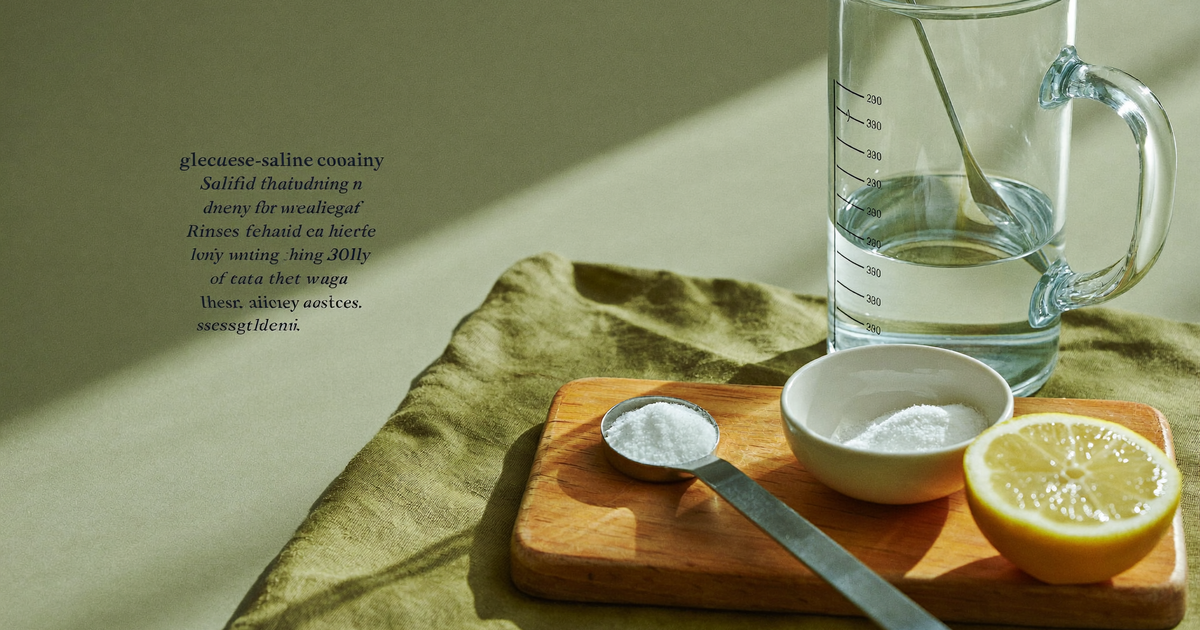
If you remember one thing, make it this. For a high-output stoma, published guidance is to limit hypotonic fluids such as water, tea, coffee and juice to roughly 0.5 to 1.0 L per 24 hours and to replace the remaining fluid with a glucose-saline solution containing at least 90 mmol/L of sodium, with 90 to 120 mmol/L cited as the working range (2). More plain water is the instinctive move and often the wrong one.
Why drinking more plain water can make output worse
Plain water is low in sodium. When it passes a short absorptive route, sodium can move from the body into the bowel rather than the other way around, so volume goes up while sodium status goes down. The glucose and sodium together in a rehydration solution are what let water be absorbed with the salt rather than flushed through.
This is also why salting food more generously is standard advice with an ileostomy. It runs directly opposite to general public health messaging about cutting salt, which is written for people with a working colon.
If you have had extensive small bowel resection as well as a stoma, fluid and electrolyte management goes further still. Our guide to short bowel syndrome and diet covers that territory.
Oral rehydration solutions and when they are needed
Oral rehydration solutions are the tool for persistent high output, not an everyday requirement for a stable stoma putting out 800 mL. Your team decides which you need, since many consumer electrolyte drinks fall well below the 90 mmol/L sodium threshold the guidance describes (2).
Palatability is the main reason people stop taking these solutions (1). That is a solvable problem rather than a personal failure: chilling it, sipping it through the day, or asking about a different preparation are all reasonable things to raise. Quietly abandoning it is the outcome worth avoiding.
The Hidden Cost of Over-Restricting
Restriction is not free. A 2026 review in Proceedings of the Nutrition Society found that restrictive eating patterns after ileostomy were associated with a net reduction of 158 kcal per day, about 8.4 percent of intake (1). Over months, that is a meaningful gap between what you are eating and what your recovery needs.
What the research shows about long-term restriction
The same review reports a striking before-and-after figure from one cohort: 30 percent of people ate more than two portions of fruit and vegetables daily before surgery, compared with 0 percent twenty days afterwards (1). A complete collapse, in under three weeks.
This is not new. A 1982 study comparing 37 people with ileostomies against matched controls found lower fibre intake in the ileostomy group, driven mainly by eating fewer fruits and vegetables (5). The pattern has been documented for over forty years.
Appliance worry drives part of it. In the cross-sectional study of 103 people, avoiding foods because of appliance leakage was far more common in the ileostomy group than the colostomy group, at 20 percent versus 4.8 percent (4). That is worth naming to your stoma nurse rather than solving silently by eating less.
Nutrients and labs worth keeping an eye on
Vitamin B12, magnesium, sodium and overall fluid status are the usual things to monitor, particularly after ileal resection. B12 deserves specific attention because the ileum is where it is absorbed, and our guide to vitamin B12 deficiency in Crohn's explains why resection changes that picture.
Sodium is easy to overlook because it is not on every routine panel. With persistent high output, it is reasonable to ask whether yours is being checked.
Building Your Own Ileostomy Diet: A Practical Approach
Here is the part that makes the rest workable: there are no consensus dietary guidelines for people living with an ileostomy, and 31 percent of people surveyed reported never receiving any dietary advice at all (1). You are not failing to find the correct universal list. It does not exist, which makes asking for a dietitian referral a reasonable request rather than a demanding one.
A short food and output log beats a generic avoid list
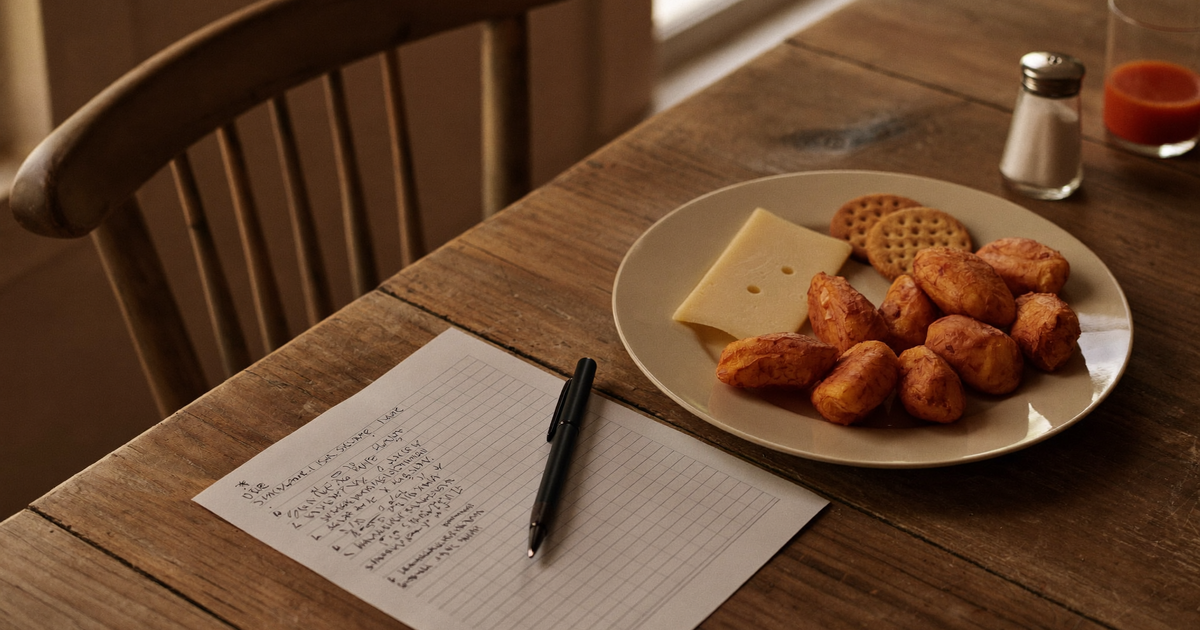
Two weeks of notes will tell you more than any article, this one included. Record what you ate, roughly how much output followed and over what period, and how you felt. Patterns show up quickly, and they are your patterns rather than averages drawn from people with different anatomy.
A log also protects you from blaming a food for a bad day that had another cause. Many of us have written off something harmless after one rough night.
What to ask for and when to escalate
Worth asking for: a dietitian referral, clarity on which fluids and how much, whether your sodium and B12 are being monitored, and what your team considers normal output for you specifically.
Escalate for persistent high output, unintended weight loss, repeated dehydration, or recurring blockages. And re-test tolerance over time. Something that caused trouble in week three is not automatically off the table a year later, and the bowel adapts in ways that reward a second look.
Frequently Asked Questions
How much output from an ileostomy is normal?
An established ileostomy normally puts out roughly 600 to 1200 mL in 24 hours (2). Output above about 1.5 to 2.0 L per 24 hours is classed as a high-output stoma and needs medical review rather than self-management (2). Volume varies with what you ate and drank, so one high day matters less than a sustained pattern.
Can I drink more water to stay hydrated with an ileostomy?
Not necessarily, and with high output it can make things worse. Guidance for a high-output stoma is to limit hypotonic fluids such as water, tea, coffee and juice to roughly 0.5 to 1.0 L per 24 hours, replacing the rest with a glucose-saline solution containing at least 90 mmol/L of sodium (2). Plain water replaces volume but not the sodium leaving in the bag.
Which foods should I avoid with an ileostomy?
There is no universal list, and no consensus dietary guidelines exist (1). Foods most often linked to blockages are nuts, seeds, popcorn, dried fruit, fruit and vegetable skins and tough fibrous vegetables. Peeling, cooking soft, chopping small, keeping portions modest and chewing thoroughly often makes a food workable rather than off limits.
Do I need to eat more salt with an ileostomy?
Salting food more generously is standard advice with an ileostomy, because output carries around 100 mmol/L of sodium (2). This runs opposite to public health messaging about cutting salt, which is written for people with a working colon. If you have other conditions affecting sodium or blood pressure, confirm the approach with your own team.
How long does the low-fibre phase after ileostomy surgery last?
It is meant to be a healing-phase measure of weeks, followed by a planned widening of the diet, with the timeline set by your surgical team. The documented risk is that the widening never happens: in one cohort, the proportion eating more than two portions of fruit and vegetables daily fell from 30 percent before surgery to 0 percent twenty days after (1).
What is the best way to test whether a food works for me?
UOAA advises introducing one new food at a time in a modest portion, then tracking output, gas and discomfort for 12 to 24 hours before deciding (3). Test on a calm day rather than during a stretch of high output, and write it down. Re-test later if something did not work the first time.
Is ileostomy diet advice covered by my healthcare system?
Access to a specialist dietitian varies widely by country and by insurance arrangement, and 31 percent of people surveyed had never received any dietary advice at all (1). Many health systems fund stoma nurse and dietitian input after surgery, so it is worth asking what your own pathway offers.
References
- Dietary restriction in people living with an ileostomy: impacts on nutrition, hydration and quality of life. Proceedings of the Nutrition Society, 2026. Read study
- How to manage a high-output stoma. 2022. View on PubMed Central
- United Ostomy Associations of America. Ostomy Nutrition Guide: Foods, Fluids, and How to Avoid Common Problems. 2026. Read article
- A Cross-sectional Study of Nutritional Status, Diet, and Dietary Restrictions Among Persons With an Ileostomy or Colostomy. Wound Management and Prevention, 2018. Read study
- Diet and health of people with an ileostomy. 1. Dietary assessment. British Journal of Nutrition, 1982. View on PubMed
Recommended Resources
Browse ResourcesRelated Articles

Short Bowel Syndrome in Crohn's Disease: Diet and Fluids
Short bowel syndrome in Crohn's disease changes how you eat and drink. What guidelines say about sodium, fluids, fat, fiber and supplements after surgery.

Low-Fiber Diet for Crohn's Disease: Who Actually Needs It
A low fiber diet for Crohn's disease has a real but narrow role. Research links routine fiber avoidance to more flares, not fewer. Here is the evidence.

Gluten-Free Diet for Crohn's Disease: What Evidence Shows
Is a gluten free diet for Crohn's disease worth trying? Here is what the research shows on celiac risk, gluten sensitivity, fructans, and who benefits.

Semi-Vegetarian Diet for Crohn's Disease: Chiba Protocol
Semi-vegetarian diet for Crohn's disease showed 92% two-year remission in Chiba's trial. Learn the SVD protocol, the evidence, and how to try it safely.

Autoimmune Protocol (AIP) Diet for Crohn's: A Patient Guide
Learn how the Autoimmune Protocol (AIP) diet may help Crohn's disease. Evidence from clinical trials, food lists, phases, risks, and how to try it safely.

Low FODMAP Diet for Crohn's: Evidence-Based Patient Guide
Low FODMAP diet for Crohn's disease in IBD remission: 2025 evidence on symptom relief, microbiota impact, and how to safely reintroduce common trigger foods.