
Low-Fiber Diet for Crohn's Disease: Who Actually Needs It

This article is for informational purposes only and does not constitute medical advice. Always consult your healthcare provider before making any changes to your treatment plan.
Almost everyone living with Crohn's has been handed a low-fiber sheet at some point, usually after a flare, an obstruction scare or a scan that mentioned narrowing. What far fewer of us are told is when to stop. A low fiber diet for Crohn's disease has a genuine role, but a narrower one than the advice we receive suggests, and the evidence on long-term fiber avoidance runs opposite to what most of us were taught.
Key Takeaways
- Crohn's patients in remission eating the most fiber had lower odds of flaring within 6 months than those eating the least, adjusted odds ratio 0.58 (95% CI 0.37 to 0.90) (1).
- Crohn's patients who said they did not avoid high-fiber foods were about 40% less likely to flare, and the authors concluded that advice to limit fiber should be re-evaluated (1).
- The term "low-residue diet" was retired from the Academy of Nutrition and Dietetics Nutrition Care Manual because "residue" has no scientifically accepted quantitative definition (2).
- A low fiber diet for Crohn's disease has real support in three settings: narrowed bowel, active flares and bowel prep, where the concern is mechanical blockage rather than inflammation.
- In 82 patients with small bowel strictures, adding a regular 24-hour liquid diet to medical therapy did not reduce sub-occlusive episodes or bowel resections (5).
- None of this applies to ulcerative colitis in the same way, where the same study found no link between fiber and flares (1).
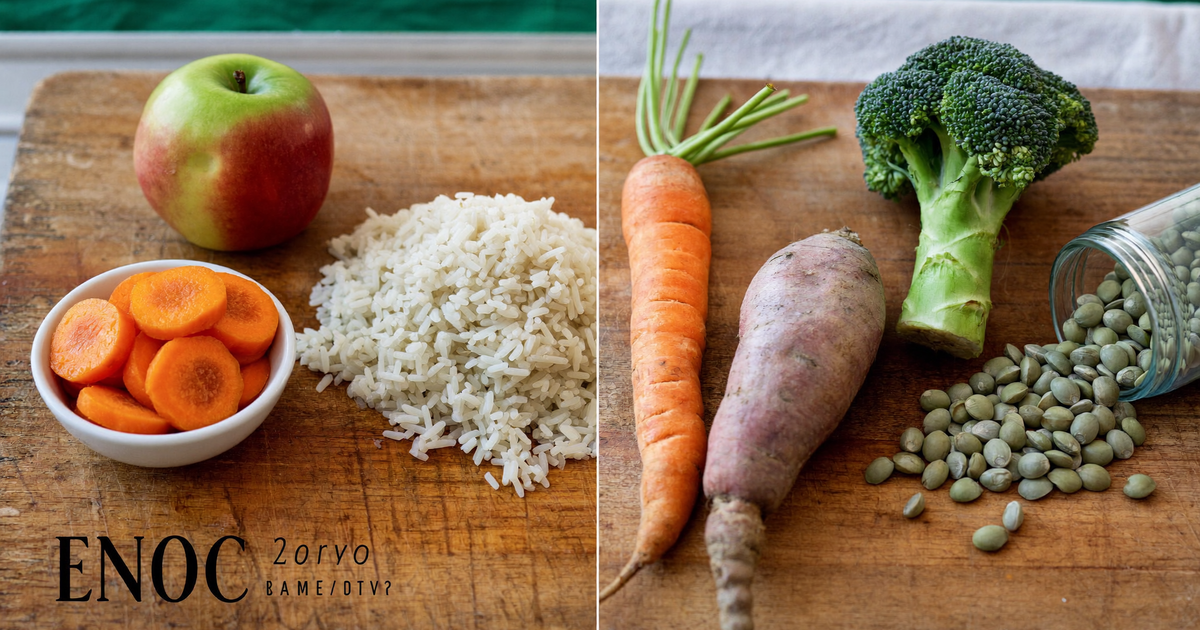
What a Low-Fiber Diet Actually Is
A low-fiber diet for Crohn's disease caps total daily fiber, and one narrative review proposed defining it as a maximum of 10 g per day (2). That matters because it replaces the vaguer "low-residue diet" many of us were given, a term retired precisely because nobody could measure what it asked for (2).
Why "low-residue" was retired as a term
Low-residue diets were removed from the Academy of Nutrition and Dietetics Nutrition Care Manual for a specific reason: there is no scientifically accepted quantitative definition of "residue", and no method to estimate how much residue a meal produces (2). Two dietitians could hand you different lists and both could call them low-residue.
The same review found the terms "low residue" and "low fiber" are used interchangeably in human disease research (2). If you were handed a low-residue sheet, you were in practice being told to cut fiber.
The 10 grams a day definition
The proposed replacement is simple: no more than 10 g of fiber per day (2). The value of a number is that you can track it, compare it against a typical intake, and tell when you have come off it. A food list cannot do any of that.
This is worth raising with your own team. If you have been told to eat low-fiber, two follow-up questions help: how many grams per day, and for how long? An instruction with no number also has no end point.
The Evidence That Routine Fiber Avoidance Backfires
The two main datasets on fiber and Crohn's flares both point the same way: patients who restricted fiber flared more often, not less. This is observational evidence rather than trial evidence, so it cannot prove cause, but it is the opposite of what the standard advice would predict and strong enough that the researchers themselves called for the advice to be revisited (1).
The 1,619-patient cohort
In a cohort of 1,619 IBD patients in remission, Crohn's patients in the highest quartile of fiber intake were less likely to flare within 6 months than those in the lowest quartile, with an adjusted odds ratio of 0.58 (95% CI 0.37 to 0.90) (1).
The avoidance finding was more direct still. Crohn's patients who reported not avoiding high-fiber foods were about 40% less likely to flare over the same 6 months, adjusted odds ratio 0.59 (95% CI 0.43 to 0.81), and the authors concluded that recommendations to limit dietary fiber should be re-evaluated (1).
One detail matters for anyone with ulcerative colitis. The same study found no association between fiber and flares in UC, adjusted odds ratio 1.82 (95% CI 0.92 to 3.60) (1), so advice should not be copied across between the two conditions.
A 54-week prospective study
A 54-week prospective study of 61 patients with clinically quiescent IBD followed what happened as people changed their fiber intake. Flare rates were 12.6% among those who increased fiber, 20.5% among those whose intake was unchanged, and 46.5% among those who decreased it (p = 0.03) (3). Fecal calprotectin, an inflammation marker measured in stool, did not differ significantly between the groups (3).
The limitations matter. Both studies are observational and diet was self-reported, and patients who were already sicker, with longer disease duration and prior surgery, tended to be eating less fiber in the first place (1). That raises reverse causation: severity may drive the low intake rather than low fiber driving the flares. These are strong grounds to question blanket restriction, not proof that adding fiber prevents flares.
When a Low-Fiber Diet Genuinely Makes Sense
Fiber restriction has real support in three situations: narrowed bowel, some active flares, and short-term bowel preparation. What unites the first of these is that the problem is mechanical rather than inflammatory, which is a different question from whether fiber affects inflammation at all.
Strictures and narrowing
A stricture is a narrowed segment of bowel, and the clearest reason to modify fiber and texture. The concern is physical: fibrous, bulky or poorly chewed food reaching a narrow passage can cause an obstruction. That logic is about plumbing, not immunology.
Even here the evidence is thinner than most of us assume. A review of stricturing and fistulizing Crohn's found oral diet modification and exclusive enteral nutrition are common approaches, but that supporting research evidence is generally limited (4). The strongest nutrition evidence here is preoperative exclusive enteral nutrition, which reduces surgical complications (4), covered in our exclusive enteral nutrition guide.
Active flares and bowel prep
During an active flare, many of us find low-fiber, low-texture food simply easier to tolerate, and that is a legitimate reason to eat that way for a while. Symptom relief counts. It does not treat the inflammation, though, so it belongs alongside medical treatment rather than instead of it.
Short-term fiber restriction before a colonoscopy is a separate case: a diagnostic use with a fixed end point measured in days, not a treatment (2). It says nothing about how you should eat the rest of the year.
Around surgery
Around planned surgery, nutrition shifts from symptom control to risk reduction. Preoperative exclusive enteral nutrition has the strongest support for reducing surgical complications in this group (4), a different proposition from a general instruction to avoid fiber.
What the Stricture Research Does Not Support
The widespread belief that eating soft food treats a stricture does not hold up. In 82 patients with small bowel strictures, adding a 24-hour liquid diet every 10 to 14 days to medical therapy did not significantly change sub-occlusive episodes, which occurred in 10 of 37 patients (27%) versus 9 of 45 (20%), or bowel resections, at 24.3% versus 15.5% (5).
Restricting texture did not change the course of the narrowing itself. The reasonable reading is that diet manages symptoms and reduces the risk of an acute blockage, while the stricture is addressed medically or procedurally.
So the question to bring to your team is what is being done about the stricture, not only what you should eat around it. Our article on endoscopic balloon dilation for Crohn's strictures covers one procedural option, alongside medication changes or surgery. Diet alone is rarely the whole plan.

Soluble vs Insoluble Fiber and the Role of Texture
Soluble fiber dissolves in water and forms a gel, which slows things down and is often better tolerated. Insoluble fiber does not dissolve and passes through largely intact, adding bulk and coarse texture. Guidance for narrowed bowel usually targets insoluble fiber, because that is the kind most likely to reach a narrow segment as recognisable plant material.
This is why so many "problem foods" are really texture problems. Cooking, peeling, deseeding and pureeing change tolerance without removing a food entirely. A raw apple with skin and a cooked peeled apple behave very differently, and the second keeps variety on your plate.
Psyllium is a different case: a soluble fiber supplement with its own evidence base and its own cautions where strictures are present. We cover it in our psyllium fiber for Crohn's disease guide.
How to Use a Low-Fiber Diet Without Getting Stuck on It
In our community, the most useful reframe is to treat a low-fiber diet like a course of steroids: a defined intervention with a reason, a duration, and a plan for coming off it.
Making it time-limited
Before you start, it helps to know the target intake, the reason, and the review date. Without one, a short-term measure quietly becomes a permanent identity. Many of us know someone who has been "low-fiber" for a decade because nobody told them the instruction had expired.
Reintroducing fiber
Reintroduction works best gradually and one food at a time, so you can tell what caused what. Cooked and peeled versions come before raw ones, portions start small, and symptoms get written down rather than remembered.
Long restriction has a real nutritional cost: narrowed variety, and less diverse fiber for the gut bacteria that depend on it. This is where an IBD dietitian earns their place. Open-ended avoidance of whole food groups is its own risk, which we cover in our guide to foods to avoid with Crohn's disease.
Questions for your team
Four questions move things forward:
- Do my scans or scopes actually show a stricture, or is this precautionary?
- How many grams of fiber per day are we aiming for?
- How long should this last, and what is the reintroduction plan?
- Who reviews this, and when?
If a low-fiber diet is right for you, these questions will not change that. They will give it an end point. The evidence does not support most of us eating this way indefinitely, and anyone who quietly cut fiber years ago deserves a fresh conversation about it.
Frequently Asked Questions
How long should I stay on a low fiber diet for Crohn's?
There is no single answer, but the evidence supports treating it as time-limited. Bowel prep lasts days. Flare-related restriction usually lasts weeks while treatment takes effect. Restriction for a stricture should carry a review date and a reintroduction plan, because observational data links long-term fiber avoidance to more flares, not fewer (1).
Does avoiding fiber prevent Crohn's flares?
The available evidence points the other way. Among 1,619 IBD patients in remission, Crohn's patients who did not avoid high-fiber foods were about 40% less likely to flare over 6 months, adjusted odds ratio 0.59 (95% CI 0.43 to 0.81), and the authors recommended that advice to limit fiber be re-evaluated (1). These findings were observational, so they show association rather than cause.
Is a low fiber diet the same as a low residue diet?
In practice, yes. A review found the terms are used interchangeably in human disease research, and low-residue diets were removed from the Academy of Nutrition and Dietetics Nutrition Care Manual because "residue" has no accepted quantitative definition and no way to measure it (2). The suggested replacement is a low-fiber diet capped at 10 g per day (2).
Will eating soft food fix my stricture?
No. In 82 patients with small bowel strictures, adding a 24-hour liquid diet every 10 to 14 days to medical therapy did not significantly reduce sub-occlusive episodes (27% versus 20%) or bowel resections (24.3% versus 15.5%) (5). Texture modification can ease symptoms and reduce blockage risk, but the narrowing itself is treated medically or procedurally.
Does this advice apply to ulcerative colitis too?
Not directly. The same cohort study found no association between fiber intake and flares in ulcerative colitis, adjusted odds ratio 1.82 (95% CI 0.92 to 3.60) (1). Crohn's and UC behave differently here, partly because strictures and small bowel involvement are features of Crohn's, so advice should not be transferred between them.
Can I eat fruit and vegetables on a low fiber diet?
Usually yes, in modified form. Cooking, peeling, deseeding and pureeing reduce the insoluble fiber and coarse texture that cause most trouble, so many of us tolerate cooked peeled carrots or stewed apple when raw versions are difficult. Keeping produce on the plate in a tolerable form beats removing whole categories of food.
What should I ask my doctor before starting a low fiber diet?
Ask whether imaging or endoscopy actually shows a stricture or whether the advice is precautionary, what daily fiber target you are aiming for, how long it should last, and who will review it. A referral to an IBD dietitian is reasonable to request, especially if the restriction may last more than a few weeks.
References
- Brotherton CS, Martin CA, Long MD, et al. Avoidance of Fiber Is Associated With Greater Risk of Crohn's Disease Flare in a 6-Month Period. Clinical Gastroenterology and Hepatology, 2016. View on PubMed
- Vanhauwaert E, Matthys C, Verdonck L, De Preter V. Low-residue and low-fiber diets in gastrointestinal disease management. Advances in Nutrition, 2015. View on PubMed
- Increased Fiber Intake Enhances Clostridia Bacteria and Reduces Clinical Relapse in Patients With Clinically Quiescent Inflammatory Bowel Disease: A Prospective Longitudinal Study. 2025. View on PubMed
- Use of oral diet and nutrition support in management of stricturing and fistulizing Crohn's disease. Nutrition in Clinical Practice, 2023. View on PubMed
- No effect of a liquid diet in the management of patients with stricturing Crohn's disease. 2020. View on PubMed
Recommended Resources
Browse ResourcesRelated Articles

Low FODMAP Diet for Crohn's: Evidence-Based Patient Guide
Low FODMAP diet for Crohn's disease in IBD remission: 2025 evidence on symptom relief, microbiota impact, and how to safely reintroduce common trigger foods.

Low Emulsifier Diet for Crohn's Disease: ADDapt Trial Results
The landmark 154-patient ADDapt trial found Crohn's patients on a low emulsifier diet were 3x more likely to improve. Here's what the evidence shows.

Gluten-Free Diet for Crohn's Disease: What Evidence Shows
Is a gluten free diet for Crohn's disease worth trying? Here is what the research shows on celiac risk, gluten sensitivity, fructans, and who benefits.

Psyllium Fiber for Crohn's Disease: What Research Shows
Is psyllium safe with Crohn's? What the research shows about soluble fiber, the benefits, correct dosing, and when strictures make it a bad idea.

Semi-Vegetarian Diet for Crohn's Disease: Chiba Protocol
Semi-vegetarian diet for Crohn's disease showed 92% two-year remission in Chiba's trial. Learn the SVD protocol, the evidence, and how to try it safely.

Autoimmune Protocol (AIP) Diet for Crohn's: A Patient Guide
Learn how the Autoimmune Protocol (AIP) diet may help Crohn's disease. Evidence from clinical trials, food lists, phases, risks, and how to try it safely.