
Psyllium Fiber for Crohn's Disease: What Research Shows

This article is for informational purposes only and does not constitute medical advice. Always consult your healthcare provider before making any changes to your treatment plan.
If you have Crohn's disease, you have probably received conflicting advice about fiber - avoid it at all costs, or load up on it for gut health. Psyllium fiber sits right in the middle of that debate, and many of us in the Crohn's community have wondered whether this particular supplement could actually help rather than harm. The answer, as with most things in IBD, depends on your specific situation - so let us walk through what the research actually shows about psyllium fiber and Crohn's disease.
Key Takeaways
- Psyllium is a semi-soluble, gel-forming fiber from Plantago ovata seeds that resists rapid fermentation and produces beneficial butyrate in the colon (1).
- In a 12-month trial of 105 ulcerative colitis patients, psyllium alone maintained remission as effectively as mesalamine, with no significant difference between groups (p=0.67) (2).
- A 2023 mouse study found psyllium protected against colitis by activating the FXR bile acid receptor, revealing a new anti-inflammatory mechanism beyond simple bulk-forming effects (3).
- Most clinical trials of psyllium in IBD were conducted in ulcerative colitis, not Crohn's disease - the Crohn's-specific evidence remains limited (1, 4).
- Psyllium can be dangerous for patients with intestinal strictures because bulk-forming fibers may worsen or trigger bowel obstruction.
What Is Psyllium and How Does It Work?
Psyllium is derived from the seed husks of Plantago ovata, a plant grown primarily in India and parts of Southern Europe. It is classified as a semi-soluble, gel-forming, bulk-forming dietary fiber, and you may also see it referred to as ispaghula husk - these are the same thing (1). Common commercial products include Metamucil and many generic psyllium husk supplements.
Where psyllium comes from
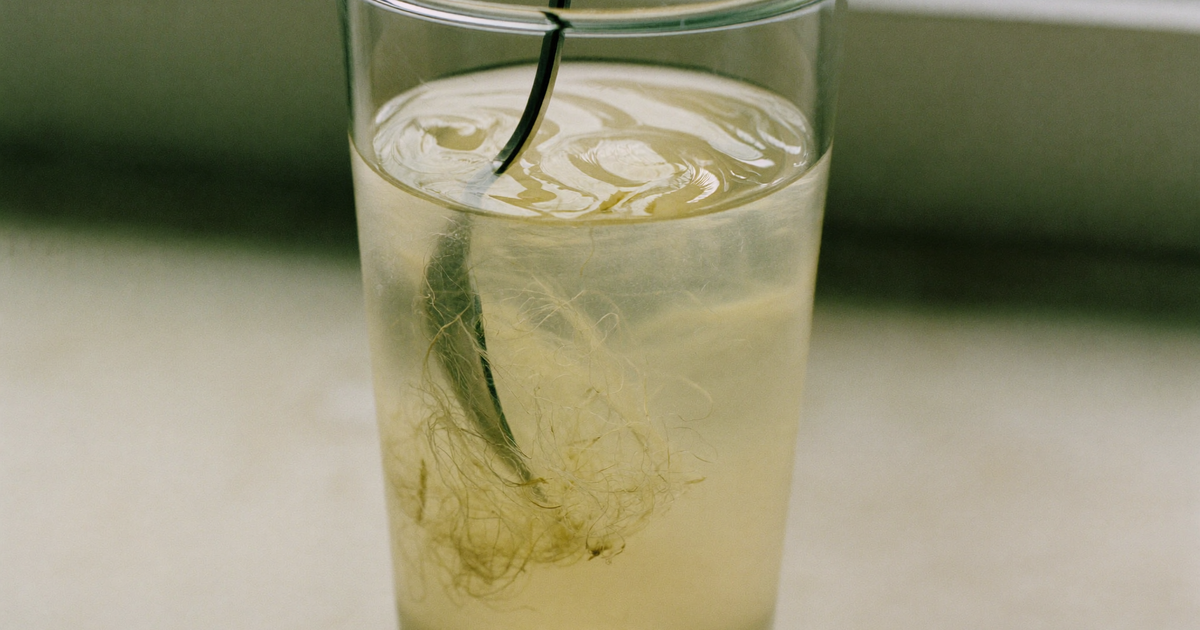
The Plantago ovata plant produces tiny seeds coated with a mucilaginous husk. When that husk contacts water, it absorbs many times its own weight in liquid and forms a thick, slippery gel. This gel-forming property is what makes psyllium different from other fiber supplements and is central to how it behaves in your gut.
How bulk-forming fiber behaves in the gut
Not all fibers are the same, and understanding the differences matters when you have Crohn's disease. Insoluble fiber - think wheat bran and raw vegetable skins - passes through mostly unchanged and can be abrasive to an inflamed gut. Highly soluble, rapidly fermented fibers like inulin dissolve completely and can produce a lot of gas quickly, which many of us know all too well.
Psyllium sits in a useful middle ground. It is semi-soluble, meaning it partially dissolves in water to form a gel, but it resists the rapid fermentation that causes bloating and gas. As it moves through the colon, gut bacteria slowly ferment it, producing short-chain fatty acids including butyrate - a molecule that serves as a primary energy source for the cells lining your colon (1). As we explored in our article on butyrate supplementation for Crohn's disease, this short-chain fatty acid plays an important role in gut barrier integrity and inflammation control.
Fiber and Crohn's Disease: Rethinking the Restriction Myth
For decades, one of the first pieces of dietary advice many Crohn's patients received after diagnosis was some version of "avoid fiber." That blanket recommendation is now being questioned by the research community, and the shift matters for how we think about psyllium.
Why patients were told to avoid fiber
The original logic was straightforward. Crohn's disease involves inflammation and sometimes narrowing of the intestinal tract. Fiber adds bulk and roughage. Therefore, fiber must be bad. This reasoning led to widespread adoption of low-residue and low-fiber diets as standard advice for IBD patients, regardless of their disease activity or location (5).
As we discuss in our guide on foods to watch with Crohn's disease, some fiber caution makes genuine sense in specific situations - particularly during active flares or when strictures are present. But the blanket "avoid all fiber" approach was never based on strong clinical evidence.
How guidance is evolving
Recent systematic reviews have found that the evidence for restricting all fiber in Crohn's disease is surprisingly thin (5). Many gastroenterologists now take a more nuanced approach: during active flares or when strictures are present, reducing insoluble fiber can make sense. But during remission, and especially for patients with colonic disease, certain soluble fibers may actually be beneficial.
The key distinction is between different types of fiber, different disease states, and different disease locations. A patient with small bowel stricturing disease has very different considerations than a patient with mild colonic Crohn's in remission. Individual variation matters enormously, which is why this conversation belongs between you and your gastroenterologist.
What the Research Actually Shows About Psyllium for IBD
Here is where honesty matters most. The clinical evidence for psyllium in IBD exists - but most of it comes from ulcerative colitis trials, not Crohn's disease studies. We need to be upfront about that gap.
Ulcerative colitis trials
The strongest human evidence comes from two randomized trials in ulcerative colitis. In the Hallert 1991 trial, patients with UC in remission who took psyllium reported significantly reduced gastrointestinal symptoms compared to placebo (P less than 0.001) (4).
The larger and more rigorous Fernandez-Banares 1999 trial followed 105 ulcerative colitis patients in remission for 12 months. Patients received either psyllium alone (10g twice daily), mesalamine alone (500mg three times daily), or the combination. The treatment failure rates were 40 percent with psyllium alone, 35 percent with mesalamine alone, and 30 percent with the combination - and there was no statistically significant difference between any of the three groups (p=0.67) (2).
That is a remarkable finding. A fiber supplement maintained remission in UC roughly as well as an established medication over a full year. But it is essential to emphasize: this was ulcerative colitis, not Crohn's disease.
New mechanistic research
A 2023 study from Georgia State University, published in Cellular and Molecular Gastroenterology and Hepatology, revealed a previously unknown mechanism by which psyllium may protect against intestinal inflammation. In two different mouse colitis models, psyllium increased serum bile acids and activated the farnesoid X receptor (FXR) - a bile acid nuclear receptor that suppresses inflammatory pathways (3).
This is significant because it suggests psyllium does more than simply add bulk. It may actively modulate the bile acid-FXR signaling axis, an entirely separate anti-inflammatory mechanism. While mouse studies do not directly prove human benefit, they help explain why psyllium might work differently than other fibers.
The Crohn's evidence gap
We want to be transparent about a limitation that many online articles gloss over. There are no large, high-quality randomized trials of psyllium specifically in Crohn's disease patients. The UC data is encouraging, and the mechanistic research is interesting, but extrapolating from UC to Crohn's requires caution because the two conditions behave differently - particularly when it comes to small bowel involvement, strictures, and disease patterns (1, 5).
This does not mean psyllium is useless for Crohn's patients. It means the evidence is not yet strong enough to make broad recommendations, and individual decisions should be made carefully with your gastroenterologist.
Potential Benefits for Crohn's Patients
Despite the evidence gap, there are several reasons why some gastroenterologists consider psyllium worth trying for certain Crohn's patients in remission.
Bowel habit regulation
One of psyllium's most practical qualities is that it can help with both loose stools and constipation - sometimes in the same patient at different times. The gel it forms absorbs excess water in loose stools and adds moisture and bulk when stools are too hard. For Crohn's patients dealing with unpredictable bowel habits, this dual-direction effect can be genuinely useful.
Psyllium also binds bile acids in the intestinal tract. This is particularly relevant for patients who have had ileal resection or have ileal disease, because bile acid malabsorption is a common cause of persistent watery diarrhea after surgery. As we cover in our article on bile acid diarrhea in Crohn's disease, managing bile acid levels can make a meaningful difference in day-to-day comfort.
Microbiome and metabolic effects
Psyllium acts as a prebiotic, selectively feeding beneficial bacteria in the colon and supporting microbial diversity. As we discuss in our overview of probiotics and prebiotics for gut health, nurturing the right bacterial populations can support overall intestinal health. The slow fermentation of psyllium produces butyrate and other short-chain fatty acids that fuel colon cells and support barrier function (1).
Beyond the gut, psyllium has well-documented effects on cholesterol reduction and blood sugar smoothing - benefits that may matter for Crohn's patients who are managing metabolic health alongside their IBD.
It is worth emphasizing: potential benefits do not mean guaranteed benefits for every patient. Individual responses vary widely, and what helps one person may not help another.
When Psyllium May Not Be Safe: The Stricture Warning
This section is arguably the most important in this article, because it is the one that many patient-facing resources either bury or omit entirely.
Strictures and bowel obstruction risk
Bulk-forming fibers expand in the gut. If there is a narrowing - a stricture - anywhere in your intestinal tract, that expanded fiber can become impacted and worsen or even precipitate a bowel obstruction. This is not a theoretical concern. It is a real clinical risk that has been documented with psyllium and other bulk-forming agents.
If you have any history of strictures, if imaging or endoscopy has shown any narrowing, or if you have had prior bowel obstructions, you should not start psyllium without explicit clearance from your gastroenterologist. Signs of subacute obstruction to watch for include cramping after meals, progressive bloating, decreased stool volume, and audible or excessive bowel sounds.
Active inflammation considerations
During severe active flares, the intestinal tract is swollen, inflamed, and potentially narrowed even without a fixed stricture. Most gastroenterologists advise avoiding bulk-forming supplements during these periods. Post-surgical recovery timing should also be individualized with your surgical team - there is no universal timeline for when it is safe to reintroduce fiber after a resection.
Practical Guidance: How to Use Psyllium With Crohn's
If you and your gastroenterologist decide that trying psyllium is reasonable for your situation, here is what the practical approach typically looks like.
Starting dose and titration
The universal rule is low and slow. A common starting approach is around 5g per day (roughly one teaspoon of powder or the equivalent in capsules), taken once daily. If tolerated well after a week or so, you can gradually increase. The doses used in the UC trials were higher - 10g twice daily in the Fernandez-Banares study (2) - but most clinicians suggest working up slowly and stopping at whatever dose provides benefit without discomfort.
Hydration and timing
This point cannot be overstated: psyllium taken with inadequate water can actually increase obstruction risk rather than reduce it. Always take psyllium with a full glass of water (at least 240ml), and maintain good overall hydration throughout the day.
Timing is a matter of personal preference and tolerance. Some patients find it works best between meals, others prefer taking it with food. There is no strong evidence favoring one approach, so experiment and find what suits your body.
Forms and choosing a product
Psyllium comes in powder form (to mix with water or blend into a smoothie), capsules, and wafers. The powder tends to provide the most flexibility with dosing. If choosing a powder product, check the label for added sugars, artificial sweeteners, and colorings - many commercial products contain these, and plain psyllium husk powder is available without additives.
Warning signs that mean stop immediately
If you experience any of the following after starting psyllium, stop taking it and contact your doctor:
- Worsening abdominal pain or cramping
- New vomiting
- Absence of gas or stool passage
- Significant new bloating that does not resolve
These could indicate a developing obstruction and need prompt medical evaluation.
Psyllium is not a substitute for prescribed IBD medications. It is a dietary supplement that may complement your treatment plan, not replace it.
Frequently Asked Questions
Is psyllium fiber safe for all Crohn's patients?
No. Psyllium is not appropriate for patients with intestinal strictures, active bowel obstruction, or severe active flares. Even without these contraindications, you should discuss starting psyllium with your gastroenterologist before trying it, especially if you have small bowel disease or a history of surgical resection.
Can psyllium replace my Crohn's medication?
Psyllium is a dietary fiber supplement, not a medication for Crohn's disease. No clinical evidence supports using it as a replacement for prescribed IBD therapies like biologics, immunomodulators, or corticosteroids. In the UC trials, it was compared to mesalamine for remission maintenance - a very different context than active Crohn's treatment (2).
How long does it take for psyllium to work?
Most people notice effects on stool consistency within a few days to a week. However, any potential anti-inflammatory or microbiome-modulating benefits would likely take weeks to months to develop. The major UC trials evaluated outcomes at 4 to 12 months (2, 4). If you experience increased bloating initially, it often improves as your gut adjusts over one to two weeks.
What is the difference between psyllium and other fiber supplements like inulin or wheat bran?
Psyllium is semi-soluble and forms a gel, which means it resists rapid fermentation and produces less gas than highly soluble fibers like inulin. Unlike insoluble wheat bran, it does not act as an abrasive roughage. This middle-ground behavior is what makes it potentially more tolerable for IBD patients, though individual responses still vary (1, 5).
Does psyllium interact with my Crohn's medications?
Psyllium can slow the absorption of some oral medications if taken at the same time. A common recommendation is to take psyllium at least two hours before or after other medications. Check with your pharmacist or gastroenterologist about specific interactions with your medication regimen, as timing matters most with drugs that have narrow absorption windows.
Is psyllium covered by insurance or widely available internationally?
Psyllium is typically sold as an over-the-counter dietary supplement and is not usually covered by insurance in most countries. It is widely available under brand names like Metamucil (primarily in North America and Australia) and as ispaghula husk (the common term in the UK and parts of Europe). Generic psyllium husk powder is available globally and tends to be the most affordable option.
What should I ask my doctor about psyllium?
Key questions include: Do I have any strictures or narrowing on my latest imaging? Is my disease location and current activity level compatible with adding a bulk-forming fiber? Are there any interactions with my current medications? What dose should I start with, and what warning signs should I watch for? Having this conversation ensures you are making an informed, individualized decision rather than following generic advice.
References
- Wong C, Harris PJ, Ferguson LR. Potential Benefits of Dietary Fibre Intervention in Inflammatory Bowel Disease. International Journal of Molecular Sciences, 2016. Read study
- Fernandez-Banares F, et al. Randomized clinical trial of Plantago ovata seeds (dietary fiber) as compared with mesalamine in maintaining remission in ulcerative colitis. American Journal of Gastroenterology, 1999. View on PubMed
- Georgia State University. Psyllium Fiber Protects Against Colitis by Activating Bile Acid Sensor, Biomedical Sciences Researchers Find. 2023. Read article
- Hallert C, et al. Ispaghula husk may relieve gastrointestinal symptoms in ulcerative colitis in remission. Scandinavian Journal of Gastroenterology, 1991. View on PubMed
- Armstrong HK, et al. Are all dietary fibers equal for patients with inflammatory bowel disease? A systematic review of randomized controlled trials. Nutrition Reviews, 2022. Read study
Recommended Resources
Browse ResourcesRelated Articles

Kefir for Crohn's Disease: What Research Really Shows
Can kefir help Crohn's disease? What human trials and microbiome studies show, how it compares to yogurt, how to try it safely, and when to skip it.

Melatonin for Crohn's Disease: What Research Really Shows
Can melatonin help Crohn's disease? What clinical trials and microbiome research show about the benefits, risks, dosing, and safety for IBD patients today.

Mastic Gum for Crohn's Disease: What the Research Shows
Mastic gum for Crohn's disease: what small trials say about CDAI reduction, IL-6, CRP, dosing, side effects, and whether this ancient resin actually helps.

Boswellia for Crohn's Disease: What Research Really Shows
Boswellia for Crohn's disease: explore what randomized clinical trials, safety data, dosing, and drug interactions really reveal about this Ayurvedic extract.

Coffee and Crohn's Disease: What Research Really Shows
Coffee and Crohn's disease: does caffeine really trigger flares? See what recent research shows on symptoms, gut microbiome, and safe intake with IBD.

Specific Carbohydrate Diet for Crohn's: What Research Shows
The Specific Carbohydrate Diet (SCD) cuts grains, most sugars, and complex starches. See what the DINE-CD trial shows about SCD for Crohn's disease symptoms.