
Semi-Vegetarian Diet for Crohn's Disease: Chiba Protocol

This article is for informational purposes only and does not constitute medical advice. Always consult your healthcare provider before making any changes to your treatment plan.
If you have been reading about dietary approaches for Crohn's disease, you have probably come across claims about plant-based eating without much clarity on what that actually means in practice. The semi-vegetarian diet for Crohn's disease - developed by Dr. Mitsuro Chiba and colleagues at Akita University Hospital in Japan - is one of the few dietary protocols with published remission data specifically for Crohn's patients, including a 92% remission rate at two years (1). Here is what the evidence says, what you actually eat, and how to approach it safely.
Key Takeaways
- In the Chiba semi-vegetarian diet trial, 92% of Crohn's patients on SVD remained in remission at 2 years versus just 25% on an omnivorous diet (P = 0.0003) (1)
- SVD is a lacto-ovo-pesco-flexitarian pattern: daily brown rice, vegetables, miso, fruit, and legumes, with fish about once a week and meat about once every two weeks (1)
- A 10-year follow-up of infliximab plus plant-based diet showed nearly half of Crohn's patients stayed relapse-free without scheduled maintenance biologics (2)
- Two 2025 RCTs found whole food diets effective for inducing Crohn's remission in both children and adults, supporting the broader plant-forward approach (4, 5)
- The 2024 AGA guidance recommends a whole-food eating pattern for IBD but notes that no single diet has consistent evidence for preventing adult Crohn's flares (6)
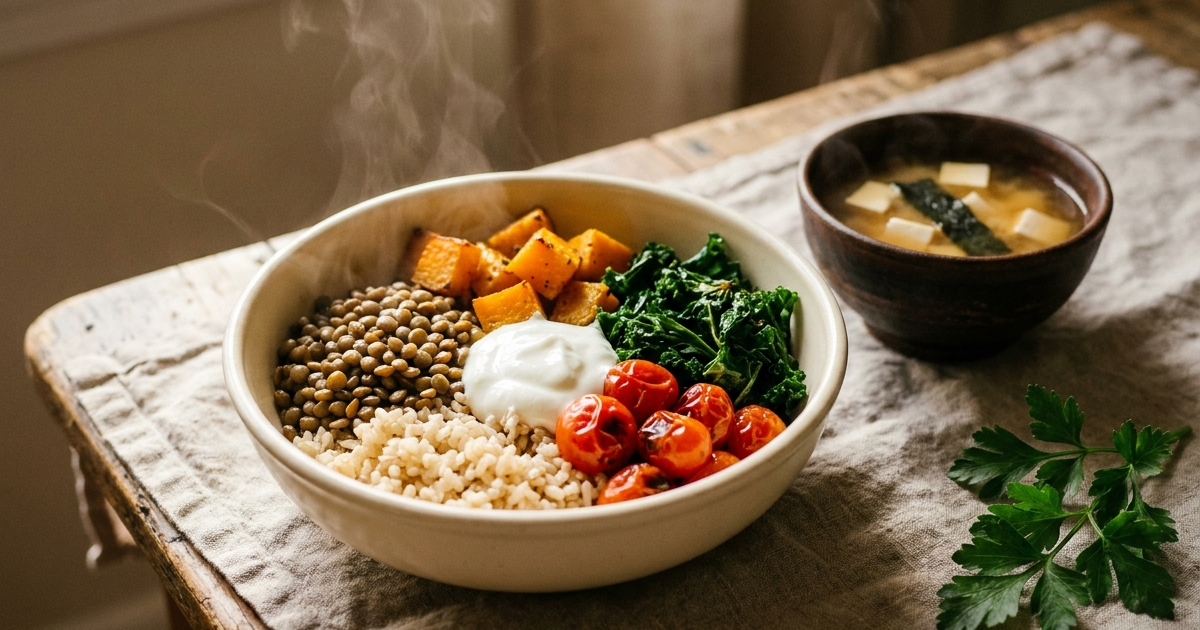
What Is the Semi-Vegetarian Diet (SVD) for Crohn's?
The semi-vegetarian diet is a structured, plant-forward eating pattern that allows moderate amounts of fish and meat at defined intervals. Unlike many dietary claims in the IBD space, the SVD protocol has specific published guidelines - what to eat daily, what to include weekly, and what to avoid - developed and tested in a clinical setting over more than a decade (1).
The Chiba Protocol Origins
Dr. Mitsuro Chiba and his team at Akita University Hospital in Japan developed the SVD in the early 2000s, rooted in the observation that the rise of IBD in Japan paralleled the country's shift toward a westernized, high-fat, high-processed-food diet. Their hypothesis was straightforward: if a westernized diet increases IBD risk, returning to a plant-centered traditional eating pattern might help maintain remission after medical induction therapy. The protocol was designed to be used alongside standard medical treatment, not as a standalone cure (1).
How SVD Differs from Vegan, Vegetarian, and Mediterranean Eating
The SVD is sometimes lumped together with "plant-based diets," but it is a distinct protocol. Unlike a vegan diet, SVD includes eggs, yogurt, fish, and small amounts of meat. Unlike a standard vegetarian pattern, SVD specifies exact frequencies for animal foods. And while the SVD shares the Mediterranean diet's emphasis on whole, minimally processed plant foods, it uses different staples - brown rice and miso soup rather than olive oil and whole grains - and has stricter limits on animal protein. The key distinction is that SVD is not a general philosophy but a specific, published protocol with defined food frequencies.
The Evidence: What Trials Show About SVD and Crohn's
The research on the semi-vegetarian diet comes primarily from Chiba's group in Japan, now joined by newer whole food diet trials from other countries. Here is what the data looks like.
The 2010 Landmark Chiba Study
The foundational study, published in the World Journal of Gastroenterology, followed 22 Crohn's patients who had achieved remission through medical therapy. Sixteen agreed to follow the SVD; six chose an omnivorous diet. The results were striking: 100% of the SVD group remained in remission at one year, and 92% at two years. In the omnivorous group, remission held at 67% at one year but dropped to just 25% at two years (P = 0.0003) (1).
These numbers are remarkable, but context matters. The trial was small, single-center, and not blinded. Patients chose their diet group rather than being randomly assigned. Still, the effect size was large enough to attract serious attention from the IBD research community.
Long-Term Follow-Up: The IPF (Infliximab Plus Plant-Based) Trial
In 2022, Chiba published a follow-up study in The Permanente Journal that pushed the timeline much further. In this trial, Crohn's patients received infliximab as first-line induction therapy combined with a plant-based diet from the outset. The results at 10 years were notable: nearly half of patients remained relapse-free without needing scheduled maintenance biologics or immunosuppressants (2). The induction remission rate was approximately 96% (3).
This is not the same as saying half of patients never needed medication again - many did require episodic treatment for flares. But the idea that a dietary protocol could meaningfully extend remission intervals and reduce the need for ongoing biologic maintenance is significant, particularly for patients concerned about long-term drug exposure.
2025 Whole Food Diet Trials
Two randomized controlled trials published in 2025 added broader evidence for whole food dietary approaches in Crohn's disease, even though neither studied the specific SVD protocol.
The TASTI-MM trial, published in Gastroenterology, compared a whole food diet to exclusive enteral nutrition (EEN) in children and young adults with mild-to-moderate Crohn's. The whole food diet was as effective as EEN for inducing remission and was significantly more tolerable - a critical finding given that EEN, while effective, requires patients to consume only liquid formula for weeks (4).
A separate UCLA randomized controlled trial published in Clinical Nutrition ESPEN found that a natural whole food diet improved clinical remission (odds ratio 1.41; 95% CI 1.03-1.93; P = 0.03) and reduced fecal calprotectin compared to habitual diet in adults with mild-to-moderate Crohn's, with no increase in nutritional deficiency or adverse events (5).
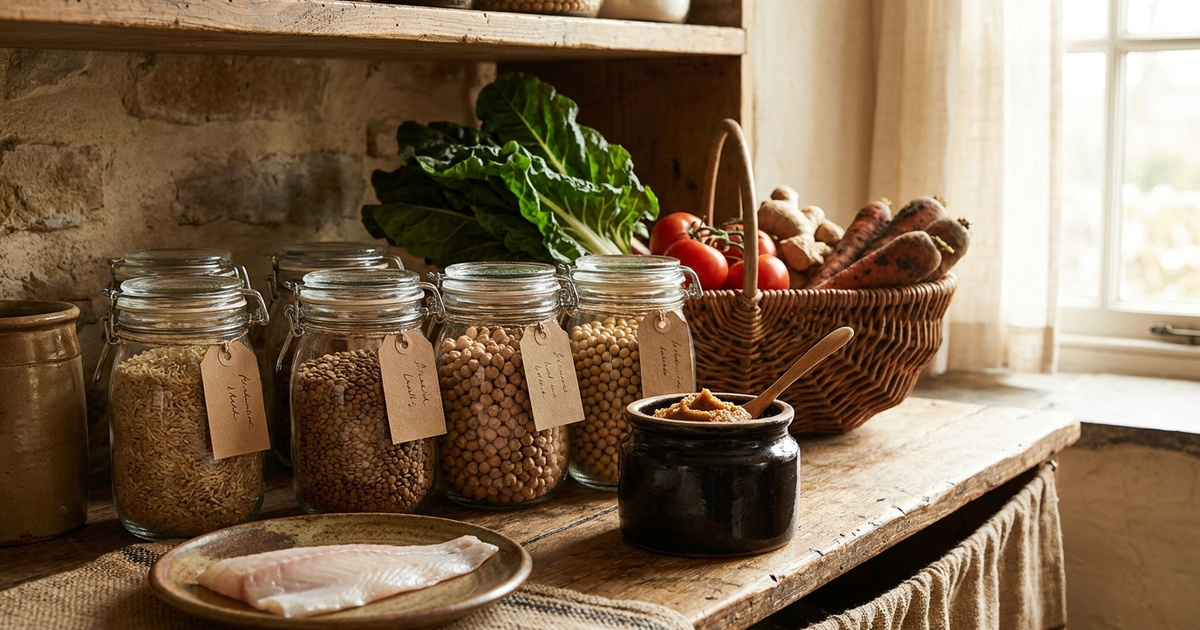
What You Actually Eat: The SVD Food List
One of the strengths of the Chiba protocol is its specificity. This is not a vague instruction to "eat more plants." Here is what the published protocol includes (1).
Daily Staples
The foundation of every day on SVD consists of brown rice (introduced gradually - see below), miso soup, seasonal vegetables, fruit, legumes, potatoes, pickled vegetables, plain yogurt, eggs, and green tea. The emphasis is on whole, unprocessed foods prepared simply. If you are used to a standard Western diet, the most noticeable shift will be the centrality of brown rice and miso soup at most meals.
Weekly and Occasional Foods
Fish is included about once a week, and meat about once every two weeks - both at roughly half a typical portion size (1). The protocol does not specify particular species of fish or types of meat, but the key principle is modest quantity and low frequency. This is where the "semi" in semi-vegetarian comes in: animal foods are not eliminated, but they play a supporting role rather than a starring one.
Foods to Limit or Avoid
The SVD discourages sweets, breads made with refined flour, cheese, margarine, fast food, carbonated drinks, fruit juices, and alcohol (1). If you have read about the link between ultra-processed foods and Crohn's disease risk, these recommendations will feel familiar. The underlying principle is minimizing highly processed, high-sugar, and high-fat foods that have been associated with gut microbiome disruption and inflammation.
One practical detail worth noting: the brown rice transition. Chiba's protocol does not start patients on full brown rice immediately. Instead, patients begin with white rice for a few days, then move to a 70% white and 30% brown mix, then progress to full brown rice (1). This gradual introduction helps the digestive system adapt and reduces initial gas and bloating.
How SVD May Work: Fiber, the Microbiome, and Anti-Inflammatory Effects
The exact mechanisms behind the SVD's apparent benefits have not been fully established, but several pathways are plausible and consistent with broader IBD nutrition research.
Higher fiber and plant polyphenol intake feeds beneficial gut bacteria, particularly those that produce short-chain fatty acids like butyrate. Butyrate is a primary fuel source for the cells lining the colon and plays a well-documented role in supporting the intestinal barrier - the same barrier that is compromised in Crohn's disease.
Lower intake of ultra-processed foods and saturated fat may reduce dysbiosis-related inflammation. This aligns with the 2024 AGA clinical guidance, which specifically recommends minimizing ultra-processed foods for IBD patients (6).
Chiba has noted that unrefined brown rice appears to promote greater beneficial-bacteria growth compared to well-milled white rice (1). And the SVD pattern broadly aligns with the hypothesis that westernized dietary patterns - high in processed food, refined carbohydrates, and animal fat - are a modifiable environmental factor in the rising global incidence of IBD.
Trying SVD Safely: A Practical Guide for Crohn's Patients
If the evidence has caught your attention and you are considering trying the semi-vegetarian diet, here is how to approach it responsibly.
Talk to Your GI and a Registered Dietitian First
This is not just a standard disclaimer. Crohn's disease involves significant individual variation in disease location, behavior, complications, and nutritional status. A dietary pattern that works well for someone in stable remission with ileal disease may be inappropriate for someone with a stricture, active fistula, or recent surgery. Always discuss significant diet changes with your gastroenterologist and, ideally, with a registered dietitian who has experience with IBD.
Adapting for Strictures, Flares, and Malabsorption
The SVD is not designed as sole therapy for a moderate-to-severe flare or for people with symptomatic strictures. High-fiber foods like brown rice, legumes, and raw vegetables can worsen obstruction symptoms when narrowing is present (6). In these situations, you may need to cook vegetables thoroughly, blend soups, peel and soak legumes, or temporarily rely on lower-fiber versions of the protocol. Your dietitian can help you make these adjustments without losing the overall pattern.
If you are reducing animal foods further than the SVD already does, monitor for micronutrient deficiencies common in Crohn's - iron, vitamin B12, zinc, and vitamin D - with periodic bloodwork. Many of us already face these deficiency risks even on a standard diet, so proactive monitoring matters.
A Sample Day on SVD
- Breakfast: Brown rice porridge with sliced banana and a cup of green tea
- Lunch: Miso soup with tofu and seasonal vegetables, brown rice, pickled daikon, and plain yogurt
- Snack: Fresh fruit (apple, pear, or whatever is in season)
- Dinner: Brown rice, steamed vegetables, a small serving of legume stew (lentils or chickpeas), and a boiled egg
On a fish day, lunch or dinner would include a modest portion of grilled or steamed fish. On a meat day (about every two weeks), a small portion of lean meat would replace the legume serving.
Limitations, Cautions, and the Bigger Picture
Enthusiasm for the SVD data is understandable, but several important caveats deserve honest attention.
Chiba's 2010 trial was small - 16 SVD patients versus 6 controls - single-center, and not blinded. Patients self-selected into their diet group, which introduces selection bias (patients motivated enough to choose SVD may also be more compliant with medication and lifestyle changes overall). These results urgently need replication in larger, multi-site randomized controlled trials (1).
Most published SVD research comes from a single Japanese group. Cultural food context, baseline dietary habits, and food availability differ significantly across countries. A Japanese patient transitioning from white rice to brown rice faces a very different practical challenge than a European or North American patient whose diet may not include rice at all.
The 2024 AGA clinical practice update acknowledges the value of a whole-food, Mediterranean-style eating pattern for IBD patients, but it concludes that there is no consistent evidence that any single diet reduces adult Crohn's flare rates (6). The AGA recommendation is intentionally cautious - the evidence base, while growing rapidly, is still dominated by small trials and short follow-up periods.
Finally, "semi-vegetarian" is not a loose label for any plant-heavy diet. The specific foods, portions, and frequencies studied by Chiba are what have been researched. Adopting a generally plant-forward eating pattern is likely beneficial, but the published remission data applies to the defined SVD protocol, not to any arbitrary reduction in meat intake.
Frequently Asked Questions
Is the semi-vegetarian diet safe during a Crohn's flare?
The SVD was studied in patients already in remission and is designed as a maintenance strategy, not a flare treatment. During an active flare, high-fiber foods like brown rice and raw legumes may worsen symptoms, particularly if you have strictures. Work with your GI team on an appropriate diet during flares, and consider transitioning to SVD once remission is achieved (1).
Can I follow SVD if I am on biologics or immunosuppressants?
Yes. The SVD was developed as an adjunct to medical therapy, not a replacement. Chiba's own trials combined SVD with infliximab (2). Never stop or reduce prescribed medication based on dietary changes alone - any medication adjustments should be made by your gastroenterologist based on clinical and laboratory monitoring.
How is SVD different from the Mediterranean diet for Crohn's?
Both emphasize whole, plant-forward foods and limit processed items. The Mediterranean diet centers on olive oil, whole grains, fish, and moderate dairy. The SVD centers on brown rice, miso soup, vegetables, and legumes, with more restrictive limits on animal protein frequency and portion size. The Mediterranean diet has stronger institutional backing from the AGA (6), while the SVD has the specific Chiba remission data (1).
Do I need to eat brown rice specifically, or can I use other whole grains?
The published SVD protocol specifically uses brown rice as the primary grain (1). Whether substituting quinoa, whole oats, or other whole grains would produce similar results has not been studied. If you want to follow the protocol as tested, brown rice is the researched choice. If brown rice causes digestive issues, start with the gradual transition Chiba recommends - white rice first, then a mixed blend, then full brown rice.
Will SVD cause nutritional deficiencies?
The SVD includes eggs, dairy (yogurt), weekly fish, and biweekly meat, so it provides more animal-source nutrients than a vegan diet. However, any dietary restriction in Crohn's patients warrants periodic bloodwork for iron, vitamin B12, zinc, and vitamin D, since malabsorption risk is already elevated regardless of diet. Work with your care team to monitor and supplement as needed.
Is there evidence for SVD in ulcerative colitis too?
Chiba's research has primarily focused on Crohn's disease, though some of the broader plant-based and whole food diet trials include mixed IBD populations. The TASTI-MM trial studied Crohn's disease specifically (4). If you have ulcerative colitis and are interested in a plant-forward approach, the evidence is less direct, but the general principles of whole-food eating and processed food reduction are recommended by the AGA for all IBD patients (6).
What should I ask my doctor about trying SVD?
Consider asking: "Is my current disease status stable enough for a high-fiber dietary change?" "Do I have any strictures or narrowing that would make increased fiber risky?" "Can we schedule bloodwork to monitor my micronutrient levels as I transition?" and "Would you recommend a dietitian to help me adapt the protocol to my situation?" These questions help your care team support you rather than just reacting to symptoms later.
References
- Chiba M, Abe T, Tsuda H, et al. Lifestyle-related disease in Crohn's disease: Relapse prevention by a semi-vegetarian diet. World Journal of Gastroenterology, 2010; 16(20):2484-2495. Read study
- Chiba M, et al. Relapse-Free Course in Nearly Half of Crohn's Disease Patients With Infliximab and Plant-Based Diet as First-Line Therapy: A Single-Group Trial. The Permanente Journal, 2022; 26(2). Read study
- Chiba M, Tsuji T, Komatsu M. Therapeutic advancement in inflammatory bowel disease by incorporating plant-based diet. Translational Gastroenterology and Hepatology, 2023; Vol 8. Read review
- Whole Food Diet Induces Remission in Children and Young Adults With Mild to Moderate Crohn's Disease and Is More Tolerable Than Exclusive Enteral Nutrition: A Randomized Controlled Trial (TASTI-MM Trial). Gastroenterology, 2025. Read study
- Randomized controlled trial of a natural whole food diet versus habitual diet for Crohn's disease: Is diet quality the key? Clinical Nutrition ESPEN, 2025. Read study
- American Gastroenterological Association. AGA Clinical Practice Update on Diet and Nutritional Therapies in Patients with Inflammatory Bowel Disease. January 2024. Read guidance
Recommended Resources
Browse ResourcesRelated Articles

Autoimmune Protocol (AIP) Diet for Crohn's: A Patient Guide
Learn how the Autoimmune Protocol (AIP) diet may help Crohn's disease. Evidence from clinical trials, food lists, phases, risks, and how to try it safely.

Short Bowel Syndrome in Crohn's Disease: Diet and Fluids
Short bowel syndrome in Crohn's disease changes how you eat and drink. What guidelines say about sodium, fluids, fat, fiber and supplements after surgery.

Low-Fiber Diet for Crohn's Disease: Who Actually Needs It
A low fiber diet for Crohn's disease has a real but narrow role. Research links routine fiber avoidance to more flares, not fewer. Here is the evidence.

Gluten-Free Diet for Crohn's Disease: What Evidence Shows
Is a gluten free diet for Crohn's disease worth trying? Here is what the research shows on celiac risk, gluten sensitivity, fructans, and who benefits.

Low FODMAP Diet for Crohn's: Evidence-Based Patient Guide
Low FODMAP diet for Crohn's disease in IBD remission: 2025 evidence on symptom relief, microbiota impact, and how to safely reintroduce common trigger foods.

IBD-AID Diet for Crohn's: Anti-Inflammatory Eating Guide
The IBD-AID diet for Crohn's combines probiotics, prebiotics, and modified carbohydrates. Studies show symptom relief and reduced medication needs in patients.