
Sarcopenia in Crohn's Disease: Muscle Loss Explained

This article is for informational purposes only and does not constitute medical advice. Always consult your healthcare provider before making any changes to your treatment plan.
Sarcopenia in Crohn's disease is far more common than most patients realize, and it can silently undermine your treatment outcomes, surgical recovery, and overall quality of life. Up to half of all Crohn's patients may be losing muscle mass without knowing it - even those at a normal or higher body weight (1). The good news is that once you understand what sarcopenia looks like and what drives it, there are concrete, evidence-based steps you can take to protect and rebuild your muscles.
Key Takeaways
- Up to 50% of Crohn's disease patients have sarcopenia, compared to 37% of ulcerative colitis patients (1)
- Sarcopenic Crohn's patients are more than twice as likely to be hospitalized within one year (45.2% vs. 20.3%) (2)
- A normal or high BMI does not rule out sarcopenia - sarcopenic obesity is increasingly recognized in IBD
- Only 48.1% of newly diagnosed Crohn's patients with sarcopenia achieved remission at 6 months, compared to 81.4% without it (3)
- ECCO recommends 1.2 to 1.5 g/kg of protein daily for Crohn's patients at risk of malnutrition (1)
- Simple tests like handgrip strength measurement and body composition scans can detect sarcopenia early
What Sarcopenia Is and Why Crohn's Raises the Risk
Sarcopenia is a progressive loss of skeletal muscle mass and strength that goes beyond what you might expect from aging alone. In Crohn's disease, sarcopenia develops through a perfect storm of factors: chronic inflammation floods the body with cytokines that break down muscle tissue, malabsorption limits the nutrients available for muscle repair, reduced appetite shrinks overall protein intake, and prolonged corticosteroid use accelerates muscle wasting (1).
What makes sarcopenia particularly sneaky in Crohn's is that it can hide behind a normal or even elevated body mass index. You do not need to look underweight to be losing significant muscle. Sarcopenic obesity - where fat mass increases while muscle mass declines - is increasingly recognized in IBD patients and carries its own set of metabolic risks (4).
Sarcopenia vs Malnutrition vs Cachexia
These three terms often get mixed up, but they describe distinct conditions. Malnutrition is a broader state of inadequate nutrient intake or absorption that can affect any body tissue. Cachexia is a severe, inflammation-driven wasting syndrome where the body breaks down both muscle and fat, often seen in advanced illness, and is difficult to reverse with nutrition alone. Sarcopenia specifically targets muscle mass and function - and unlike cachexia, it can often be improved or even reversed with the right combination of nutrition and exercise (4).
Understanding which of these applies to you matters because each calls for a different approach. Many Crohn's patients live with some degree of sarcopenia without ever being assessed for it, which means they may be missing a critical piece of their treatment puzzle.
How Common Sarcopenia Is in Crohn's Disease
The short answer is: more common than most gastroenterology clinics currently screen for. A meta-analysis found that up to 50% of Crohn's disease patients and 37% of ulcerative colitis patients have sarcopenia (1). That is a striking number, and it suggests that muscle health deserves far more attention in routine IBD care.
Prevalence Estimates by Study
The exact prevalence depends heavily on which diagnostic criteria and measurement tools a study uses, which is why published estimates range from 7.6% to 56.3% across the literature (4). Here are some of the most recent findings:
- A 2024 prospective study of 158 IBD patients (96 with Crohn's) found that 34.8% had sarcopenia. Multivariate analysis identified extensive ileal disease, low serum albumin, and smaller waist circumference as significant independent risk factors (2).
- A 2025 study focusing specifically on newly diagnosed Crohn's patients found sarcopenia in 38.6% of participants at the time of diagnosis (3). This is a particularly important finding because it shows that muscle loss can already be significant before treatment even begins.
- Frail IBD cohorts - those with both sarcopenia and other markers of physical decline - show 2 to 3 fold higher mortality compared to non-frail patients (4).
These numbers make it clear that sarcopenia is not a niche concern. If you have Crohn's disease, especially active disease, prior bowel resection, or chronically poor appetite, the odds that you have some degree of muscle loss are substantial.
How Sarcopenia Affects Your Prognosis and Treatment Response
Sarcopenia is not just about feeling weaker or losing fitness. Research increasingly shows that low muscle mass directly influences how well Crohn's treatments work and how patients fare through surgeries and hospitalizations. Understanding this connection can help you advocate for more comprehensive care.
Remission and Flare Risk
One of the most striking findings comes from a 2025 study of newly diagnosed Crohn's patients: only 48.1% of those with sarcopenia at baseline achieved clinical remission at six months, compared to 81.4% of those without sarcopenia (3). That is a dramatic difference, and it suggests that muscle status may be an underappreciated factor in treatment response.
The relationship likely works in both directions. Active inflammation drives muscle breakdown, and reduced muscle mass may impair immune regulation and drug metabolism, making it harder to reach and sustain remission. As we discussed in our guide to nutrition and inflammatory bowel diseases, the body's nutritional foundation profoundly shapes how well it responds to medical therapy.
Surgical and Hospitalization Outcomes
The data on hospitalization risk is equally compelling. In the 2024 prospective study, 45.2% of sarcopenic IBD patients were hospitalized within one year, compared to just 20.3% of those without sarcopenia (p=0.026) (2). That more-than-doubled risk reflects a pattern seen across multiple studies: sarcopenic patients face higher rates of postoperative complications, abscess formation, and infection after bowel surgery (4).
For patients heading into planned surgery, this has practical implications. Prehabilitation - a structured program of nutrition optimization and exercise before surgery - is gaining traction as a way to reduce these risks. If surgery is on your horizon, raising the topic of prehabilitation with your surgical team could meaningfully improve your recovery.
How Sarcopenia Is Diagnosed
Detecting sarcopenia in Crohn's disease does not always require extra tests. Many of the imaging studies you may already be receiving can provide muscle composition data when a radiologist knows to look for it. ECCO now recommends that all IBD patients undergo sarcopenia assessment regardless of body weight (1) - a recognition that BMI alone misses too many cases.
Imaging Tools
Cross-sectional imaging at the L3 (third lumbar) vertebra is considered the reference standard for measuring skeletal muscle index. If you are already scheduled for a CT scan or MR enterography to assess your Crohn's disease activity, your radiologist can potentially measure muscle area on the same images at no additional cost or radiation.
For patients who are not undergoing CT or MRI, there are lower-radiation alternatives. DEXA scans (dual-energy X-ray absorptiometry) - the same technology used for bone density screening in Crohn's disease - can also assess lean body mass. Bioelectrical impedance analysis (BIA) is another option that requires no radiation at all and is available in many clinical and gym settings.
Strength and Function Tests
Imaging tells you about muscle quantity, but function matters too. Handgrip strength testing is a simple, validated bedside measure that takes under a minute. You squeeze a handheld dynamometer as hard as you can, and the result is compared to age- and sex-based norms. Low handgrip strength is one of the earliest signs of sarcopenia and correlates with overall functional decline.
Muscle ultrasound is emerging as a promising non-invasive tool for assessing muscle quality at the bedside, but it is not yet standardized for routine IBD clinical use (1). As the evidence base grows, this may become another accessible screening option.
Nutrition and Exercise Strategies to Prevent and Reverse Muscle Loss
The encouraging reality about sarcopenia in Crohn's disease is that, unlike cachexia, it is often reversible. The two pillars of treatment are targeted nutrition - especially adequate protein - and progressive resistance exercise. Neither works as well alone as they do together.
Protein Targets
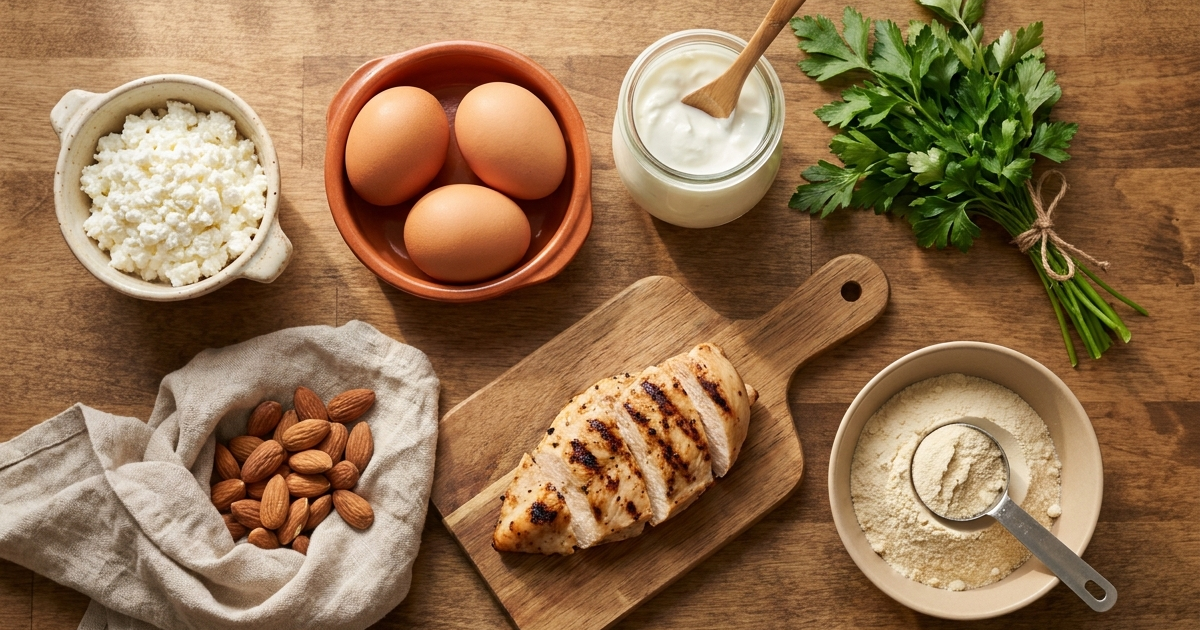
ECCO recommends increasing daily protein intake to 1.2 to 1.5 g/kg body weight for Crohn's patients at risk of malnutrition or with active disease (1). For a 70 kg (154 lb) person, that means roughly 84 to 105 grams of protein per day - significantly more than the general population recommendation of 0.8 g/kg.
How you distribute that protein matters, too. Research on muscle protein synthesis suggests that spreading protein intake evenly across meals - roughly 20 to 30 grams per meal - is more effective for building muscle than loading most of your protein into a single meal (1).
When oral intake alone is not enough - whether due to flare-related nausea, strictures limiting food tolerance, or simply poor appetite - oral nutrition supplements and enteral nutrition can help fill the gap. As we covered in our article on exclusive enteral nutrition for Crohn's disease, liquid nutrition formulas are a well-established tool in IBD care and can be a practical way to meet protein targets during difficult stretches.
Resistance Training in IBD
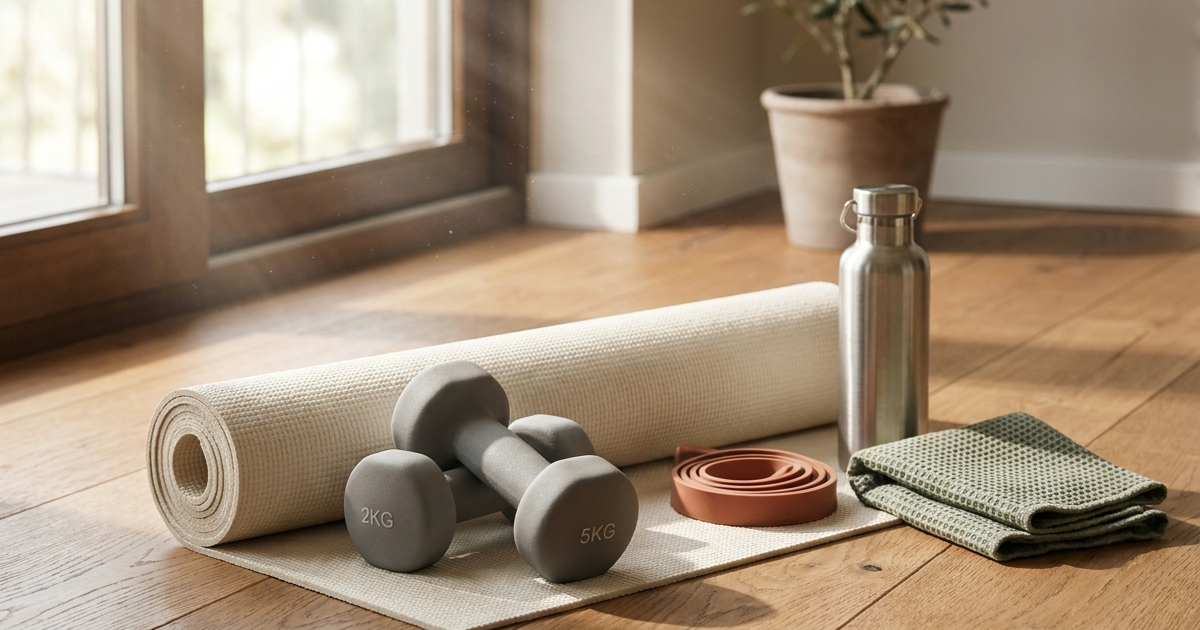
Exercise, particularly resistance training, is the other essential piece of the puzzle. Lifting weights, using resistance bands, or performing bodyweight exercises stimulates the muscle-building pathways that nutrition alone cannot fully activate. As we explored in our guide to exercise and IBD symptom management, structured physical activity is safe for most IBD patients and offers benefits well beyond muscle preservation - including improved mood, fatigue reduction, and better bone density.
The key is to match exercise intensity to your current disease activity level. During a severe flare, even gentle movement like walking or light stretching maintains some muscle stimulus. As disease activity improves, gradually introducing resistance exercises - ideally with guidance from a physiotherapist or exercise physiologist familiar with IBD - builds a sustainable habit. Combining resistance training with aerobic activity appears to provide the broadest range of benefits (4).
Correcting Micronutrient Gaps
Muscle recovery does not happen in a nutritional vacuum. Several micronutrient deficiencies common in Crohn's disease can directly impair muscle repair and function. Vitamin D plays a role in muscle protein synthesis and muscle fiber integrity. B12 is critical for nerve function and energy metabolism in muscle tissue. Iron deficiency causes fatigue that can derail exercise efforts. Zinc supports protein synthesis and immune function.
Addressing these gaps through testing and targeted supplementation - ideally guided by a registered dietitian experienced in IBD - removes barriers that might otherwise limit the effectiveness of your protein and exercise efforts.
Questions to Ask Your Gastroenterologist
Many gastroenterology appointments are focused on disease activity, medications, and lab markers. Muscle health rarely comes up unless you bring it yourself. Here are questions worth raising at your next visit:
- Should my next MR enterography or CT be reviewed for skeletal muscle index? This costs nothing extra and can be done on scans you are already getting.
- Can I be referred to a registered dietitian who works with IBD patients? A dietitian can calculate personalized protein targets and help plan meals that work around your specific tolerances and symptoms.
- Am I safe to start a resistance training program at my current disease activity level? Getting clinical clearance and guidance on how to scale exercise to your current state is a reasonable ask.
- Would checking albumin, vitamin D, B12, iron studies, and handgrip strength be reasonable at my next visit? These simple tests paint a clearer picture of your muscle health and nutritional status.
- If I need surgery, can prehabilitation be part of my plan? A structured pre-surgery program of nutrition and exercise can reduce complication rates and improve recovery.
You know your body. If you have noticed clothes fitting differently despite a stable weight, increasing fatigue with routine activities, or difficulty carrying things that used to feel manageable, these are worth mentioning. They may point to muscle changes that a scale alone would never reveal.
Frequently Asked Questions
Can you have sarcopenia even if you are overweight?
Yes. Sarcopenic obesity - where muscle mass declines while fat mass increases or remains stable - is increasingly recognized in Crohn's disease (4). BMI and body weight can remain normal or even elevated while significant muscle loss occurs beneath the surface. This is one reason ECCO recommends sarcopenia screening for all IBD patients regardless of their weight (1).
How much protein should I eat daily if I have Crohn's disease and suspect muscle loss?
ECCO guidelines recommend 1.2 to 1.5 grams of protein per kilogram of body weight per day for Crohn's patients at nutritional risk or with active disease (1). Spreading protein intake across meals in roughly 20 to 30 gram portions appears to optimize muscle protein synthesis. A registered dietitian can help tailor these targets to your specific needs and food tolerances.
Is resistance training safe during a Crohn's flare?
Light movement and gentle exercises are generally considered safe during mild to moderate flares, but intense resistance training should be scaled back during severe flares. Work with your gastroenterologist and, ideally, a physiotherapist experienced in IBD to determine what level of activity is appropriate for your current disease state. Even maintaining gentle physical activity during flares can help limit muscle loss.
What is the simplest way to screen for sarcopenia at home?
While formal diagnosis requires clinical testing, there are signs you can watch for at home. Noticeable loss of strength for everyday tasks (carrying groceries, opening jars, climbing stairs), changes in how clothing fits despite stable weight, and increased fatigue with previously manageable activities can all suggest muscle loss. Handgrip strength measured with a simple dynamometer - available online for under $30 - provides a validated screening metric.
Does treating Crohn's disease improve sarcopenia on its own?
Bringing Crohn's disease into remission helps by reducing the inflammatory cytokines that accelerate muscle breakdown and by improving nutrient absorption (3). However, remission alone may not be sufficient to reverse established sarcopenia. Active intervention with targeted protein intake and resistance exercise produces the best results for muscle recovery (1).
Which Crohn's patients are at highest risk for sarcopenia?
Research identifies several risk factors: extensive ileal disease, low serum albumin levels, and smaller waist circumference were significant independent predictors in multivariate analysis (2). Other risk factors include prolonged corticosteroid use, prior bowel resection, chronically active disease, and inadequate protein intake. Patients heading into surgery should be particularly attentive to their muscle status.
Should my gastroenterologist routinely check for sarcopenia?
ECCO guidelines recommend sarcopenia assessment for all IBD patients regardless of body weight (1), yet routine screening is not yet standard practice in most clinics. If your gastroenterologist is not yet assessing muscle health, you can request that your existing imaging studies be evaluated for muscle composition and ask about simple measures like handgrip strength testing.
References
- ECCO. Sarcopenia in Inflammatory Bowel Disease: a clinical challenge. ECCO News, Volume 20, Issue 3, 2025. Read article
- Bezzio C, Brinch D, Ribaldone DG, et al. Prevalence, Risk Factors and Association with Clinical Outcomes of Malnutrition and Sarcopenia in Inflammatory Bowel Disease: A Prospective Study. Nutrients, 2024. Read study
- Kadavanoor S, Krishnadas SP, Peumpalath N, et al. The Prevalence of Sarcopenia in Crohn's Disease Patients and Its Correlation With Disease Activity and Effect on Prognosis. Cureus, 2025. Read study
- Neelam PB, Sharma A, Sharma V. Sarcopenia and frailty in inflammatory bowel disease: Emerging concepts and evidence. JGH Open, 2024. Read study
Recommended Resources
Browse ResourcesRelated Articles

Grief After a Crohn's Diagnosis: Coping with Lost Self
Grief and Crohn's disease often travel together. Learn how patients mourn their healthy self, face ambiguous loss, and find honest paths to acceptance.

Hair Loss in Crohn's Disease: Causes and How to Cope
About one in three IBD patients report hair loss. The five main causes, which Crohn's medications affect hair, what to ask your doctor, and how to cope.

Skyrizi Side Effects and Safety for Crohn's Disease
Skyrizi side effects in Crohn's disease: real trial rates, liver enzyme monitoring during IV induction, infection risk, pregnancy data, and what to watch.

Humira Biosimilars in 2026: Every Brand, Interchangeability, Cost
Every FDA-approved Humira biosimilar for Crohn's disease in 2026: all 10 brands, which are interchangeable, high vs low concentration, and real cost data.

Entyvio vs Skyrizi for Crohn's Disease: A Patient Comparison
Entyvio vs Skyrizi for Crohn's disease: how the two drugs work, what their trials showed, safety, dosing burden, and where 2025 AGA guidance puts each.

Rinvoq vs Stelara for Crohn's: Oral JAK or Biologic
Rinvoq vs Stelara for Crohn's disease: a daily pill or an injected biologic. What each trial showed, the boxed warning gap, dosing burden and 2026 costs.