
Titanium Dioxide (E171) and Crohn's Disease: A Guide

This article is for informational purposes only and does not constitute medical advice. Always consult your healthcare provider before making any changes to your treatment plan.
If you have seen a headline about Europe banning a white food colouring, you have probably already asked the obvious question: does titanium dioxide matter for Crohn's disease? Many of us have turned a packet of sweets over, read "E171" and wondered whether this is one more thing to cut. The honest answer is more interesting than either side of the usual argument, because this question was actually tested in people with Crohn's disease twice.
Key Takeaways
- The European Food Safety Authority concluded in May 2021 that E171 can no longer be considered safe as a food additive, because genotoxicity concerns could not be ruled out (1).
- EU law removed titanium dioxide from the authorised additive list, and the sell-off period for existing stock ended on 7 August 2022 (2).
- The FDA still permits it, capped so titanium does not exceed 1 percent of the weight of the food, and says it did not identify genotoxicity concerns from the available data (6).
- A 2001 pilot of 20 patients saw CDAI fall from 392 to 145 on a low microparticle diet, but a larger 2005 trial of 83 patients found no added benefit at all (3)(4).
- In mice, oral titanium dioxide nanoparticles worsened colitis through the NLRP3 inflammasome, which gives the concern a plausible mechanism (5).
- Cutting E171 is a reasonable precaution with no trial support behind it, and it is not a substitute for Crohn's treatment.
What Titanium Dioxide (E171) Is and Where You Eat It
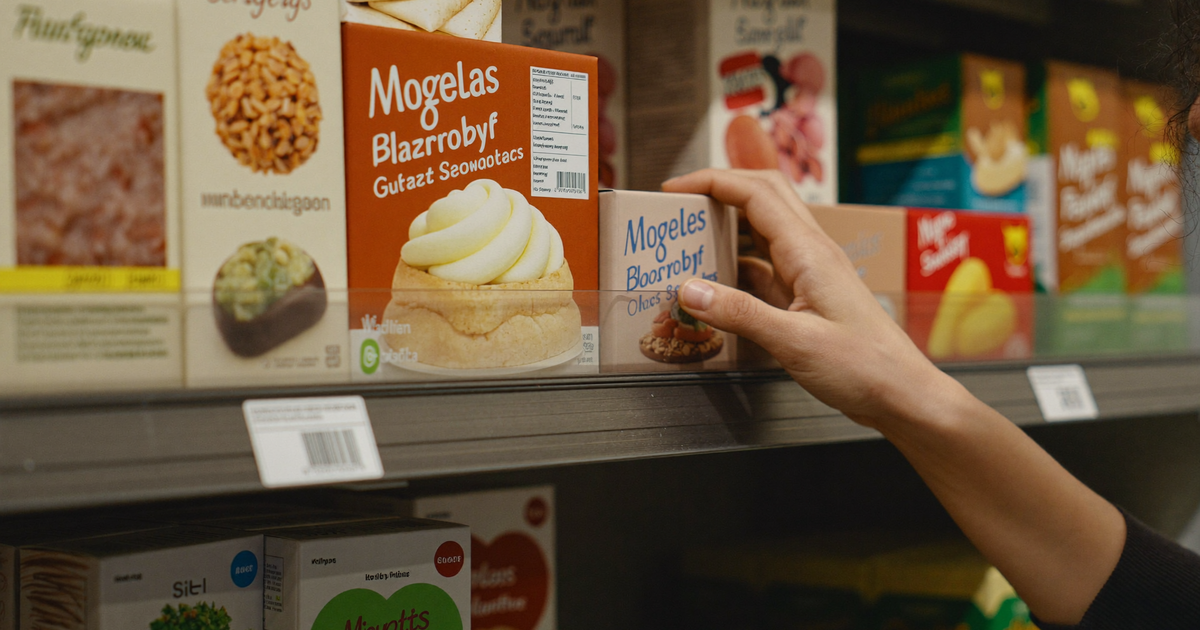
Titanium dioxide is a white mineral pigment used in food to add whiteness and opacity. It is not a preservative, a sweetener or a flavouring, and it does nothing for shelf life. Its entire job is to make something look brighter or more solid in colour, which is why it turns up in coatings and confectionery.
Why it is added to food
Manufacturers use it because nothing else quite matches it. A white coating on chewing gum, an icing that does not look translucent, a coffee whitener that looks like milk: all rely on a pigment that scatters light strongly at very small particle sizes. The effect is purely cosmetic.
Where it shows up on a label
The list of common sources is short and predictable:
- Sweets, chewing gum and white or pastel confectionery coatings
- Icings, frostings and decorative toppings
- Coffee whiteners and some powdered sauces and dressings
- Toothpaste, which you mostly spit out but not entirely
- The coatings of some tablets, capsules and supplements
That last one deserves attention: if you take several coated tablets every day, as many of us do, your medication can be a meaningful share of your exposure. On EU labels it appeared as "titanium dioxide" or "E171" before the ban. On US labels it is usually "titanium dioxide," occasionally bundled under "artificial colour."
What makes it interesting for IBD is its physical class. Titanium dioxide is a dietary microparticle: roughly bacteria-sized, non-biological and resistant to digestion (4). It passes through the gut as a particle rather than being broken down like a nutrient, which is what made researchers wonder whether an inflamed intestine handles it differently.
Why the EU Banned E171 and the US Did Not
The split comes down to how two regulators weighed the same uncertainty. In May 2021, EFSA concluded that E171 can no longer be considered safe as a food additive, because a concern for genotoxicity, the potential to damage DNA, could not be ruled out (1). That is a different statement from "this additive causes harm."
The EFSA 2021 opinion
EFSA's panel noted that absorption of titanium dioxide particles from the gut is low, but that absorbed particles may accumulate in the body (1). Because it could not rule out genotoxicity, the panel could not identify a safe daily intake, and without a safe level there is no basis for authorisation. Commission Regulation (EU) 2022/63 followed, removing titanium dioxide from the EU's authorised food additive lists, with the sell-off period ending on 7 August 2022 (2).
Where the FDA stands
The FDA has not followed. It still permits titanium dioxide under 21 CFR 73.575, provided the quantity of titanium does not exceed 1 percent by weight of the food, and it has stated that it did not identify genotoxicity concerns from the data available to it (6). The agency is reviewing a colour additive petition filed on 14 April 2023 asking it to revoke the listing (6).
Two competent regulators read overlapping evidence and disagreed about how much unresolved uncertainty is acceptable in a purely cosmetic additive. That is a disagreement about uncertainty, not proven harm. If you see the EU ban described as proof that E171 damages your gut, that is a step the evidence does not support.
What the Laboratory Evidence Shows in Inflamed Gut
The mechanistic case is the strongest part of the story. A 2017 study in Gut found that oral titanium dioxide nanoparticles worsened acute DSS-induced colitis in mice, running through the NLRP3 inflammasome, a protein complex that triggers inflammatory signalling (5). Crystals also accumulated in the spleens of treated animals (5).
The NLRP3 inflammasome finding
In the same work, titanium dioxide particles were taken up by intestinal epithelial cells and macrophages, triggered release of the inflammatory messengers IL-1 beta and IL-18, and increased epithelial permeability (5). The researchers also measured raised blood titanium levels in patients with active ulcerative colitis, suggesting an inflamed, leakier intestine lets more of it through (5).
Why a damaged barrier may matter
The authors' conclusion was carefully conditional: people with a defective intestinal barrier and pre-existing inflammation might be negatively affected, while people with healthy barriers probably handle it without consequence (5). That is the most plausible version of the concern for anyone with Crohn's.
It is also not evidence in humans. Mouse colitis induced by a chemical irritant is not Crohn's, and cell monolayers are not an intestine. Nothing here shows that titanium dioxide causes Crohn's disease, or that removing it improves Crohn's disease. For that, we have to look at the diet trials.
The Two Human Diet Trials in Crohn's Disease
This is the part most coverage skips entirely. Whether cutting dietary microparticles helps active Crohn's disease was tested in randomised trials, and the two results point in opposite directions.
The 2001 pilot that looked promising
A double-blind pilot randomised 20 patients with active, steroid-treated ileal or ileo-colonic Crohn's disease to either a low microparticle diet or a control diet for four months (3). The results looked striking. In the low microparticle group, the Crohn's Disease Activity Index fell from 392 plus or minus 25 to 145 plus or minus 47, with 7 patients reaching remission. The control group ended at 295 plus or minus 25, with none in remission (3).
Findings like that generated a hypothesis worth chasing: if dietary microparticles drive inflammation, that might help explain why liquid elemental feeds work, since they contain essentially none. We covered that approach in our article on exclusive enteral nutrition for Crohn's disease.
The 2005 trial that did not replicate it
Then came the larger test. A multicentre trial randomised 83 patients with active Crohn's disease in a 2 by 2 factorial design to diets either low or normal in microparticles and either low or normal in calcium, alongside corticosteroids, for 16 weeks (4). It found no added effect on any outcome measure: not CDAI remission, not CRP, not intestinal permeability, not faecal calprotectin. The authors described the trial as adequately powered (4).
That is the honest headline. The best-designed human trial of reducing dietary microparticles in Crohn's was negative. A promising small pilot that fails to replicate in a larger trial is a common pattern in medical research, and the larger trial is the one to weigh more heavily. One caveat cuts both ways: the trials tested microparticles as a category, mainly titanium dioxide plus mixed silicates, so they do not isolate E171 (4).
What This Means for Your Own Shopping Basket
Cutting E171 is low-risk, legal and entirely your call. It is also a precaution rather than a treatment with trial support behind it, and holding both thoughts at once is the position the evidence supports.
If you want to reduce your exposure, a few steps are straightforward:
- Read labels on sweets, chewing gum, icings, white coatings, coffee whiteners and decorative toppings.
- Favour less processed foods where you can, which lowers additive exposure generally rather than one at a time. We looked at that wider picture in our article on ultra-processed foods and Crohn's disease risk.
- Check the coatings on tablets and supplements if you take several daily, and ask a pharmacist whether an alternative formulation exists.
Some things are worth not doing. Do not stop, reduce or delay prescribed Crohn's medication in favour of an additive-free diet. If a coated tablet concerns you, that is a conversation about formulations, not a reason to skip doses.
The second caution is one we see more often in our community than any additive problem. Additive avoidance has a way of growing. One ingredient becomes five, the safe-food list shrinks, weight drifts down, and eating becomes anxiety rather than nourishment. Malnutrition and food fear are far better documented harms in Crohn's than titanium dioxide is. If you are removing several additives, involve an IBD dietitian so your nutrition does not quietly slide.
Every single-additive elimination faces this same evidence problem. As we discussed in our articles on carrageenan and Crohn's disease and the low emulsifier diet for Crohn's disease, the mechanistic case usually runs well ahead of the human outcome data.
Questions Worth Asking Your IBD Team
If titanium dioxide is on your mind at your next appointment, these questions turn a worry into something actionable:
- Is any of my current medication coated with titanium dioxide, and is there an alternative formulation?
- Given my disease location and how active things are right now, is diet change a sensible place to put my effort?
- Can I be referred to an IBD dietitian before I start removing food groups?
- Which objective marker, such as faecal calprotectin, will we use to tell whether anything I change is actually helping?
That last question is the most useful one here. The reason we know the 2005 trial was negative is that it measured something objective rather than impressions (4). Borrow the same logic: pick a marker, give the change a defined window, and read the number rather than the hope. If you want to avoid E171, go ahead, without guilt or false hope. It is a precaution, not a therapy, and effective medication, monitoring and adequate nutrition stay where they were on the priority list.
Frequently Asked Questions
Is titanium dioxide banned in the United States?
No. The FDA still permits it as a colour additive under 21 CFR 73.575, as long as the quantity of titanium does not exceed 1 percent by weight of the food (6). It has stated it did not identify genotoxicity concerns from the available data, and it is reviewing a colour additive petition filed on 14 April 2023 asking for the listing to be revoked (6).
Will cutting titanium dioxide put my Crohn's disease into remission?
The evidence does not support that expectation. A 2001 pilot of 20 patients found a large drop in disease activity on a low microparticle diet (3), but a larger 2005 trial of 83 patients found no added benefit on CDAI remission, CRP, intestinal permeability or faecal calprotectin over 16 weeks (4).
Does titanium dioxide cause Crohn's disease?
There is no evidence that it does. The 2017 Gut study showed oral titanium dioxide nanoparticles worsened chemically induced colitis in mice and increased epithelial permeability in cell work (5), but worsening existing inflammation in an animal model is a different claim from causing Crohn's in humans.
Is titanium dioxide in my Crohn's medication, and should I stop taking it?
Some tablets, capsules and supplements use it in their coatings, so it is a fair question if you swallow several each day. The answer is never to stop a prescribed medicine over it. Ask your pharmacist whether an alternative formulation exists, since substitutions are often straightforward.
Why did the EU ban it if the FDA says it is fine?
Both regulators looked at overlapping evidence and judged unresolved uncertainty differently. EFSA concluded in 2021 that genotoxicity could not be ruled out and no safe daily intake could be identified, leaving no basis for authorisation (1). The FDA concluded the available data did not establish genotoxicity concerns (6). This is a regulatory disagreement, not a finding of proven harm.
What is a low microparticle diet, and is it the same as avoiding E171?
Not quite. A low microparticle diet reduces all dietary microparticles, mainly titanium dioxide plus mixed silicates, which is broader than avoiding E171 alone (4). That is also why the trials cannot isolate titanium dioxide: they tested the whole category. Avoiding E171 on labels is a narrower version of the same idea.
References
- EFSA Panel on Food Additives and Flavourings. Safety assessment of titanium dioxide (E171) as a food additive. EFSA Journal, 2021. View on PubMed
- Food Safety Authority of Ireland. Titanium Dioxide is no Longer Authorised as a Food Additive. 2022. Read article
- Lomer MCE, et al. Efficacy and tolerability of a low microparticle diet in a double blind, randomized, pilot study in Crohn's disease. European Journal of Gastroenterology and Hepatology, 2001. View on PubMed
- Lomer MCE, et al. Lack of efficacy of a reduced microparticle diet in a multi-centred trial of patients with active Crohn's disease. European Journal of Gastroenterology and Hepatology, 2005. View on PubMed
- Ruiz PA, et al. Titanium dioxide nanoparticles exacerbate DSS-induced colitis: role of the NLRP3 inflammasome. Gut, 2017. View on PubMed
- US Food and Drug Administration. Titanium Dioxide as a Color Additive in Foods. Read article
Recommended Resources
Browse ResourcesRelated Articles

Red Meat and Crohn's Disease: What the Evidence Shows
Red meat and Crohn's disease: a randomized trial found that cutting it out did not reduce flares. Here is what the evidence supports, and what it does not.

Nutrition Before Crohn's Surgery: How to Prepare Your Body
Nutrition before Crohn's surgery can lower your complication risk. What the evidence shows about liquid diets, timing, and how to prepare for the operation.

Potassium Deficiency in Crohn's Disease: A Patient Guide
Potassium deficiency in Crohn's disease: what drains your levels, why magnesium must be corrected first, and how to hit your target on a low-fiber diet.

Short Bowel Syndrome in Crohn's Disease: Diet and Fluids
Short bowel syndrome in Crohn's disease changes how you eat and drink. What guidelines say about sodium, fluids, fat, fiber and supplements after surgery.

Protein Intake With Crohn's Disease: How Much You Need
How much protein do you need with Crohn's disease? ESPEN sets 1.2 to 1.5 g/kg in a flare and about 1 g/kg in remission. A guide to protein intake with Crohn's.

IgG Food Sensitivity Tests for Crohn's: Do They Work?
Is an IgG food sensitivity test worth it for Crohn's? What the sham-controlled trial found, why allergy societies reject the panels, and what to do instead.